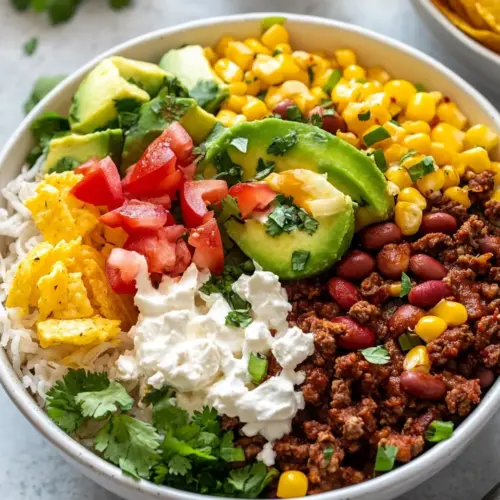
Taco Bowl
Taco Bowl is a savory, easy weeknight dinner that combines seasoned ground beef, fluffy rice, creamy avocado, and crisped flour tortillas for a satisfying texture play. Smoky spices and bright tomato lifts each bite, making it both comforting and bold, perfect for busy evenings when you want flavorful, family friendly food that comes together quickly.
Equipment
- Large Skillet
- Spatula
- Non-Stick Skillet
Ingredients
- 1 pound ground beef I like lean ground beef Brown and crumble to provide a savory, protein-rich base that carries the dish; cook until no longer pink to develop flavor and texture through browning.
- 1 teaspoon salt Season generously to enhance overall flavor balance; dissolve into the meat and rice to bring out savory notes and highlight other spices.
- 1/2 teaspoon pepper Season lightly to add subtle heat and contrast; balance with salt to prevent the dish from tasting flat and to complement the beef.
- 2 cloves garlic minced Mince finely and sauté to release aromatic oils; contribute pungency and depth while brightening the savory profile of the bowl.
- 1 medium onion finely chopped Chop finely and sweat until translucent to add sweet, savory complexity; provide body and a mild crunch when not overcooked.
- 1 teaspoon smoked paprika Sprinkle to introduce a smoky, warm accent that deepens the spice profile; pairs well with cumin and chili powder to create a layered flavor.
- 1 tablespoon chili powder Add to build classic taco seasoning with a robust, earthy heat; balances smoky and warm spices while delivering the characteristic chili flavor.
- 1 teaspoon ground cumin Stir in for an earthy, slightly bitter warmth that rounds out the spice blend; pairs with chili powder and paprika for authentic taco notes.
- 1 teaspoon garlic powder Dust over to reinforce garlicky flavor and aroma; offers a concentrated, dry hint of garlic that complements fresh minced garlic.
- 4 flour tortillas Warm and crisp briefly to make chips or tortillas for scooping; provide a soft, slightly chewy vehicle for holding the bowl components.
- 2 cups cooked rice Fold in as a neutral, starchy base to bulk the bowl and absorb sauces; provides comforting texture and helps distribute flavors evenly.
- 1/2 cup corn kernels Stir through or warm to add sweet, juicy kernels and pop of color; contribute a tender bite and mild sweetness that contrasts savory beef.
- 1/2 cup kidney beans Rinse and add for creamy, earthy bites with protein and fiber; lend a hearty texture and absorb seasonings while balancing richness.
- 1/2 cup shredded cheese I used mozzarella Sprinkle shredded to introduce melty, creamy richness that binds ingredients; offers a salty, comforting dairy note when melted over warm components.
- 1 small avocado sliced Slice and arrange to provide creamy, buttery texture and healthy fats; add freshness and a cooling contrast to spiced meat.
- 1 large tomato chopped Chop and scatter to lend bright acidity and juiciness; cut through richness with fresh tomato flavor and add visual color.
Instructions
- In a large skillet over medium-high heat, add the ground beef. Break it apart with a spatula and cook until it starts to brown.: The moment the ground beef hits the hot skillet you will hear a satisfying sizzle and smell an immediate savory note that signals caramelization is beginning. As the meat browns, the surface will darken into small flecks of browned crust, which carry deep roasted flavor. Use a sturdy spatula to break the meat into varied sized pieces so you get a mix of tiny crumbles and slightly larger bites, both of which add textural interest. The why here is simple: browning creates complex Maillard compounds that define the taste of the meat. A common mistake is stirring too frequently or using a pan that is not hot enough, which causes the meat to steam instead of brown, resulting in a pale, less flavorful mixture. If excessive liquid accumulates, tilt the pan and spoon it off, or increase the heat slightly to encourage evaporation, but watch closely to avoid burning.
- Add the chopped onions and minced garlic to the skillet. Continue to cook, stirring occasionally, until the beef is fully browned, and the onions are softened.: When you add the onion and minced garlic , the pan will release a fragrant, savory aroma that fills the kitchen and deepens the beef's profile. The onions will first turn translucent, then develop gentle golden edges that lend sweetness and depth. The garlic will bloom in the hot fat, adding aromatic warmth; it should soften and become fragrant rather than toasted to a crisp. These softened aromatics meld into the meat and create a cohesive base. Avoid adding them too early on a low heat, otherwise they may become mushy, or too late, which can leave them undercooked. Stir occasionally to prevent sticking, and scrape the brown bits from the bottom of the pan to incorporate flavor.
- Sprinkle salt, black pepper, smoked paprika, chili powder, ground cumin, garlic powder, and onion powder evenly over the meat mixture and mix well. Reduce the heat to medium-low and let the taco meat simmer for an additional 5 minutes, or until most of the liquid is absorbed.: As the spices hit the warm meat, you will see a quick bloom of color and smell layers of complexity, from smoky to earthy to warm chili notes. Mixing the spices thoroughly ensures even seasoning so every bite tastes balanced. Reducing the heat to medium low allows the flavors to meld and encourages moisture to evaporate slowly, concentrating taste without drying the meat completely. The gentle simmer helps the spices infuse the meat and softens any remaining raw onion pungency. A frequent slip here is rushing the simmer, which can leave an acidic, raw spice edge; be patient and keep the pan uncovered enough to let steam escape. Taste at the end and adjust the salt, remembering that the toppings may add additional saltiness.
- If desired, crisp up the tortillas in a non-stick skillet and then place them in four bowls, pressing down the sides to replicate the same shape.: When you toast the flour tortillas they release a warm, toasty aroma and develop a surface texture that ranges from slightly chewy to crisp, depending on how long you cook them. Use medium heat and press gently against the pan for even browning; you want a golden color with tiny dark flecks rather than deep charring. Shaping them into bowls while still warm lets them cool into a sturdy vessel that contrasts wonderfully with softer fillings. The why is that crunchy edges provide structure and a delightful mouthfeel against the creamy and tender elements. The mistake to avoid is overheating the tortillas, which can make them brittle and prone to cracking when filled.
- Add the rice, corn, kidney beans, shredded cheese, sliced avocado, and chopped tomatoes to each bowl. Decorate with sliced jalapeños, fresh cilantro, and sour cream.: The assembly is where textures and temperatures meet, creating a lively eating experience. Spoon warm rice into the base, then add sweet corn and tender kidney beans which offer both bite and substance. Sprinkle the shredded cheese over the hot meat so it softens and becomes slightly melty, creating a cohesive layer. Place sliced avocado for silky richness and scatter chopped tomato for bright acidity that cuts through the savory layers. The sensory payoff is immediate, with warm and cool elements contrasting, soft and crunchy textures playing off each other, and a spectrum of flavors from smoky to fresh. Avoid piling wet ingredients directly next to the tortilla edge to prevent sogginess, and assemble just before serving to maintain the crispness of any toasted shells.
Notes
- Swap Proteins: Try ground chicken or turkey if you want a leaner option; they brown differently and benefit from slightly higher heat to develop color.
- Cheese Choices: Swap mozzarella for a sharper cheese if you want more tang, meltability changes slightly with varietal.
- Make Ahead Rice: Cook the rice a day in advance and refrigerate for firmer grains that reheat well without becoming mushy.
- Warm Tortillas Properly: Heat tortillas over medium heat, flipping often, to achieve flexible warmth or crisp bowls without burning.
- Bean Prep: If using dried kidney beans, soak and cook them until tender to avoid a grainy texture; canned are convenient after a rinse.
- Spice Control: Start with the listed spice amounts and increase gradually, tasting as you go to avoid overpowering the fresh toppings.
- Layering Order: Place the rice first to absorb juices, meat next, and fresh toppings last to preserve texture contrasts.