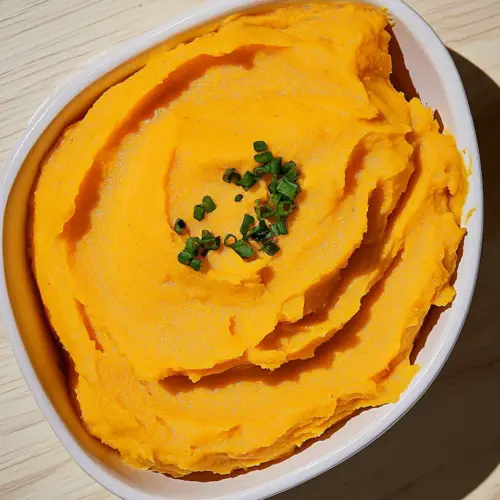
Sweet Potato Puree
Sweet Potato Puree is a creamy, naturally sweet side that roasts to a lightly caramelized finish and blends into a silky mash. This easy, comforting preparation makes an excellent weeknight side or a holiday accompaniment, offering vibrant color and nourishing texture. Make it for simple dinners or when you want a fuss free dish that feels indulgent.
Equipment
- Oven
- Baking Sheet
- Aluminum Foil
- Fork
Ingredients
- 3 large Sweet Potatoes Boil or roast until tender to provide a naturally sweet, creamy base for the puree; break down easily when mashed or blended and contributes color and body. Preserve moisture during cooking to ensure a silky texture, and balance with seasoning for a harmonious dish.
- 1 tablespoon Butter Melt to add richness and a smooth mouthfeel while helping to bind the puree; incorporate at the end of cooking off heat for optimal creaminess. Brown lightly if desired to introduce a subtle nutty depth without overpowering the sweet potatoes.
- 1/2 teaspoon Salt Season to enhance and balance the natural sweetness, bringing out the vegetable’s inherent flavors and preventing the dish from tasting flat. Adjust to taste during finishing to ensure the puree is well-rounded and savory.
- 1/4 teaspoon Pepper Season lightly to introduce a subtle bite and complexity that highlights sweetness and richness; use sparingly to avoid dominating the flavor profile. Grind fresh if possible for a brighter, more pronounced note in the finished puree.
Instructions
- Oven: preheat to 400 degrees F (205 degrees C). Meanwhile, line your baking sheet with foil.: preheat to 400 degrees F : The moment the oven warms and you feel steady heat, the air fills with an anticipatory warmth that will coax the Sweet Potatoes into soft, caramelized perfection. A properly preheated oven ensures even roasting, which concentrates sugars and develops that subtle nutty aroma. Listen for the quiet hum of the oven stabilizing, and give it a full ten to fifteen minutes to reach temperature before you put the potatoes in. If you skip preheating, the potatoes may cook unevenly and lack caramelized notes, resulting in a blander puree. One mistake I often see is sliding the pan in while the oven still climbs in temperature, which lengthens cooking time and yields inconsistent texture.
- Line your baking sheet with foil: When you lay down a sheet of foil, the kitchen instantly feels tidier and cleanup becomes effortless. The foil also reflects heat slightly and prevents the potatoes from sticking as they release sugars that can adhere to the sheet. I press the foil flat so it sits smoothly under the potatoes, and if you want, a very light brush of neutral oil prevents any stubborn sticking. Avoid crumpling the foil which can cause uneven contact and spotting; smooth it first. A common error is skipping the foil and then scraping stuck bits from the pan after roasting, which is tedious and unnecessary.
Notes
- Choose uniform potatoes so they roast evenly, avoiding a mix of sizes which leads to some being underdone while others are overcooked.
- Preheat fully to ensure caramelization and consistent texture; an oven that is still warming can cause uneven cooking.
- Use warm butter when mixing, it dissolves into the flesh more easily and lends a silkier mouthfeel than cold butter.
- Test with a fork for doneness instead of relying solely on time, since potato size and oven variances affect cooking time.
- Season in stages tasting as you go, because the perceived saltiness changes as the puree cools slightly.