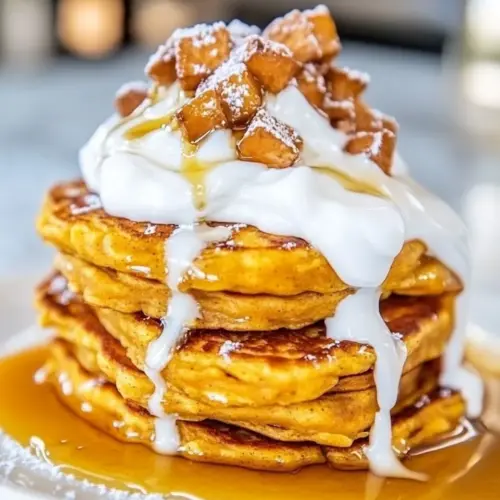
Sweet Potato Pancakes with Marshmallow Sauce
Sweet Potato Pancakes with Marshmallow Sauce deliver creamy, spiced pancakes topped with glossy marshmallow sauce and toasted pecans. This easy seasonal brunch recipe blends pantry staples for a cozy, crowd pleasing dish, perfect for fall gatherings and Thanksgiving mornings. Try it for a memorable weekend that balances sweet, crunchy, and pillowy textures.
Equipment
- Large Bowl
- Medium Bowl
- Whisk
- Wooden Spoon
- Rubber spatula
- Griddle or nonstick pan
- Small Pan
Ingredients
- 3/4 cup all-purpose flour Measure accurately to provide the pancake batter with structure and lightness, balancing whole wheat for texture.
- 3/4 cup whole wheat flour, I use White Lily Provide additional structure while keeping a tender crumb, contributing a nuttier, slightly sweet flavor to the pancakes.
- 3 tablespoons packed light brown sugar Sweeten and add moisture while lending a deeper caramel-like flavor that complements the sweet potato and spices.
- 1 1/2 teaspoons baking powder Leaven the batter to create fluffy pancakes by releasing carbon dioxide during cooking for lift and airiness.
- 1 teaspoon ground cinnamon Add warm, aromatic flavor that enhances the sweet potato and pairs well with nutmeg and brown sugar.
- 1/2 teaspoon ground nutmeg Contribute a warm, slightly sweet spice note that complements cinnamon and deepens the overall flavor profile.
- 1/2 teaspoon salt Enhance overall flavor balance and control sweetness, helping to bring out the other spices and sweet potato.
- 2 eggs, beaten Bind the wet and dry ingredients together while adding richness and helping create a tender pancake texture.
- 1 1/2 cups whole milk Provide liquid to hydrate the flours and dissolve sugars, contributing to batter consistency and richness.
- 3 tablespoons butter, melted Add fat for tenderness and mouthfeel; melted form disperses evenly to keep pancakes moist and soft.
- 1/2 teaspoon vanilla extract Impart a subtle sweet, floral aroma that rounds out the batter and enhances other warm flavors.
- 1 cup mashed sweet potato Introduce moist, naturally sweet flavor and body, adding color and a silky texture to the pancake batter.
- Vegetable oil Prevent sticking during cooking or frying by providing a neutral, high-heat-friendly fat for the griddle.
- 2/3 cup pecan halves or pieces Add crunchy texture and a toasty, buttery flavor when toasted or folded into the pancakes.
- 1 tablespoon butter Contribute to toasting with butterfat for richness and to help caramelize sugars when cooking pecans or toppings.
- 1 tablespoon brown sugar Supply additional sweetness and help caramelize nuts or topping components for contrast and depth.
- 1 (7-ounce) jar marshmallow creme Provide a light, fluffy marshmallow flavor and sweetness used to make a smooth, spreadable sauce.
- 2 tablespoons boiling water Dilute and warm marshmallow creme to a pourable consistency and help create a glossy sauce for serving.
Instructions
- In a large bowl, combine both flours, brown sugar, baking powder, cinnamon, nutmeg, and salt.: The aroma of warm cinnamon and nutmeg will bloom immediately, signaling the spice balance is right. Gently whisking the dry mix ensures the baking powder distributes evenly, which is crucial because uneven leavening can cause spots of dense pancake. You should see a uniform pale tan mixture with specks of spice. A common mistake is rushing this step and leaving clumps of brown sugar or pockets of leavener, which leads to uneven rise. If you find any clumps, press them through the whisk so the batter can hydrate evenly later.
- In a medium bowl, whisk together eggs, milk, melted butter, and vanilla. Stir in sweet potato until evenly combined.: As you whisk, the mixture will become glossy and slightly thick from the melted butter . When you fold in the warm or room temperature mashed sweet potato , the batter takes on a creamy, velvety texture and a soft orange hue. This wet mix is where moisture and richness come from, so make sure the mashed sweet potato is smooth enough to incorporate without lumps. A frequent pitfall is using cold, lumpy mash, which can create streaks in the batter; if needed, warm and mash it until smooth before adding.
- Make a well in the middle of the dry ingredients and add the wet ingredients. Stir with a wooden spoon or rubber spatula until mixed.: When you fold wet into dry, the batter will thicken and smell warmly spiced. Use gentle strokes to combine until just mixed, leaving a few small streaks is fine. Overmixing develops gluten from the flours and yields tougher pancakes, so resist the urge to keep stirring. The correct texture is a slightly lumpy batter that pours slowly from a spoon. If your batter seems too thick, it should still be pourable; you can let it rest briefly to hydrate or add a splash more milk if absolutely necessary.
- Heat a griddle or nonstick pan over medium heat. Coat with vegetable oil.: You want a surface that is hot enough to sizzle when a drop of batter hits it, yet not so hot that the exterior chars before the center cooks. The oil should shimmer lightly across the pan; if it smokes, lower the heat and let it cool for a moment. The first pancake is often a tester, so watch its underside for a golden brown color and bubbling at the surface. A common error is cooking at too high a temperature which results in dark outsides and raw middles, so adjust the heat to achieve an even golden color.
- Pour batter onto heated and greased griddle, forming pancakes about 4 inches across. Cook until bubbles form on the surface. Flip over and cook until cooked through.: As the batter hits the hot surface you should hear a gentle sizzle and see edges set while tiny bubbles dome across the top. That bubbling is your cue to flip. When you turn, the underside should be a deep golden brown with a satisfying crust. After flipping, listen for a softer sizzle as the interior finishes. Press lightly with a spatula; if the center springs back, they are done. Avoid flipping repeatedly, as that deflates the pancakes and makes them dense.
- Melt 1 tablespoon butter in a small pan. Add pecans and cook, stirring frequently until toasted, 2 to 3 minutes. Sprinkle 1 tablespoon brown sugar on top. Stir to coat pecans. Once sugar is melted, remove pan from heat.: Toasting pecans in a bit of butter releases their oils and transforms their flavor to a warm, nutty note. The brown sugar melts into a glossy glaze that clings to the nuts, giving a caramelly crunch. You will smell a fragrant toasty note when they are ready. Be attentive because nuts burn quickly; constant stirring for those few minutes prevents scorching. If the sugar begins to smoke or darken too much, remove the pan immediately to avoid bitterness.
- Place marshmallow fluff in a medium bowl. Add boiling water and whisk until smooth.: The marshmallow creme will loosen and become glossy as you whisk, turning into a silky sauce that is easy to drizzle. The steam from the boiling water gently thins it without losing that pillowy sweetness. You should stop whisking once the sauce is smooth and pourable, with no visible lumps. A common misstep is adding too much water which makes the sauce too thin; add the hot water gradually and stop when the texture is just right for drizzling.
Notes
- Boost the spice: Increase the ground cinnamon slightly for a warmer profile, but add in increments to avoid overpowering the sweet potato flavor.
- Adjust pancake size: For mini pancakes, use a tablespoon to dollop batter; they cook faster and make lovely bite sized stacks for parties.
- Swap nuts carefully: If you prefer another nut, choose one with similar oil content like walnuts; toast gently to avoid bitterness.
- Sauce texture control: Add the boiling water in small amounts to the marshmallow creme until you reach the desired pourable consistency.
- Make ahead: Prepare the batter and refrigerate for up to 24 hours to let flavors meld, then bring to room temperature before cooking for better rise.
- Keep pancakes warm: Hold finished pancakes on a baking sheet in a 200 F oven so they stay soft while you finish the batch.