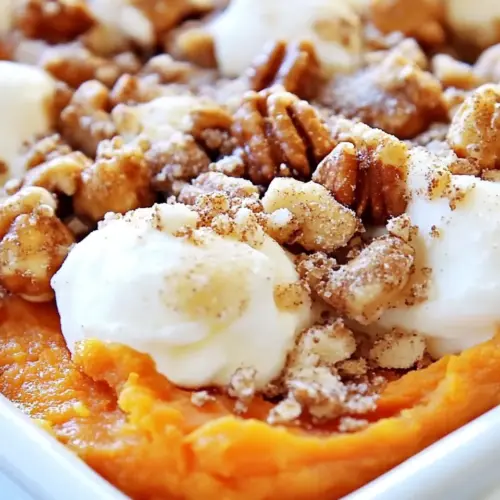
Sweet Potato Casserole with Praline Marshmallow Topping
Sweet Potato Casserole with Praline Marshmallow Topping is a creamy, slightly sweet casserole crowned with a crispy praline crumb and toasted mini marshmallows. The texture contrast and warm, buttery flavors make it an easy crowd pleaser for holidays or family dinners. Make it ahead for stress free entertaining and watch it disappear.
Equipment
- Pot
- Casserole Dish
- Mixing Bowl
- Fork
- Oven
Ingredients
- 2 lbs sweet potatoes Provide natural sweetness and creamy texture when mashed, forming the base of the casserole and supplying moisture and body when combined with eggs and butter. Roast or boil until tender, then mash thoroughly to ensure a smooth, cohesive filling that bakes evenly. Contribute vitamins and color, enhancing the dish’s visual appeal and flavor depth.
- 2 large eggs well beaten Bind the mashed sweet potatoes and other wet ingredients, helping the casserole set during baking and creating a richer, custard-like interior. Whisk until fully combined so they incorporate air and stabilize the mixture, improving texture and structure. Add protein and mouthfeel while supporting browning at the surface.
- 2 tablespoons butter Enrich the filling with a silky mouthfeel and subtle richness that rounds out the sweet potatoes' flavor while aiding smooth consistency. Soften before mixing so it blends uniformly into the mash, contributing to oven browning and a tender crumb. Offer a mild savory balance to sweet components.
- 1/2 cup packed brown sugar Sweeten and deepen flavor with molasses notes that complement the sweet potatoes and balance the savory elements. Pack firmly to measure accurately and incorporate into the wet mixture to dissolve and infuse flavor. Also contributes to caramelization on the casserole’s surface during baking.
- 1/2 teaspoons salt Enhance overall flavor and balance sweetness by bringing out natural tastes and reducing blandness, while helping to season the dish. Dissolve evenly into the potato mixture to ensure uniform seasoning throughout the casserole. Also helps control sweetness perception so the topping and filling harmonize.
- 1 teaspoon pure vanilla extract Impart aromatic warmth and complex sweetness that heightens the overall flavor profile, linking the sweet potatoes and praline topping. Add at the end of mixing to preserve volatile flavors and ensure a bright vanilla note throughout the filling. Works with sugar to create a balanced, rounded taste.
- 1/2 cup packed brown sugar Provide additional sweetness for the streusel-like praline layer or to adjust the filling’s sugar level, contributing to caramel-like flavor when baked. Pack firmly so measurement is consistent, and mix into either the filling or topping per recipe instructions to achieve desired sweetness. Enhances browning and texture of the topping.
- 3 tablespoons all-purpose flour Create structure and slight thickening in the praline topping or filling, absorbing some moisture and helping achieve a crumbly texture for the nut mixture. Sift to avoid lumps and combine with sugar and butter to form coarse crumbs that toast and crisp in the oven. Also contributes mild binding without adding heaviness.
- 2 tablespoons buttermelted, cooled Melt and enrich the praline topping or filling with creamy fat, helping bind dry ingredients and facilitate browning for a glossy, nutty crust. Ensure melted butter is cooled slightly before combining to prevent melting marshmallows or altering texture. Adds richness and enhances flavor release of sugars during baking.
- 1/4 cup chopped walnuts or pecans Add crunchy texture and nutty flavor to the topping, providing contrast to the smooth sweet potato base and gooey marshmallows. Chop to an even size so pieces toast uniformly and disperse throughout the praline layer, releasing oils that enhance aroma and flavor. Offer a pleasant textural counterpoint and visual interest.
- 1 cup mini marshmallows Provide a sweet, soft, and gooey finish to the casserole top that melts and browns for classic sticky peaks and contrast with the nutty praline. Scatter evenly over the assembled dish near the end of baking so they puff and lightly caramelize without overbrowning. Create a familiar, marshmallowy appearance and playful texture.
Instructions
- Butter 2 quart casserole dish. Set aside.: The warm scent of butter softened across the dish tells you it is properly greased, preventing sticking and encouraging even browning around the edges. Use full coverage on the base and sides so the finished casserole slips out easily if you want to serve it on a platter. A common mistake is skimping on the greasing which can make edges cling, making serving messy. If your butter is too cold it will not coat smoothly, so soften it slightly before spreading.
- Peel and dice sweet potatoes. Cook in a pot with water until soft.: As the sweet potatoes simmer, the kitchen fills with an earthy, sweet aroma and the water will steam gently. Cook until a fork slides through the cubes without resistance, which ensures they mash creamy rather than grainy. Overcooking can make them waterlogged, which waters down flavor; undercooking leads to lumps. To avoid either, keep a steady simmer and check in at ten minute intervals.
- Preheat oven to 350 degrees F.: The dry, warm air inside a properly heated oven guarantees the topping crisps while the filling sets. You should hear no popping or dramatic sounds, just a faint hum and eventual steady heat. Placing a rack in the center ensures even browning of the praline and gentle toasting of the mini marshmallows later. A common slip is not preheating, which lengthens bake time and can lead to uneven texture.
- Once potatoes are cooked, drain and mash. Add butter and mix until melted.: Draining well removes excess water, and when you mash the sweet potatoes you should notice a smooth, slightly glossy texture as the starches release. Stir in the warm butter until it melts into the mash, creating a richer mouthfeel and carrying flavors evenly. If you skip draining or mash while still wet, the filling can become soupy. Use a potato masher or ricer for the desired consistency; a ricer yields the silkiest result.
- In a small mixing bowl, whisk together eggs, brown sugar, vanilla and salt. Add to mashed sweet potatoes and mix well. Spread potato mixture in prepared casserole dish. Set aside.: Whisking by hand blends the eggs with brown sugar and vanilla into a smooth, fragrant custard that permeates the mashed potatoes . The mixture should smell slightly sweet with warm vanilla top notes, and when folded into the mash it should feel cohesive and slightly glossy. Spread it evenly in the dish so it bakes uniformly; thin spots will dry out. A common error is under-mixing, leaving streaks of egg; whisk until the sugar mostly dissolves for the best texture.
- In another mixing bowl, mix together sugar, flour, salt and nuts. Add melted butter and stir with a fork, until it forms crumbly dough.: As you stir the brown sugar , all purpose flour , salt, and chopped walnuts or pecans with melted butter , you will notice the mixture breaking into small clusters that glisten slightly from the fat. The nutty aroma grows as the butter coats the sugar, and the crumb should hold together loosely when pressed between fingers. If it is too dry add a touch more melted butter , if too wet sprinkle a pinch more flour. Overmixing will create a paste, so stop when crumbs form.
- Sprinkle dough in desired pattern over the mashed potatoes.: The act of scattering the praline crumbs releases a sweet, toasty scent and creates immediate contrast against the smooth orange of the mashed potatoes . Aim for even coverage so every serving gets some crunch, and press down lightly in places to anchor the crumbs. If you heap the topping it can insulate the filling and slow baking, so keep it fairly uniform. Avoid disturbing the filling surface so the topping stays atop and toasts properly.
- Bake casserole for 25 minutes. Add mini marshmallows. Place dish back in the oven and bake until the marshmallows are toasted, about 3 to 5 minutes.: During the initial bake you will notice edges bubbling faintly and the praline beginning to color, emitting a warm, caramel aroma. After adding the mini marshmallows , they will puff and then brown quickly; watch closely so they turn golden rather than black. The marshmallows should be soft and lightly toasted, with a slightly blistered surface. A common mistake is leaving them in too long; remove as soon as they reach a deep gold for best texture. If your oven runs hot, lower the rack to prevent burning.
- Cool before serving.: As the casserole cools, the filling firms slightly and the flavors knit together, producing a more cohesive mouthfeel and easier slices. You will lose some of the steam, revealing the final aroma of toasted nuts and vanilla. Serving too hot can make the filling runny, and plating may be messy. Allow at least ten minutes to let everything settle so the texture is ideal for serving.
Notes
- Swap nuts for a different crunch, try chopped pecans if you used walnuts or vice versa to change the nutty profile without altering the method.
- Adjust sweetness, reduce one of the brown sugar portions slightly for a less sweet casserole while keeping the toasted marshmallow charm.
- Make it ahead, assemble the casserole fully but hold off on adding mini marshmallows until reheating to preserve their toasted appearance.
- Use a ricer, press the cooked sweet potatoes through a ricer for the creamiest possible base before adding butter and eggs.
- Toast nuts first, warm the chopped walnuts or pecans in a dry skillet to amplify their fragrance before mixing into the praline.