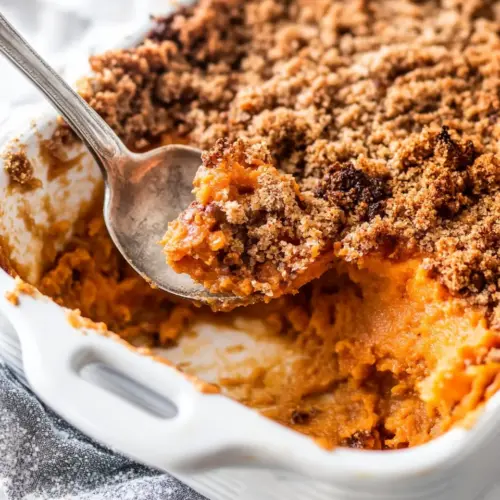
Sweet Potato Casserole
Sweet Potato Casserole is a creamy, slightly sweet side with a crunchy pecan streusel, perfect for holiday tables and easy weeknight dinners. The silky mashed sweet potatoes, warm spices, and caramelized topping create a comforting texture contrast that tastes indulgent yet familiar. Make it for gatherings or cozy suppers, it always earns second helpings.
Equipment
- Hand Mixer
- Potato Masher
Ingredients
- 4 -5 large sweet potatoes (orange yams) Peel and roast or boil until tender, then mash to provide the creamy, naturally sweet base for the casserole; orange yams add moisture and body while contributing rich beta-carotene and natural sugars that enhance overall flavor. Combine with eggs and dairy to create a smooth, custard-like filling that holds shape when baked. Adjust texture by mashing finely or leaving slightly chunky depending on desired mouthfeel.
- 3 large eggs Whisk into the sweet potato mixture to bind ingredients and help set the filling as it bakes; eggs add structure and a light, custardy texture while contributing protein. Beat thoroughly to incorporate air for a silkier consistency, and temper with warm sweet potatoes if needed to avoid scrambling.
- 1/2 cup evaporated milk, or substitute cream, or half and half Add to thin and enrich the sweet potato mixture, contributing creaminess and a subtle milky sweetness; evaporated milk concentrates dairy flavor while half and half or cream provide a richer, fatter alternative. Choose based on desired richness and caloric content to balance between a lighter custard and a decadent, silky filling.
- 1 teaspoon vanilla extract Infuse a sweet, aromatic nuance when folded into the mixture; vanilla extract enhances perceived sweetness and balances the savory notes of butter and salt. Use pure vanilla when possible for depth, but adjust quantity to taste to avoid overpowering the delicate sweet potato flavors.
- 1/2 cup granulated sugar Sweeten and help balance the natural flavors of the potatoes and dairy, contributing granulated sugar's clean sucrose profile to the filling. Dissolve fully into the warm mixture to ensure even sweetness and to support proper caramelization at the edges during baking.
- 1/2 teaspoon salt Enhance overall flavor by drawing out and balancing sweetness, while also accentuating savory undertones and controlling the perception of richness. Dissolve salt uniformly to prevent pockets of over-salinity and to improve the depth and complexity of the casserole.
- 1/4 cup butter, melted Melt and incorporate into the sweet potato filling to add richness, smooth mouthfeel, and a buttery flavor that complements the sweetness; melted butter also contributes fat necessary for a tender custard. Mix thoroughly so the fat disperses evenly, preventing greasy spots and ensuring an even bake.
- 3 tablespoons butter Cut into the topping mixture or melt for brushing to create a crisp, golden streusel; additional butter provides the necessary fat to bind flour and brown sugar into crunchy clusters. Chill briefly if making a coarse crumble to help retain texture when baking, and distribute evenly over the filling.
- 1/4 cup all-purpose flour Bind with butter and sugar to form the streusel topping, creating tender, slightly crisp crumbs that contrast the creamy filling; all-purpose flour supplies structure and absorbs moisture. Combine gently to avoid overworking, which can toughen crumbs, and sift if lumpy to ensure even texture.
- 1 cup light brown sugar Sweeten and caramelize the topping, contributing deep, molasses-like notes and chewiness when baked; light brown sugar also adds moisture that helps form cohesive streusel clusters. Pack lightly when measuring for consistent sweetness and to maintain the proper crumb structure in the topping.
- 1 cup pecans, chopped Provide a crunchy, nutty finish when chopped and sprinkled over the streusel, adding textural contrast and toasty, buttery flavor; pecans also contribute visual appeal and nutrients like healthy fats and fiber. Toast briefly for enhanced aroma before mixing into the topping to maximize flavor.
Instructions
- Cook Potatoes: Place the sweet potatoes in a large pot. Add enough water to the pot to cover the potatoes a little more than halfway. (You will need at least 3-4 inches of water but the water will not completely cover the potatoes!) Bring the water to a boil and then turn the heat to a medium simmer. Cover and simmer until they feel tender when poked with a fork. It may take 20-40 minutes to cook your sweet potatoes depending on the size of the potatoes, but you don't want them to be mushy.: You will notice the kitchen filling with a faint, earthy steam as the sweet potatoes simmer in the pot, and when you pierce them with a fork they should give easily but not collapse, which signals they have softened enough to mash into a creamy base. This gentle simmer extracts starches without turning them gluey, and keeping the water level to cover the potatoes about halfway rather than fully submerged prevents waterlogged flesh. A common mistake is boiling too rapidly, which can cause the potatoes to burst and absorb excess water, diluting flavor; maintain a medium simmer and check for tenderness every ten minutes to avoid overcooking.
- Peel Potatoes: Drain water and place sweet potatoes on a plate or cutting board to cool down. Once they are cool enough to handle, peel and discard the skin from the potatoes and place potatoes in a large mixing bowl.: After draining, as the potatoes cool their surface becomes easier to handle and the skins slip away with little resistance, revealing vibrant orange flesh that smells faintly sweet and nutty. Work while they are warm but not scalding, since slightly warm potatoes mash more smoothly than ones that are cold. Use a paring knife or your fingers to lift skins; avoid leaving long cooling gaps because temperature affects how the mash binds later. A frequent error is trying to peel while the potatoes are too hot, leading to burns or rushed peeling that leaves skin bits behind.
- Mix: Add eggs, evaporated milk, vanilla, sugar, salt, and butter and mash everything together until smooth. I start with a potato masher, and then use an electric mixer on low speed, for about 45 seconds, to get the mixture smooth.: When you add the eggs , evaporated milk, vanilla , sugar, salt, and melted butter , the bowl will begin to give off a rich, cozy aroma as you mash, and the texture moves from coarse to velvety as you switch from a hand masher to a hand-held electric mixer on low. This dual technique ensures small lumps are smoothed without overworking the mixture, preserving a lightness that makes the casserole feel airy rather than dense. I recommend pulsing the mixer only briefly to avoid incorporating too much air, which can create unwanted cracks in the final bake. One pitfall is adding all liquid at once; instead, stir gently and stop when you reach a satiny consistency.
- Pour mixture into a lightly greased casserole dish. Anything around the size of an 8×11'', 9×13'' or even a deep dish 10'' pie pan will work.: As you spread the mash into your chosen pan, notice how the surface levels out and holds a slight sheen from the butter, which indicates proper moisture. Press gently to create an even top so the topping will sit uniformly, and leave a little room at the edges for bubbling without overflow. The size of the dish affects baking time; a deeper pan may need extra minutes. Avoid packing the filling too tightly, since compacting can yield a heavier bite instead of a tender, spoonable texture.
- Make Topping: Add flour, brown sugar and pecans to a mixing bowl. Add butter and cut in with a fork or pastry blender until well combined. Sprinkle topping over sweet potato mixture.: When you combine flour, light brown sugar, and chopped pecans then cut in the butter, the mixture should transform into coarse, mealy crumbs that smell of toasted sugar and nuts even before baking, which is a good indicator it will brown nicely. The tactile process of rubbing the butter in encourages pockets of fat that toast into crisp clusters. If the crumbs look too wet, chill them briefly; if too dry, add a tiny bit of cold butter. A common misstep is overworking the mixture until it becomes paste like, which prevents the crunchy texture you want.
- Bake at 350 degrees F for 35-40 minutes.: During baking the kitchen fills with a warm, caramel scent and you will see the topping turn golden and the edges of the filling begin to bubble, signals that the casserole is reaching temperate readiness. The timing allows the filling to set gently while the topping crisps without burning; rotate the dish once if your oven has hot spots to promote even browning. If the center still jiggles excessively near the minimum time, give it another five minutes, but avoid overbaking which can dry the filling. A typical error is turning up the heat to hurry browning, which risks burning the streusel before the interior heats through.
- Store leftovers in the refrigerator for 4-5 days.: Once cooled to near room temperature, cover the casserole tightly so the topping does not absorb fridge moisture, and refrigerate to preserve freshness; when reheating, warm slowly in a 325 to 350 degree F oven to revive the topping's crispness and bring the filling back to serving temperature. The residual aroma of toasted pecans will return as it heats. Avoid freezing after baking if you want to retain the topping crunch; instead, freeze unbaked for best texture retention and thaw thoroughly before baking. A common oversight is leaving it uncovered in the fridge, which leads to a soggy topping and muted flavors.
Notes
- Make Ahead Prepare the filling up to two days in advance and store it in the baking dish covered; prepare the topping separately and keep it chilled so you can assemble and bake with minimal fuss on the day of serving.
- Freeze Unbaked If you want to preserve this for longer, assemble the casserole without baking, cover tightly with two layers of foil, and freeze for up to three months; thaw overnight in the refrigerator and bake until warmed through and the topping is golden.
- Nut Allergy Swap For guests with nut allergies, omit the pecans and fold in about a half cup of rolled oats for texture, or simply increase the brown sugar and butter to create a crisp streusel without nuts.
- Texture Control If you prefer a silkier filling, use an electric mixer briefly at low speed after initial mashing; for a chunkier, rustic feel, stick to the hand masher and stop when you still see small pieces of sweet potato.
- Topping Variation Split the casserole and top half with the pecan streusel and half with miniature marshmallows for a classic contrast, adding the marshmallows in the last five to ten minutes of baking so they puff and brown without overmelting.