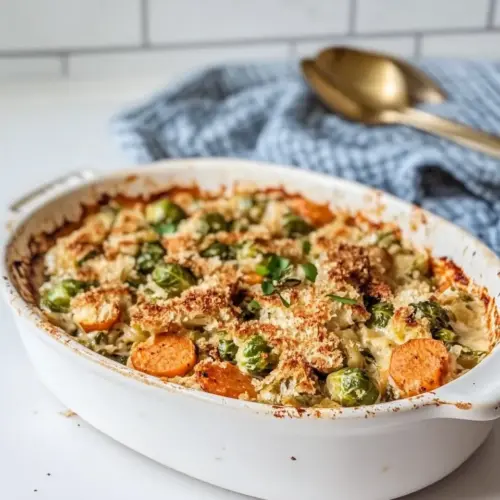
Sweet Potato Brussels Sprouts Gratin
Sweet Potato Brussels Sprouts Gratin is a creamy yet light vegetable bake with a crispy nut and panko topping. The sauce made from oat milk, vegetable broth, dijon mustard and nutritional yeast lends savory depth while the sweet potato adds gentle sweetness. Perfect for an easy weeknight dinner or a holiday side, it offers bold texture and comforting flavors that make it worth making again.
Equipment
- Mixing Bowl
- Baking Dish
- Whisk
Ingredients
- 1 lb brussels sprouts, thinly sliced Provide a firm, slightly bitter foundation that contrasts sweet potato richness; thin slicing allows even cooking and caramelization when baked in the gratin.
- 1 large sweet potato, thinly sliced (peeling optional) Offer natural sweetness and creamy texture when thinly sliced; optional peeling preserves nutrients and adds rustic visual appeal to layered dishes.
- 1/2 cup Califia Farms unsweetened oat milk Contribute a smooth, dairy-free creaminess and mellow oat flavor that helps bind the sauce while keeping the gratin vegan-friendly.
- 1 cup vegetable broth Introduce savory depth and body to the sauce while providing liquid for even baking and helping to meld flavors together.
- 1 1/2 tbsp dijon mustard Lend a tangy, sharp note that brightens the dish and balances the sweetness of the potatoes and maple syrup in the sauce.
- 2 tbsp nutritional yeast Impart a subtle cheesy, nutty umami that enriches the sauce and enhances savory complexity without using dairy.
- 1 tsp dark maple syrup Add a touch of sweetness and a warm, maple flavor that complements the sweet potatoes and balances the mustard.
- 1 tsp sea salt Provide essential seasoning that enhances overall flavor; sprinkling into the sauce ensures even salting throughout the gratin.
- 1/2 tsp freshly ground black pepper Offer mild heat and aromatic depth when freshly ground; a small amount sharpens other flavors without overpowering.
- 1 cup panko bread crumbs or homemade bread crumbs Create a light, crisp topping that delivers crunch and golden color after baking, contrasting the creamy layers beneath.
- 3/4 cup finely chopped walnuts or pecans Supply a buttery crunch and toasted flavor when finely chopped and mixed into the topping, adding texture and richness.
- 2 cloves garlic, minced Bring pungent, aromatic depth when minced; garlic infuses the sauce and topping with savory complexity during cooking.
- 2 tbsp extra virgin olive oil Add fruity, savory richness and help brown the topping; drizzling or tossing with crumbs promotes golden crispiness.
- 1 tsp sea salt Provide additional seasoning for layers or topping; a second measure of salt ensures balanced flavor throughout the dish.
Instructions
- Preheat oven to 350°.: When you step into the kitchen you should already smell a touch of warm air as the oven comes up to heat, which primes everything that follows. A consistent oven temperature ensures even cooking throughout the gratin, so it is worth waiting until the oven reaches a stable 350 degrees Fahrenheit before sliding the dish in. You may notice a faint hum from the oven and a gentle warmth radiating from the door when it is ready, and that steady heat encourages the sweet potato to soften while the topping crisps. One common mistake is placing the dish in too early, which can extend cooking time and leave pockets of undercooked vegetable.
- Place the sliced brussels sprouts and sweet potato in a baking dish.: The visual should be tidy layers or a well combined pile depending on your preference, with thin, uniform slices arranged so heat touches each piece. As you arrange the brussels sprouts and sweet potato , notice the colors blending, the pale orange against deep green, and aim for pieces of similar thickness for predictable cooking. Even contact with the dish helps the vegetables release steam into the sauce rather than drying out, and the edges that touch the dish will develop slightly softer, almost caramelized notes. A typical error here is irregular slicing, which leads to uneven doneness, so take a moment to make consistent cuts.
- In a mixing bowl, combine the oat milk, broth, mustard, nutritional yeast, maple syrup, salt and pepper.: As you whisk these together you will witness the sauce take on a pale, slightly glossy texture as the nutritional yeast hydrates and the dijon mustard disperses. The aroma shifts from vegetal to savory with a subtle tang, and the mixture should smell rounded and inviting. Whisk until homogenous so there are no streaks of mustard, and taste to balance salt and sweet. If the sauce separates or feels grainy, keep whisking and let it rest for a minute to hydrate; failing to fully combine will create uneven pockets of flavor in the finished gratin.
- Stir well, then pour over the vegetables.: When you pour the sauce over the layered vegetables you should see it pool and slowly sink between slices, coating surfaces without drowning them. That glossy coating is what will steam and gently braise the brussels sprouts and sweet potato in the oven, so aim for even distribution. Use a spatula to nudge the liquid into crevices and make sure nothing is left dry on top. If you pour carelessly, some areas may remain insufficiently moistened and not soften properly during baking.
- In another bowl, combine the bread crumbs, nuts, garlic, olive oil and salt. Stir well.: As you toss the crumbs with the chopped walnuts or pecans , minced garlic , and extra virgin olive oil , the mixture will take on a fragrant, toasty aroma even before hitting the oven. The oil helps the crumbs and nuts brown and bind so the topping forms a cohesive crust. Mix until the crumbs are evenly moistened and the garlic is evenly distributed, because uneven mixing can create salty or raw garlic pockets. A frequent oversight is under mixing, which prevents even browning in the final bake.
- Pour the mixture over the veggies then spread evenly.: As you spread the crumb and nut mixture across the top, press gently so it adheres but do not compact it into a dense layer; the goal is a light, crunchy cap. The visual cue is an even, textured surface that glints from the olive oil, and you should be able to see small bits of nut and breadcrumb dotted across the top. An even layer browns uniformly and gives you consistent crunch with each serving. Pressing too hard will prevent proper airflow and can yield a soggy top instead of a crisp one.
- Bake for 40 minutes, rotating the baking dish halfway through.: During baking the kitchen should fill with a toasty, slightly sweet aroma as the panko bread crumbs and nuts brown and the vegetables soften. Listen for a faint bubbling at the edges and watch for the topping to turn golden brown, which signals that the crust is crisp and the interior is steaming. Rotating the dish halfway ensures even color and heat exposure; ovens often have hot spots, and this simple rotation prevents one side from overbrowning while the other side remains pale. A typical pitfall is underbaking, which leaves the center undercooked, or overbaking, which dries out the vegetables, so rely on visual cues and an even golden top to determine doneness.
Notes
- Pick your nuts: Swap walnuts for pecans depending on whether you want a more buttery or more pine like finish, and toast them first to intensify aroma.
- Adjust the sweetness: If you prefer less sweet notes, reduce the dark maple syrup to half a teaspoon or omit it; the natural sweetness of the sweet potato will still come through.
- Make-ahead ease: Assemble the dish up to the point of adding the topping, cover, and refrigerate; add the crumb mixture and bake when ready, adding a few extra minutes if cold from the fridge.
- Control the crust: For an extra golden top, broil for one to two minutes at the end, watching closely to avoid burning, which can happen quickly due to the nuts and panko.
- Oil choice matters: Use a fruity extra virgin olive oil for a brighter finish, or a neutral oil if you want the nuts and vegetables to be the dominant flavour.
- Swap milk mindfully: If you do not have oat milk, another unsweetened plant milk will work, but expect subtle differences in creaminess and flavor integration.
- Watch your salt: Because both the vegetable broth and added sea salt contribute sodium, taste the sauce before pouring to avoid over salting.