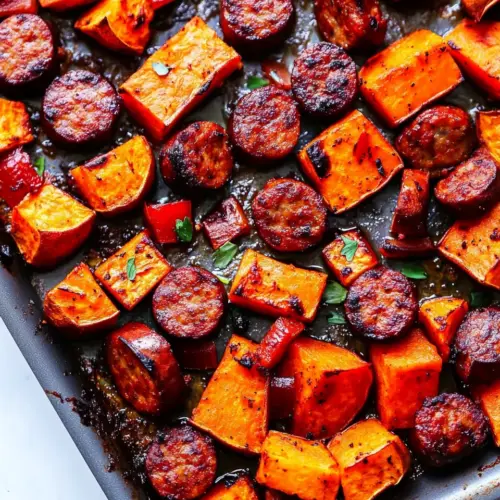
Sweet Potato And Sausage
Sweet Potato And Sausage is a cozy, roasted one pan meal featuring caramelized sweet potato, smoky sausage, and a bright creamy sauce. This easy weeknight dinner delivers crispy edges, tender centers, and bold savory notes with minimal cleanup, making it perfect for busy evenings or casual gatherings. Try it for a flavorful, fuss free meal that comes together in under an hour.
Equipment
- Sheet pan (15" x 10") 15 x 21-inch
- Food Processor
Ingredients
- 2 cups thinly sliced yellow onion Sliced thinly to soften and sweeten when caramelized, adding a mild pungent base flavor and texture contrast to the dish. Use even, thin slices so they cook through alongside the sweet potatoes and pick up seasoning evenly. Contributes natural sugars that balance savory and spicy elements.
- 3 cups cubed sweet potato Cubed to provide hearty body, creamy texture when roasted or sautéed, and a naturally sweet backbone to complement sausage. Cook until tender but not mushy so cubes hold shape and absorb seasonings and oil. Offers color, nutrients, and a satisfying mouthfeel in every bite.
- 1 large red pepper Deseeded and chopped to add fresh, crisp sweetness and vibrant color that brightens the overall dish. Cook briefly to soften while retaining slight crunch, which contrasts with softer sweet potato and sausage. Enhances visual appeal and introduces a mild pepper flavor.
- 3 tablespoons olive oil Used to coat and help distribute spices, promote even cooking, and provide a silky mouthfeel when sautéing vegetables and sausage. Warm the oil before adding aromatics for better flavor release, and use the specified amount to avoid greasiness. Delivers healthy fats and aids browning.
- 1 teaspoon salt Added to season and enhance overall flavor, balancing sweetness and fat while drawing out moisture from vegetables. Sprinkle and taste as you cook to avoid over-salting, especially if using salty sausage or cheese. Provides fundamental seasoning that elevates other ingredients.
- 3/4 teaspoon pepper Ground to introduce a subtle heat and sharpened savory edge, helping to balance the sweetness of the potatoes and richness of the sausage. Add with other spices early in cooking to bloom its aroma in the hot oil. Adjust quantity based on desired spiciness.
- 1/2 teaspoon chili powder Sprinkled for a mild smoky heat that complements paprika and sausage, tying together southwestern or Tex-Mex flavor notes. Combine with cumin and paprika to create a cohesive spice profile that seasons the vegetables thoroughly. Adds depth without overwhelming other flavors.
- 1/2 teaspoon ground cumin Used to add warm, earthy undertones that enhance the savory profile and pair well with smoked sausage and chili powder. Toast briefly in oil to maximize aroma before adding solids, which helps infuse the dish with complexity. Works as a subtle background spice.
- 1 teaspoon paprika Incorporated to deliver smoky, sweet notes and deepen color; pairs well with both the sausage and sweet potato. Add with other dry seasonings to ensure even coating and to build layers of flavor during cooking. Can be adjusted for intensity depending on paprika type.
- 1 teaspoon garlic powder Sprinkled to give a concentrated garlic flavor without fresh pieces, helping season evenly and sustain flavor through cooking. Add with other dry spices so it rehydrates and melds into the vegetables and oil. Convenient for consistent garlicky notes throughout the dish.
- 12 to 14 ounces smoked sausage Sliced or chopped to provide a smoky, savory meat component and salty richness that complements sweet potatoes and spices. Brown the sausage to render fat and achieve caramelized edges, which flavor the vegetables and pan sauce. Use the specified range for portion preference.
- Serving suggestions Listed to suggest accompaniments or serving options that pair well rather than a discrete ingredient, guiding presentation and finishing touches for the prepared dish. Offer ideas such as side salads, crusty bread, or rice to complete the meal and match flavors. Helps tailor the plate to diners' preferences.
- 1/2 cup packed fresh cilantro Packed and chopped to add a bright, herbaceous finish that contrasts richness and enhances freshness in the final dish. Stir in at the end of cooking or sprinkle just before serving to preserve vibrant flavor and color. Cilantro also contributes citrus-like notes that lift the recipe.
- 1/3 cup thinly sliced green onions Sliced thin to provide mild oniony crunch and a fresh, sharp garnish that brightens flavors and adds textural contrast. Scatter over the finished dish to maintain crispness and vivid green color, contributing subtle allium aroma without overpowering. Complements cilantro and lemon-based dressings.
- 1/2 cup mayo Blended into a sauce or used as a creamy binder to mellow spices, add richness, and create a smooth finish for serving alongside or on top of the cooked mixture. Combine with lemon juice and herbs for a tangy, silky accompaniment that cools spicy heat. Use in moderation to balance calories and flavor.
- 2 tablespoons lemon juice Squeezed to introduce bright acidity that cuts through fatty sausage and creamy mayo, balancing richness and enhancing overall flavor. Add gradually and taste to achieve the desired zing without overwhelming other seasonings. Fresh lemon juice also helps preserve color and freshness.
- 1/4 cup freshly grated Parmesan cheese Grated finely to contribute salty umami, nutty complexity, and a savory finish that ties together roasted vegetables and sausage. Sprinkle near the end of cooking or over plated servings so the cheese melts lightly and melds with other components. Provides depth and a slightly granular texture.
Instructions
- Preheat oven to 400°F (200°C). Combine cubed sweet potatoes, onions, and bell pepper on a very large (15×21-inch) sheet pan (or two smaller pans). Drizzle with 2 tablespoons oil and sprinkle with all seasonings. Toss well with hands. Spread out evenly so veggies have plenty of room to roast (they’ll steam and take longer if overlapping). Roast 20 minutes.: You will notice the kitchen warming slightly and the oven ticking down to temperature, which ensures the pan hits a consistent, hot surface for proper roasting. A fully preheated oven promotes immediate sizzling when the vegetables enter, encouraging browning rather than steaming. If the oven is not hot enough the vegetables will release moisture and become soft instead of crisping, so wait until the display reads the correct temperature. A common mistake is sliding the pan in too early, which delays caramelization and produces a paler, less flavorful result.
- Remove tray; add sliced sausage and remaining 1 tablespoon oil; toss well and space everything out again. Roast another 15–20 minutes or until sweet potatoes are fork tender. Taste and adjust, adding more seasoning as needed.: As you spread out the chopped sweet potato , yellow onion , and red pepper , you should hear a faint scrape of metal against vegetables, and you will be able to arrange them in a single layer with space around each piece. Leaving room allows hot air to circulate so edges crisp and sugars caramelize. If pieces overlap they trap steam and cook unevenly, becoming soggy. A troubleshooting tip: if your pan seems crowded, move about half to a second pan so everything roasts properly.
- Meanwhile, combine all sauce ingredients in a small food processor. Pulse until the mixture is smooth and creamy; taste and adjust flavors. Refrigerate until ready to use.: Pouring the olive oil over the veggies helps the spices cling and promotes browning, releasing a subtle, savory aroma as the oil warms. Massage the oil and spices onto the vegetables with your hands for even coating, which results in uniform color and flavor. Skimping on oil can lead to dry, dull roasted vegetables, while too much will lead to an oily finish, so use the measured amount for balance.
- Divide the sausage mixture evenly among four plates atop a bed of rice or quinoa. Drizzle sauce (to taste) over each plate (you may have extra) or top with freshly grated Parmesan cheese. If using, top each plate with diced avocado. Enjoy!: Tossing by hand distributes the oil and spice mix thoroughly, and you will feel the texture change as the pieces become evenly coated. This tactile step ensures every cube and slice has seasoning in the nooks and crevices, leading to consistent flavor in each bite. Avoid overhandling which can break delicate pieces; a few gentle turns are enough. One mistake is tossing on a narrow pan, which makes even distribution harder, so use the large pan recommended.
- Spread out evenly so veggies have plenty of room to roast theyll steam and take longer if overlapping: When you space the vegetables properly you will see gaps between pieces and be able to eyeball uniformity, which promotes the sizzle and blistering that we want. The visual cue to look for is light bronzing beginning around the edges after initial roasting. Overlapping causes steaming and a longer cook time, so if some pieces look crowded move them. If the pan becomes crowded mid roast, use a second pan to finish for the best results.
- Roast 20 minutes: During this initial roast you should smell the sweet, toasty aroma of the sweet potato and notice the edges beginning to color, with a gentle sizzling sound as moisture evaporates. This phase starts the caramelization process that builds depth and sweetness. Resist opening the oven frequently, as heat loss slows cooking and prevents proper browning. The common error is checking too often which extends the roast time and reduces oven efficiency.
- Remove tray add sliced sausage and remaining 1 tablespoon oil toss well and space everything out again: When you pull the pan out, you might see steam rising and notice deeper browning on some pieces, which is your cue to add the sliced sausage . The extra tablespoon of olive oil helps the newly added sausage crisp and keeps vegetables from drying. Toss gently so the sausage nests among the vegetables without crowding, creating points of contact that will caramelize and impart flavor. A mistake here is to pile the sausage in one area which prevents even browning, so distribute it evenly.
- Roast another 15 to 20 minutes or until sweet potatoes are fork tender: As the second roast proceeds, the pan will sizzle more noticeably and the sausage edges should darken slightly, releasing appetizing aromas. Watch for the moment when the sweet potato yields easily to a fork and the sausage has a little crisp on the surface, that signals doneness. If the pieces are not tender after the time window, continue roasting in five minute increments, checking texture each time. A common pitfall is overcooking which will dry the vegetables and toughen the sausage.
- Taste and adjust adding more seasoning as needed: After removing the pan from the oven, tasting is essential because roasting concentrates flavors and you may need to rebalance salt or pepper. Use a small spoonful to test the interplay of sweetness, smoke, and spices, adding a pinch of salt or a crack more pepper if it feels flat. Be cautious adding salt if your sausage is already salty, to avoid over seasoning. A common mistake is assuming seasoning is correct without tasting, which can result in a muted final dish.
- Meanwhile combine all sauce ingredients in a small food processor: While the pan finishes, the sound of the processor chopping will fill the kitchen and you will see the sauce coalesce into a smooth emulsion. The cold, creamy base and bright lemon juice meld together into a glossy sauce that cuts through the roasted richness. If you do not have a food processor, whisk vigorously by hand, though texture will differ slightly. Avoid over processing if you prefer a bit of texture in the sauce.
- Pulse until the mixture is smooth and creamy taste and adjust flavors refrigerate until ready to use: The final texture should be silky and spoonable, and tasting here is crucial to balance acidity, salt, and creaminess. Chilling the sauce briefly lets flavors meld and firms the texture so it drizzles nicely over the warm ingredients. If the sauce tastes too sharp, add a touch more mayo; if flat, brighten with more lemon juice or a pinch of salt . A frequent mistake is serving the sauce immediately without tasting, which can yield an unbalanced finish.
- Divide the sausage mixture evenly among four plates atop a bed of rice or quinoa: When plating, you will notice steam rising from the warm roasted mix and the colors of the sweet potato , red pepper , and sausage creating an inviting contrast. Serving over grains like rice or quinoa provides a neutral backdrop that soaks up juices and makes the meal more substantial. Ensure even distribution so each plate gets a balance of vegetables and protein. A plating mistake is to pile everything in one mound which can cool unevenly, so spread evenly for consistent portions.
- Drizzle sauce to taste over each plate you may have extra or top with freshly grated Parmesan cheese if using top each plate with diced avocado enjoy: The final drizzle adds creaminess and a bright counterpoint to the roasted components, and freshly grated Parmesan cheese provides a salty, umami finish that melts slightly on contact. If you have diced avocado available, it lends a rich, silky contrast. Serve immediately while warm, and remind diners to add sauce sparingly at first, then adjust to preference. A common oversight is adding too much sauce which can mask the roasted flavors, so taste as you go.
Notes
- Choose even cuts Cut the sweet potato, yellow onion, and red pepper into similar sizes so they finish at the same time and you do not end up with a mix of raw and overdone pieces.
- Preheat the oven fully Wait for the oven to reach the target temperature to ensure vegetables begin to brown immediately on the hot pan rather than slowly sweating and becoming pale.
- Use enough oil Coat all pieces lightly but thoroughly with olive oil so spices adhere and surfaces crisp; too little oil prevents browning, too much makes the pan greasy.
- Don’t overcrowd the pan Give the vegetables breathing room or they will steam; if your pan is too full, split across two pans for better results.
- Adjust seasoning after roasting Roasting concentrates flavor, taste the mixture and add a little extra salt or pepper if it feels muted rather than over seasoning beforehand.
- Add sausage later Introduce the sausage after the initial roast so it crisps but does not dry out, keeping a juicy interior and a slightly caramelized edge.