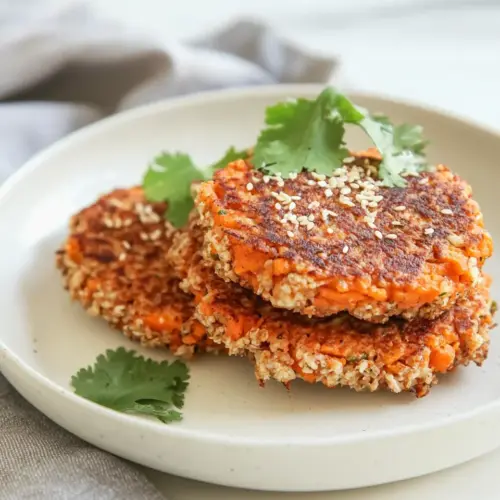
Sweet Potato and Parsnip Fritters
Sweet Potato and Parsnip Fritters are crispy edged, tender inside, and full of earthy, nutty flavor. These easy fritters pair roasted root sweetness with a crunchy sunflower seed crust and a bright avocado lime mash, making them an ideal easy weeknight dinner or cozy fall plate. They are simple to scale and a persuasive reason to cook from your pantry.
Equipment
- Large Pot
- Colander
- Food Processor
- Baking Sheet
- Parchment Paper
- Small Bowl
Ingredients
- 1 medium sweet potato peeled and sliced Adds natural sweetness and a moist, tender texture when cooked; provides body and a slightly caramelized flavor when fried into fritters. Complements root vegetable earthiness and helps bind the mixture when shredded or mashed slightly.
- 1 medium parsnip peeled and sliced Contributes an earthy, slightly sweet peppery note and firm texture that holds up well in fritters; balances the sweet potato’s sweetness. Offers structural bulk and a subtle nutty undertone when combined with other grated roots.
- 2 teaspoons stone ground mustard Imparts a tangy, pungent heat that brightens the overall flavor profile and cuts through richness. Acts as a flavor enhancer to lend depth and a slight piquancy to the batter or dipping sauce.
- 1/4 teaspoons ea salt Seasoning that enhances overall taste by providing essential savory balance and bringing out natural flavors in the vegetables. Helps to round and unify the fritter seasoning when mixed into the batter.
- 1/2 cups sunflower seeds roughly ground Provides a crunchy, nutty element and protein content while helping absorb moisture to firm up fritters; roughly ground texture adds pleasant bite. Contributes a toasty flavor and can help replace some flour for a gluten-free texture.
- 1.5 tablespoons nutritional yeast Delivers a savory, umami-rich, cheesy flavor while keeping the recipe plant-based; enhances depth and mouthfeel. Acts as a seasoning that amplifies other spices and complements the nutty sunflower seeds.
- 1/2 teaspoon chipotle chili powder Adds a smoky, warm heat that gives the fritters a subtle chili kick and complexity. Works well in small amounts to layer flavor without overpowering the other ingredients.
- 1 medium avocado peeled and pitted Provides a creamy, rich element that can be mashed into a sauce or used as a topping to add healthy fats and smooth texture. Balances heat and acidity while contributing a mild, buttery flavor.
- 2 tablespoons fresh lime juice Introduces bright acidity that lifts and balances the dish, cutting through richness and enhancing other flavors. Useful in dressings or a finishing squeeze to refresh the fritters before serving.
- 1/2 teaspoon chipotle chili powder Adds a repeated smoky, warm heat to further emphasize chipotle flavor and build consistent spice levels throughout the dish. Helps maintain balanced spice if the first addition was mixed into a different component.
- 1/4 teaspoons ea salt Supplies a second measure of savory balance to ensure seasoning is even across components and finished dishes. Useful for adjusting taste at mixing or just before cooking to achieve the desired salt level.
Instructions
- Add the sweet potato and parsnip to a large pot of boiling water. Lower the heat, cover, and cook until tender when poked with a fork, 10 to 12 minutes.: The kitchen will fill with a roasted root scent as the water returns to a gentle boil, and the steam will carry a comforting, earthy perfume. This method softens both sweet potato and parsnip evenly, which is important so the fritter texture is uniform, not lumpy. Listen for a steady simmer and watch for tender flesh when pierced with a fork, which indicates readiness. A common pitfall is boiling too vigorously, which can break down pieces unevenly and create excess water in the mix. If you overcook slightly, drain thoroughly and let the vegetables sit to shed moisture before continuing.
- Drain the parsnip and sweet potato in a colander and allow them to cool.: As you pour the pot into a colander, you will notice the steam fade and the aroma settle into a sweeter, caramel like note. Cooling is crucial because handling hot vegetables can create a mushy mixture and risk burns. Let them rest until they are warm but manageable, which helps them retain enough structure for pulsing. A mistake to avoid is skipping the cool down and processing while piping hot, which often results in an overly wet batter that will not hold shape.
- Add the fritter ingredients to a food processor and pulse until the mixture comes together, but still has texture.: When you pulse the cooled roots with the mustard, a little salt , and other fritter ingredients, you want the mixture to bind yet remain chunky. You will hear the processor change pitch as it compresses the vegetables, and you should see flecks of seed and root that promise interesting mouthfeel. This technique matters because over processing creates a glue like paste, while under processing leaves large unbound pieces that fall apart. If you find the mix too loose, pulse in brief bursts rather than extended blending, and avoid adding liquids which will dilute the structure.
- Preheat the oven to 400 degrees F and line a baking sheet with parchment paper.: Preheating lets the baking sheet and oven reach an even temperature so the fritters begin to set immediately, promoting crisp edges. As the oven approaches temperature you will sense a dry, warming scent that primes the crust to toast. Using parchment prevents sticking and preserves the fragile crust. A frequent error is placing the sheet in a cold oven which yields limp sides rather than a satisfying crunch.
- Stir together the crust ingredients in a small bowl. Spread this mixture on a small plate for dipping the fritters.: Combining the roughly ground sunflower seeds , nutritional yeast , and spice creates a textured dredge that clings to the fritter exterior. Rubbing these components together with your fingers releases oils and enhances aroma, making the crust more flavorful. This step matters because an even coating ensures each fritter has consistent crunch. Avoid making the crust too fine; if it is overly powdery it will not form a satisfying shell during baking.
- Take about 2 to 3 tablespoons of the sweet potato and parsnip mixture and form it into a patty. Dip the patty into the sunflower seed crust mixture, and press it into the patty. Place patty on the prepared baking sheet, and repeat for remaining fritter and crust mixture. See recipe note: When you shape each patty, the mixture should feel cohesive but slightly yielding, with the surface showing flecks of root and seed. Press gently to compact without compressing into a dense cake. Dipping the patty into the crust and pressing helps the seeds adhere and creates a pleasing contrast of textures. Be mindful that the fritters can crumble if handled roughly, particularly during flipping; a useful trick is to press the edges firmly so they hold. Avoid forming patties that are too thick, which can lead to undercooked centers.
- Bake the fritters in the preheated oven for 25 minutes, carefully flipping half-way through.: As they bake you will hear a faint crackling and see the edges turn a warm golden brown, signaling that the crust is crisping. Flipping halfway promotes even browning and prevents one side from over crisping while the other remains soft. This step is essential for texture balance because it ensures both surfaces get direct oven heat. A common mistake is attempting to flip too early when the crust has not set; allow a few minutes for the bottom to firm before turning to avoid breakage.
- Add the ingredients for the guac to a small bowl and mash together until desired consistency is achieved (I like leaving mine chunky). Taste for flavor and add more sea salt if desired.: Mashing the avocado with lime juice , salt, and any remaining spice releases a bright citrus aroma and creamy texture that complements the fritters. I like leaving a bit of chunk for contrast, so stop mashing when you have pleasant variance in texture. The acidity from the lime keeps the avocado vibrant, enhancing overall flavor. Over mixing makes the guacamole too uniform, so aim for a mix of smooth and chunky for best results.
- Serve sweet potato and parsnip fritters with the guacamole and a side salad or slaw.: Arrange the warm fritters alongside a spoonful of the creamy avocado mash so each bite includes crisp, tender, and cool elements. The combination of textures and temperatures is what makes the dish memorable, and a fresh salad or slaw adds a crisp, acidic counterpoint. Plate attractively so the fritters retain their crunch; avoid stacking them while hot which can steam and soften the coating. If a fritter seems fragile, serve it on its own plate to preserve presentation and texture.
Notes
- Use a binder if needed I sometimes whisk an egg into the root mixture if I need extra hold. This improves structural integrity during flipping and serving. If you avoid eggs, pressing the patties firmly and chilling them briefly helps.
- Adjust chipotle heat If you prefer milder flavor, reduce one or both mentions of chipotle chili powder by half. Taste the mixture and the guacamole as you go so the spice balances with the lime.
- Make the crust crunchier For extra crunch, toast the sunflower seeds briefly before grinding to enhance nuttiness. Cool them completely before pulsing to prevent oily clumping.
- Control moisture If the root mixture seems wet, let it sit in a colander or on a clean towel to shed excess liquid, then form patties. This prevents soggy fritters that fail to brown.
- Swap equipment smartly If you do not have a food processor, grate the vegetables finely and mix by hand, though texture will be slightly different, still delicious.
- Chill patties before baking If you want firmer fritters, refrigerate formed patties for 15 to 20 minutes before baking. Chilling helps them set and reduces crumbling when turning.