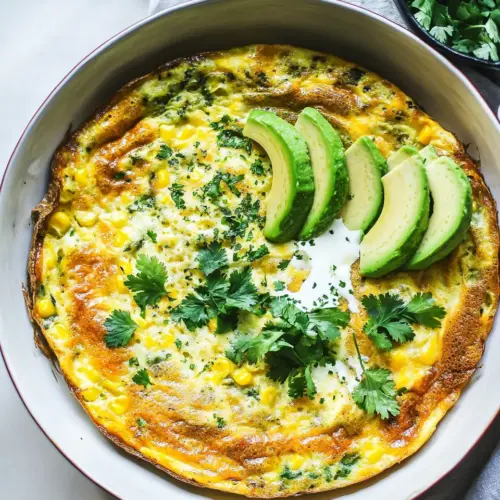
Sweet Corn Frittata with Avocado and Herbs
Sweet Corn Frittata with Avocado and Herbs is a creamy, easy skillet dish that balances sweet corn, melty monterey jack cheese, and silky avocado. Perfect for an easy weeknight dinner or relaxed weekend brunch, this recipe delivers golden edges and a tender interior with bright herbaceous finish. Try it when summer corn is in season for the best flavor.
Equipment
- 10 inch non stick skillet
- Spatula
- Mixing Bowl
- Fork
Ingredients
- 2 tablespoons unsalted butter Melted in the pan to provide a rich, savory base and help sauté aromatics; butter contributes a silky mouthfeel and light browning to the frittata edges.
- 2 fat scallions or 3 small ones, white and light green parts only, thinly sliced Sliced thinly to add a sweet, mild onion flavor and aromatic freshness when softened; scallions also add color and subtle crunch when lightly cooked.
- 1 garlic clove, minced Minced to release pungent, savory notes that deepen the overall flavor; garlic should be cooked briefly to mellow sharpness without becoming bitter.
- 1 cup fresh corn kernels Cooked briefly to bring out sweet, bright corn flavor and tender texture that contrasts with the eggs; fresh kernels add juicy bursts and visual appeal.
- Kosher salt Used sparingly to enhance and balance flavors throughout the dish; kosher salt helps season both vegetables and eggs evenly.
- Freshly ground black pepper Ground to season and add warm, peppery bite that complements sweet corn and creamy avocado; freshly ground pepper brightens the overall flavor profile.
- 8 eggs Beaten together to form the custardy base of the frittata, providing structure, richness, and protein; eggs set gently for a tender, fluffy interior.
- 1/2 cup shredded monterey jack cheese Sprinkled into the egg mixture or on top to add creamy, mild, slightly tangy meltiness; monterey jack contributes gooey texture and savory depth.
- 1/4 cup whole milk Whisked with the eggs to loosen the mixture and produce a creamier, softer curd when cooked; whole milk lightens texture without overpowering flavor.
- Extra virgin olive oil, for drizzling Drizzled over the finished frittata to add fruity richness and a subtle peppery note; extra virgin olive oil also enhances mouthfeel and sheen.
- 1 ripe California Avocado, peeled, pitted and sliced Sliced and arranged on top to add creamy, buttery texture and cool contrast to warm eggs; avocado brings healthy fats and a silky finish.
- Lime juice, for sprinkling Squeezed lightly to add bright, acidic lift and cut through richness; lime juice enhances flavors and prevents avocado from tasting flat.
- Fresh herbs, for sprinkling (parsley, dill and chives used here) Chopped and sprinkled for fresh, herbaceous brightness and layered flavor contrast; parsley, dill, and chives add color and aromatic complexity.
Instructions
- Preheat broiler on high, and place an oven rack on the top 1/3 position.: When the broiler is preheated to high and the rack sits in the top third of the oven, you create the perfect environment for achieving a golden, slightly blistered top while keeping the interior tender. You should hear a faint electrical hum from the broiler and notice the oven warming quickly, and the light inside will get noticeably brighter. This placement matters because if the pan is too close to the element, the top will char before the center sets, and if it is too low, you may not get that appealing golden finish. A common mistake is skipping preheat, which can add unpredictable time under the broiler and lead to uneven browning. I recommend checking the broiler at the end of the step and keeping the oven door slightly ajar only if your oven manual permits it.
- Warm butter in a 10" non-stick skillet over medium heat, then add scallions and garlic. Cook for 1 minute, then stir in the corn, a pinch of salt, and several turns of black pepper. Cook, stirring occasionally, until just tender (about 2 minutes more).: As the unsalted butter melts it should sizzle gently and smell nutty within about 30 seconds to a minute, signaling that it is hot enough to release the aroma of the scallions and garlic . The thinly sliced white and light green parts of the scallions will soften quickly and the minced garlic will become fragrant but not browned. This step builds a flavorful base, and moving too fast or using too high heat risks burning the aromatics, which turns bitter. If the butter starts to brown too quickly reduce heat slightly. Stirring constantly during this initial minute helps the aromatics soften evenly without sticking.
- While the corn is cooking, crack eggs in a medium bowl. Add milk, cheese, a couple pinches of salt (to taste) and several turns of black pepper. Using a fork, lightly whisk to combine.: After the initial minute, adding the corn should produce a lively sizzling sound as the kernels hit the hot butter, releasing steam and a sweet corn aroma. Toss the kernels so they heat evenly and start to pick up a little color on the edges, which intensifies their sweetness. Seasoning with kosher salt and freshly ground black pepper at this stage helps the flavors bloom. A frequent error is overcrowding the pan which causes the corn to steam rather than toasty sear, so give the kernels room to breathe by using the specified skillet size.
- Once the corn is done cooking, check the fat level in the pan. If it seems dry, add a little olive oil. Add egg-cheese mixture to the skillet, stirring to combine. Continue to scramble the eggs for 2 minutes, then let cook undisturbed for 2 minutes. Take the skillet off the heat, then run a spatula around the edge of the frittata (it should be somewhat firm). Drizzle a little olive oil around the edge to keep it from sticking. Place the skillet underneath the broiler and cook until the top of the frittata is golden brown (about 1 to 2 minutes). Timing can vary based on your broiler, so watch this step closely. You can keep the frittata in the skillet if you plan on serving immediately. If not, transfer to a cutting board or serving plate.: Over the next couple of minutes you should notice the kernels softened slightly yet still retain a gentle bite, and occasional stirring prevents sticking while allowing some edges to brown. The visual cue is tiny toasted specks appearing on kernels and a sweet, caramelized scent becoming prominent. If you cook beyond tenderness the corn loses its pleasant bite and becomes mushy, so stick to the short window. Timing varies with kernel freshness, so use texture rather than the clock as your guide.
- To serve, top warm frittata with slices of ripe avocado seasoned with lime juice and salt. Finish with a healthy sprinkling of fresh herbs, a drizzle of olive oil, and a few turns of black pepper. Enjoy warm or at room temperature.: As you crack the eggs into a bowl, the shells should come away clean and the yolks remain intact before whisking. This quiet moment is where texture gets set, because how you combine the eggs affects the custard. Whisking introduces a little air for lift without overbeating, which can make the final texture rubbery. A common slip is overwhisking; stop once the whites and yolks are blended and slightly frothy.
- Add milk, cheese, a couple pinches of salt (to taste) and several turns of black pepper: Adding whole milk and shredded monterey jack cheese creates the creamy matrix that produces a silky interior. The mixture should look smooth and slightly glossy after whisking, and the cheese should disperse so you do not see large clumps. Salt and pepper balance the natural sweetness of the corn , but remember the cheese brings salt as well, so season conservatively and adjust after cooking. Over-salting here is a common oversight.
- Using a fork, lightly whisk to combine: A light whisk with a fork blends components without over aerating, yielding a custardy texture rather than a spongy one. You should see a uniform pale yellow mixture with tiny streams of melted cheese starting to swirl in. Whisk until just combined and stop, because overwhisking can incorporate too much air and change the final bite. If curdled bits appear, you mixed too vigorously or the dairy temperatures were mismatched.
- Once the corn is done cooking, check the fat level in the pan: At this point the skillet should have a glossy coating of butter and the toasted corn should glisten, releasing sweet, roasted aromas. If the pan appears dry, adding a splash of extra virgin olive oil prevents sticking and keeps the edge from crisping too fast. This small adjustment protects the texture as you add the egg mixture; too much liquid will lead to a loose frittata, while too little leads to overbrowning. The common mistake is skipping this check and finding the eggs stuck to the pan later.
- Add egg-cheese mixture to the skillet, stirring to combine: When you pour the egg mixture in, listen for a soft sizzle and watch as the edges begin to set almost immediately. Use a spatula to fold the warmed corn into the eggs and distribute the mixture evenly across the pan. Even distribution ensures a uniform set and avoids pockets of undercooked egg. If you pour and leave the pan untouched, the eggs may set unevenly, so gentle initial stirring helps with consistency.
- Continue to scramble the eggs for 2 minutes, then let cook undisturbed for 2 minutes: During those first two minutes of gentle stirring you will feel the mixture thicken and hear faint sizzling as moisture escapes. After you stop stirring and let it rest, the edges should appear set and slightly puffed, while the center remains custardy. This rhythm of stirring then resting helps create a creamier interior with pleasant edge texture. A typical error is skipping the resting stage which can prevent the interior from setting properly.
- Take the skillet off the heat, then run a spatula around the edge of the frittata (it should be somewhat firm): Running a spatula around the perimeter loosens any bonding to the pan and prevents tearing when the top finishes under the broiler. You should feel gentle resistance as the edge has firmed but the center should still jiggle slightly. If the entire surface is liquid, it needed more stove time; conversely if it is fully firm, you may have overcooked it. Loosening the edges also reduces the chance of the frittata cracking when you slide it onto a plate.
- Drizzle a little olive oil around the edge to keep it from sticking: A light rim of extra virgin olive oil adds a protective layer that helps the top brown evenly and prevents the pan surface from snagging the frittata when broiling. You will see the oil bead and shimmer, and it contributes subtle fruitiness to the finished crust. Too much oil can make the surface greasy, so use sparingly.
- Place the skillet underneath the broiler and cook until the top of the frittata is golden brown (about 1 to 2 minutes): Under the broiler the top will rapidly develop a golden, slightly blistered surface and you may hear faint crackling as small bubbles form. Keep a close eye because this stage moves fast; timing varies with broiler strength. The goal is a warm, golden top while preserving a tender interior. A common pitfall is walking away, which can result in a burnt surface in seconds, so stay attentive and ready to remove the pan.
- Timing can vary based on your broiler, so watch this step closely: Because broilers differ, visual cues are essential here, including a rich golden color and a faint aroma of toasted egg and cheese. If the top seems slow to brown but the edges are already firming, move the skillet slightly closer to the element carefully. Relying solely on minutes instead of watching the color often leads to overcooking.
- You can keep the frittata in the skillet if you plan on serving immediately: Serving directly from the skillet keeps the slices warm and makes presentation rustic and inviting. The skillet surface should feel warm but not dangerously hot to handle; use an oven mitt. If you prefer a neat presentation, transfer to a cutting board, but note that the metal retains heat and will continue to cook the frittata slightly as it rests.
- If not, transfer to a cutting board or serving plate: Transferring allows the frittata to settle and makes slicing easier, and you will notice steam gently rising as it rests. Letting it sit for a minute or two helps the center set to a perfect sliceable consistency. Cutting too soon may lead to a loose center that does not hold shape well, so brief resting is useful.
- To serve, top warm frittata with slices of ripe avocado seasoned with lime juice and salt: The finishing touch is the cool, creamy avocado whose texture contrasts with the warm frittata, and the citrus from the lime juice brightens the whole plate. Season the slices lightly with kosher salt and a few turns of black pepper , and the dish will sing. A common oversight is slicing the avocado too early, which results in browning before plating.
- Finish with a healthy sprinkling of fresh herbs, a drizzle of olive oil, and a few turns of black pepper: The final herbs add fragrance and visual appeal, while the drizzle of extra virgin olive oil lends gloss and subtle flavor. Use parsley, dill, and chives as suggested or adjust to what you have, and apply herbs just before serving to retain vibrancy. Overdoing the herbs can mask the delicate corn and egg flavors, so aim for balance.
- Enjoy warm or at room temperature: Whether you dig in immediately or let it sit for a while, the frittata maintains its charm, with the temperature change slightly altering the texture and flavor perception. Warm slices emphasize creaminess, while cooler slices taste more savory and compact. If you refrigerate leftovers, reheat gently to maintain texture, and avoid high heat which can dry the eggs out.
Notes
- Choose fresh corn, preferably from the farmer market or picked recently, because flavor and bite are far superior to older ears; fresh kernels will sound slightly crisp when bitten.
- Shred cheese fresh rather than using pre shredded; fresh shreds melt more smoothly and avoid anti caking coatings that can affect texture.
- Control broiler distance by placing the rack on the top third; this balance helps brown the top without burning it too quickly.
- Use moderate heat on the stove when softening aromatics; too high a flame can brown garlic and scallions too fast and introduce bitterness.
- Season gradually — add salt in small increments and taste after the frittata comes together, because the cheese and residual pan seasoning will influence final saltiness.
- Keep avocado fresh by sprinkling with lime juice immediately after slicing; the acid preserves color and brightens flavor.