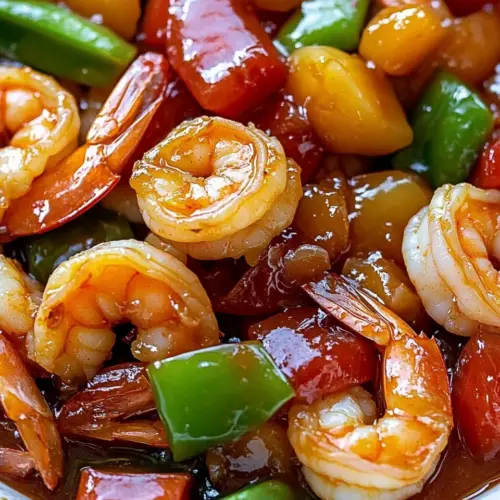
Sweet and Sour Shrimp
Sweet and Sour Shrimp is a bright, glossy stir fry with tender shrimp, crisp vegetables, and a sticky sauce made from honey, rice vinegar, and pineapple juice. This easy weeknight dinner is both quick and impressive, delivering sweet, tangy, and savory flavors with a lovely texture contrast. Make it when you want a fast family friendly meal that feels restaurant quality.
Equipment
- Wok or Large Sauté Pan
- Mixing Bowls
- Whisk
- Spatula or tongs
Ingredients
- 1/2 cup honey Sweeten and balance the sauce with natural floral notes while contributing viscosity that helps the glaze cling to the shrimp and vegetables. Use measured amounts to avoid overpowering acidity and maintain the intended sweet-and-sour profile. Honey also helps brown the shrimp slightly during high-heat tossing for appealing color and flavor.
- 1/3 cup rice vinegar Acidify and brighten the sauce with a gentle tang that cuts through the honey and richness of the oil. Rice vinegar preserves the Asian-inspired character of the dish without adding harshness. Adjust slightly if needed to maintain harmony between sweet and sour elements.
- 1 tablespoon soy sauce Season and deepen the savory backbone with umami and a touch of saltiness that enhances shrimp and vegetable flavors. Soy sauce adds complexity and color to the sauce, helping to round out the sweetness and acidity. Opt for low-sodium if reducing overall saltiness in the dish.
- 3 tablespoons tomato paste Provide concentrated tomato umami, color, and a subtle sweetness that enriches the sauce body. Tomato paste thickens the mixture while contributing depth and a slightly tangy undertone. Blooming paste briefly in oil can unlock greater flavor before combining with liquids.
- 3 tablespoons pineapple juice Introduce fruity acidity and pineapple aroma that complements the tomato and vinegar components of the sauce. Pineapple juice reinforces the tropical sweet-and-sour theme while helping to thin the sauce for easy coating. Choose unsweetened juice to better control overall sweetness.
- 1 tablespoon cornstarch Thicken the sauce into a glossy glaze by forming a slurry that sets when heated, ensuring it clings to shrimp and vegetables. Cornstarch provides a smooth, translucent finish without clouding flavors. Mix thoroughly with cold water before adding to hot sauce to prevent lumps.
- 2 tablespoons water Hydrate the cornstarch to create a smooth slurry that will thicken the sauce when cooked. Water also helps to adjust sauce consistency for even coating of proteins and produce. Use cold water to ensure a lump-free mixture when combined with cornstarch.
- 1 pound peeled and deveined shrimp Provide tender, protein-rich seafood as the center of the dish, offering a sweet, briny flavor that pairs well with the tangy glaze. Shrimp cooks quickly and soaks up the sauce, becoming the primary texture and flavor component. Ensure shrimp are dry before cooking to promote proper searing.
- 1/2 teaspoon kosher salt Enhance overall seasoning and help bring out natural flavors while slightly firming the shrimp flesh during cooking. Kosher salt allows for even distribution and easy adjustment of saltiness. Use measured amounts to avoid over-salting sensitive seafood.
- 1/4 teaspoon black pepper Contribute subtle heat and earthy depth that complements the sweet-and-sour sauce without dominating it. Freshly ground black pepper adds aromatic notes and a mild bite to balance the dish. Add cautiously and taste before finishing to maintain balance.
- 2 tablespoons vegetable oil, divided Provide a neutral frying medium for quick high-heat cooking while preventing sticking and burning during stir-frying. Dividing the oil allows initial searing of shrimp and later sautéing of vegetables to avoid overcrowding. Use a high-smoke-point oil for best results.
- 1/2 teaspoon sesame oil Add a toasted, nutty aroma in small quantity to enrich the flavor profile and provide an authentic Asian finish. Sesame oil is potent, so measured use imparts fragrance without overwhelming delicate seafood. Drizzle near the end of cooking to preserve its aroma.
- 1 cup diced red bell pepper, 3/4-inch pieces Contribute crisp, sweet, and slightly bitter notes while adding bold color contrast and crunchy texture to the stir-fry. Diced red bell pepper holds up well to quick cooking and absorbs the sauce for balanced bites. Cut peppers uniformly to ensure even cooking with other vegetables.
- 1 cup sliced zucchini, 1/4-inch slices Provide mild, tender, and slightly sweet vegetal texture that complements the peppers and shrimp while absorbing sauce. Sliced zucchini cooks quickly and adds a hydrated contrast to firmer ingredients. Uniform thin slices ensure even, fast cooking without becoming mushy.
- 2 teaspoons minced garlic Impart pungent, savory aromatics that elevate the sauce and marry the sweet and sour components together. Minced garlic releases flavorful oils when sautéed briefly in oil, creating a fragrant base. Add toward the start of cooking to flavor the oil, but avoid burning to prevent bitterness.
- 1 teaspoon minced ginger Introduce warm, peppery, and slightly sweet aromatic lift that pairs well with garlic and seafood. Minced ginger brightens the dish with fresh spice and aids digestion while complementing the pineapple notes. Add early with garlic to infuse the oil without scorching.
- 1 cup pineapple chunks Bring juicy bursts of tropical sweetness and acidity that echo the pineapple juice and enrich the texture of the dish. Pineapple chunks offer pleasant contrast to savory shrimp and vegetables, providing both flavor and visual appeal. Drain slightly if excessively watery to avoid thinning the sauce.
- 1 tablespoon sliced green onion Provide a fresh, mild oniony finish and pop of green color when sprinkled as garnish at the end of cooking. Sliced green onion adds crispness and an aromatic lift that complements the sesame oil and garlic. Add just before serving to retain texture and brightness.
- 1/4 teaspoon sesame seeds Offer a delicate, nutty garnish that adds visual polish and a slight crunch to the finished dish. Sesame seeds enhance aroma and provide subtle textural contrast without altering the balance of flavors. Toast lightly beforehand for deeper flavor if desired.
Instructions
- Whisk together 1/2 cup honey, 1/3 cup rice vinegar, 1 tablespoon soy sauce, 3 tablespoons tomato paste, and 3 tablespoons pineapple juice in a medium bowl. Whisk together 1 tablespoon cornstarch and 2 tablespoons water in a separate small bowl.: Before you turn on the heat take a deep breath and inhale the mix of sweet and tangy aromas as you whisk the sauce components together, the glossy honey and thick tomato paste coming together into a rich colored emulsion. The sound is subtle here, just the soft clink of whisk against bowl, but the real sensory cue is the smell, a bright pineapple top note balanced by the savory umami of soy sauce . Mixing a separate cornstarch slurry ensures the sauce will thicken smoothly when heated without forming lumps, and it is why I always make it in its own bowl. A common mistake is adding cornstarch directly to a hot sauce which makes clumps, so keep it separate until the sauce is warm. Take a moment to taste a tiny smear on the spoon so you understand the sweet to tang ratio and adjust if needed.
- Dry the 1 pound peeled and deveined shrimp with paper towels. Combine shrimp with 1/2 teaspoon kosher salt and 1/4 teaspoon black pepper in a medium bowl.: Drying the shrimp is a tactile step, you will notice the difference between slick and dry flesh, and dryness will help achieve a proper sear. When you season with kosher salt and black pepper , the salt penetrates briefly and seasons the meat while the pepper gives an aromatic edge. The smell of the fresh shrimp changes subtly as the salt draws moisture to the surface, so be quick to pat them again if they release water. A common error is overcrowding the bowl with liquid marinate, which prevents proper searing, so keep the seasoning minimal and direct.
- Heat a wok or large saute pan over medium-high heat. Add HALF of the 2 tablespoons vegetable oil, and the 1/2 teaspoon sesame oil.: Heating the pan properly is an auditory and visual cue, you want to see a faint shimmer on the oil and possibly a whisper of smoke at the lip of the pan. Adding half the vegetable oil with the sesame oil gives you both the high heat tolerance and the toasted aroma. The scent of sesame oil blooming is immediate and pleasing. If the pan is not hot enough the shrimp will steam, so be patient and get it hot first. Avoid adding cold ingredients that will drop the pan temperature too much.
- Once the oil is hot, add the shrimp in a single layer and do not move for 1 minute. Stir and cook for another 30 seconds until the shrimp is opaque and pink. Transfer the cooked shrimp to a clean plate.: You will hear a bright sizzle when the shrimp hits the pan, and resisting the urge to move them lets a thin sear form, lending texture and nutty browned notes. The visual cue is a change from translucent to opaque, with a pink hue and curled shape. Shrimp overcook quickly, so timing here is everything; an extra 30 seconds can make them rubbery. A common mistake is crowding the pan, which produces steam instead of sear, so work in batches if needed. Once cooked, transfer them to a warm plate to rest briefly while you cook the vegetables.
- Add the remaining vegetable oil to the pan and heat. Once the oil is hot, add the 1 cup diced red bell pepper, and 1 cup sliced zucchini. Cook for 2 minutes, stirring frequently.: The vegetables will hit the hot oil with a bright sizzling sound and a fragrant sweetness will lift from the pan. As you stir, watch for the edges of the red bell pepper to soften and the zucchini to develop a faint golden edge while remaining firm in the center. This step is about texture contrast, you want a quick tender crispness rather than a soft, lifeless vegetable. A frequent oversight is overcooking the vegetables until they lose color and snap, so stick to the brief cooking window and keep them moving.
- Add in the 2 teaspoons minced garlic and 1 teaspoon minced ginger, stir-fry for 30 seconds. Add in the 1 cup pineapple chunks and stir-fry for another 30 seconds.: When you add the garlic and ginger the pan will erupt with aromatic notes, a warm pungency that perfumes the oil. Stir briefly to avoid browning the garlic, which can become bitter. Adding the pineapple releases a burst of fruity steam and a quick caramelization may begin on the fruit edges, adding a wonderful complexity. Work quickly and keep the pieces moving so nothing burns, and watch for a syrupy sheen starting to form around the fruit.
- Pour the sweet and sour sauce over the vegetables and pineapple, stir, and cook until simmering, 2 minutes.: As the sauce hits the hot pan you will hear a steady bubbling and smell the melding of sweet and tangy elements. The sauce will thin at first then begin to reduce and concentrate, coating the vegetables and pineapple with a glossy finish. Simmering helps meld flavors so the acidity softens and the sweetness rounds out. A typical mistake is simmering too long which can over reduce and make the sauce too thick and overly sweet, so watch the pan and stir gently to encourage even heating.
- Gradually whisk the cornstarch mixture into the sauce and stir constantly until the sauce is thickened, 30 seconds.: Adding the cornstarch slurry slowly while stirring creates a velvety, clingy glaze. The texture shifts quickly from thin to syrupy, and you will see the sauce take on a clear, shiny appearance. Keep stirring to avoid lumps and to monitor the thickness so you do not end up with a glue like consistency. If the sauce becomes too thick, a splash of water can rescue the texture, which is a fix I often use. The right thickness is when the sauce coats the back of a spoon and drips slowly.
- Add the cooked shrimp back to the pan, stir to combine, and cook until shrimp are warmed through, 2 minutes.: Reintroducing the shrimp brings back that satisfying sizzle and the aroma of cooked seafood infused with glaze. The shrimp will warm quickly and absorb the flavors from the sauce; you will see the liquid cling to the curved shapes and glisten. This short final heat allows flavors to meld without overcooking the protein. Avoid leaving the pan on high heat too long, which can toughen the shrimp .
- Serve sweet and sour shrimp garnished with 1 tablespoon sliced green onion and 1/4 teaspoon sesame seeds.: The finishing garnish adds fresh color and a mild sharpness from the green onion , while the sesame seeds deliver a tiny nutty crunch. Serve right away while the sauce is glossy and warm, and plate so each portion gets a balance of shrimp , vegetables, and fruit. A common serving mistake is letting the dish sit too long which dulls the glaze and softens textures; serve promptly for best results.
Notes
- Swap the vegetables: Try different quick cooking vegetables to change texture and color while keeping the cooking time short.
- Adjust sweetness: Reduce the honey slightly and add a splash more rice vinegar if you want a tangier profile.
- Make it saucier: Increase the pineapple juice by a tablespoon and simmer a touch longer before adding the slurry to get more sauce to spoon over rice.
- Toast the sesame seeds: Give them a quick toast in a dry pan before garnishing to amplify their nutty aroma and crunch.
- Finish with fresh herbs: Add a sprinkle of fresh herbs just before serving to give a bright herbal lift to the completed dish.