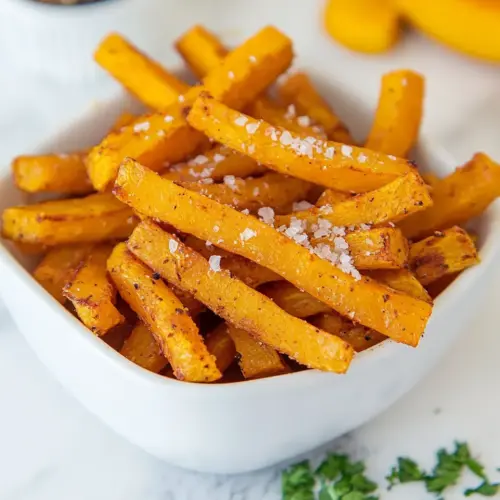
Sweet and Salty Butternut Squash Fries
Sweet and Salty Butternut Squash Fries are crispy on the edges and tender inside, offering a comforting, slightly caramelized bite. This easy fall side uses simple ingredients for an approachable, flavorful dish perfect for an easy weeknight dinner or a seasonal gathering. Make them to enjoy a lighter, veggie forward alternative to regular fries that still satisfies cravings.
Equipment
- Oven
- Cookie Sheet
- Sturdy knife
- Spoon
Ingredients
- 3 pound butternut squash Peel and cube to provide the starchy, sweet base for the fries; roasting concentrates its natural sugars and yields tender interiors with crisped edges. Adds bulk and visual appeal while carrying flavors of oil and seasonings throughout the dish.
- 1/2 teaspoons salt Enhance overall flavor by bringing subtle mineral salinity that balances sweetness; sprinkle evenly to season the flesh before or after roasting for consistent taste. Helps draw out moisture for slightly crisper edges when used judiciously.
- 1 tablespoon olive oil Coat pieces lightly to promote even browning and crisp texture; heat transfer from the oil helps achieve caramelization and prevents sticking. Contributes a mild fruity flavor that complements the squash without overwhelming it.
- 1/4 teaspoon garlic salt Season with a garlicky, savory kick to elevate the fries; a light dusting imparts aromatic depth and complements both the sweetness and saltiness. Works well combined with salt to create a balanced, flavorful crust.
Instructions
- First, place butternut squash in its whole form in the oven at about 350 degrees for 30-45 minutes. This will just soften it up enough to cut it up, while not cooking it.: The oven warmth gently softens the squash, making it far safer and easier to cut, and it begins to concentrate sugars which later caramelize. You will notice a warm, sweet squash aroma filling the kitchen, and the skin will yield slightly when pressed, which signals readiness. This step matters because trying to chop a rock hard squash leads to uneven sticks and potential injury. Common mistake, skipping this softening and forcing the knife, which results in ragged pieces and uneven cooking.
- Once soft, cut in half. Scoop out the seeds, and cut away the skin.: After the initial roast the squash will be hot, so let it cool until manageable. Cut it lengthwise with a sturdy knife, then scoop out the seeds with a spoon. You should see a moist, fragrant interior that smells toasted and sweet. Carefully remove the skin, which should peel away more easily after softening. Why this helps, the softened flesh is firm enough to slice into uniform fries yet tender enough to become creamy inside as they finish roasting. A frequent error is trying to peel or cut while the squash is too hot, which risks burns, or too cold, which makes cutting harder.
- Slice flesh into french fry size sticks.: Aim for consistent thickness so they cook at the same rate; about a half inch to three quarters inch is a good target. As you slice, you can feel the texture becoming smooth and creamy, and the sticks will show clean edges if cut evenly. Uniform pieces give you predictable browning and prevent some sticks from burning while others remain undercooked. Avoid irregular cuts, because smaller bits will crisp too quickly and larger ones will stay mushy inside.
- Arrange in a single layer on a cookie sheet, and drizzle with olive oil. Sprinkle with salt, garlic salt and any other seasonings you choose.: Spread the sticks on the sheet so there is breathing room between them, and drizzle the olive oil evenly before tossing gently to coat. The oil will shimmer slightly and help the surface develop that desirable blistered look in the higher heat stage. Crowding the pan traps steam, leading to limp fries, so use two sheets if needed. A common oversight is piling them together which yields steaming not roasting, so keep them single layer.
- Increase temperature to 425 and cook for about 25 minutes, or until the fries get browned, yet not burned. (time will vary depending on the size of your sticks): Lightly dust with the measured salt and garlic salt , distributing evenly so each fry gets a touch of seasoning. You will catch a savory scent that complements the squash sweetness. Seasoning before roasting allows the salts to meld into the flesh rather than just sitting on the surface, which improves overall flavor. Beware of over-salting at this stage since seasoning concentrates as the moisture reduces during roasting.
- Increase temperature to 425 and cook for about 25 minutes, or until the fries get browned, yet not burned: The higher heat is where the magic happens, creating crisp edges and caramelized surfaces while the interior stays tender. Expect sizzling sounds and a brown, glossy sheen on the edges, and rotate the pan once if your oven has hot spots so browning is even. Time will vary with the size of your sticks, so check visually for deep golden color, and test a piece to ensure a tender interior. The main pitfall, leaving them too long so they char rather than brown, which yields a bitter note instead of a sweet roast.
Notes
- Swap oil thoughtfully: Try a neutral oil if you want less olive flavor, it still promotes browning but changes the aroma profile slightly.
- Finish with flaky salt: After roasting, a pinch of flaky salt brightens the edges and gives a satisfying crunch that contrasts the soft interior.
- Make ahead trick: You can soften the whole squash earlier in the day and finish the fries just before serving to save active time.
- Adjust stick size: Thinner sticks crisp faster and make a snackable fry, while thicker sticks give a creamier interior for a heartier side.
- Keep seasoning simple: The base of salt and garlic salt emphasizes the squash, so only add more spices if you want a distinct flavor profile.