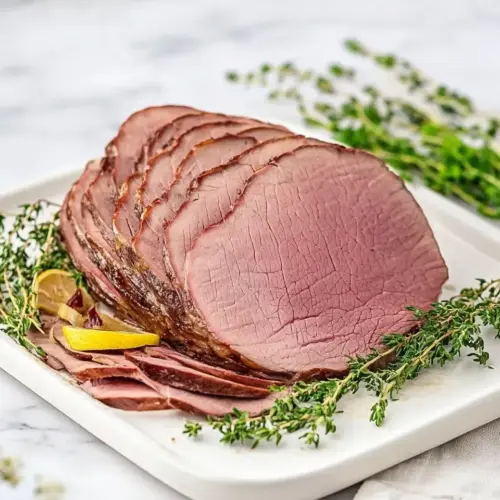
Swedish Roast Beef
Swedish Roast Beef is a tender, slow roasted and brined beef that combines savory herbs and warm spices for a subtly sweet, richly flavored finish. This easy weeknight dinner or make ahead main yields thin, juicy slices perfect for sandwiches or plated meals, and the comforting aroma makes it ideal for winter gatherings. Try it for reliably delicious results and simple entertaining.
Equipment
- Roasting Pan
- Rack
- Instant-read meat thermometer
- Large Pot
- Storage container
Ingredients
- One 3 to 4 pound boneless beef rump roast (or other lean beef roast), frozen Freeze the roast to make slicing and slow cooking easier while retaining juices; select a 3 to 4 pound boneless beef rump roast or other lean beef roast for even cooking and a tender result when properly thawed and cooked slowly.
- 2 cups water, at room temperature Provide room-temperature water to dissolve seasonings and salts evenly; using 2 cups at room temperature helps create a consistent brine or cooking liquid without shocking the frozen roast.
- 1/2 cup salt Dissolve salt thoroughly to season and help tenderize the meat via osmosis; 1/2 cup provides a strong brine that seasons deeply and aids in moisture retention during roasting or brining.
- 3 whole bay leaves Add whole bay leaves to impart a subtle, aromatic bitterness and depth to the cooking liquid; three leaves release a mild herbal note that complements beef without overpowering other seasonings.
- 3 sprigs fresh thyme Include fresh thyme sprigs to contribute bright, savory herbal undertones; three sprigs deliver a gentle earthy aroma that pairs well with beef and other woody herbs.
- 3 sprigs fresh rosemary Incorporate fresh rosemary sprigs to give a pine-like, resinous fragrance and robust flavor; three sprigs add structure and aromatic intensity that holds up to roasted beef.
- 1/2 teaspoon ground ginger Sprinkle ground ginger to introduce warm, slightly spicy and citrusy notes that brighten the dish; 1/2 teaspoon provides a subtle warmth that balances richer flavors.
- 1/2 teaspoon ground nutmeg Use ground nutmeg sparingly to add warm, sweet, and nutty undertones; 1/2 teaspoon lends depth and a touch of aromatic complexity without becoming cloying.
- 1/2 teaspoon ground Ceylon cinnamon Measure ground Ceylon cinnamon to impart a delicate sweet-spicy aroma and gentle warmth; 1/2 teaspoon Ceylon cinnamon gives a mild, refined cinnamon character that blends smoothly with other spices.
- 2 cups ice water Add ice water to rapidly cool brine or cooking liquid and control temperature for safe handling; 2 cups of ice water help halt cooking or bring liquids to a desired chill for finishing steps.
- 3 tablespoons honey Stir in honey to balance savory and salty flavors with subtle sweetness and to aid in browning; 3 tablespoons contribute gloss, caramelization potential, and a mellow sweet counterpoint to the spice blend.
Instructions
- Preheat the oven to 200°F. Place the frozen roast on a rack in a shallow roasting pan.: As the oven comes up to temperature you will notice the kitchen stays relatively calm, without the intense dry heat of a high roast. The low setting creates a whisper of warmth that slowly melts frozen interior ice crystals, preventing the outside from overcooking. You might hear the faint settling sound as the frozen surface begins to release moisture, and the meat will once in a while give off a quiet, beefy scent that is not yet developed but promising. Using a shallow pan and rack allows air to circulate around the roast so it heats evenly. A common error here is starting with a thawed or warm roast, which shortens the gentle cooking window and makes the exterior finish before the center reaches the desired temperature, causing uneven doneness.
- Roast to desired doneness, 7 to 10 hours. Use an instant-read meat thermometer to check the internal temperature of the meat (125° for rare, 135° for medium-rare, and 145° for medium).: Over the long roast time you will notice the kitchen begin to smell faintly of cooked beef, not aggressive, but steady and comforting. The low slow cook draws collagen into gelatin gradually, giving a soft, silky texture when sliced thinly. Listening for subtle changes, you might catch occasional pops of rendered juices, and visually the roast will take on a steady, slightly glossy surface rather than a deep crust. Use an instant-read meat thermometer to know the true internal temperature, because visual cues alone are unreliable at low heat. Do not rely on times alone; thermometer checks are the only precise way to reach your preferred doneness. A frequent mistake is opening the oven repeatedly, which lets heat escape and prolongs cooking time unnecessarily, so plan to check toward the end of the window.
- Meanwhile, in a large pot, combine the room temp water, salt, bay leaves, thyme, rosemary, ginger, nutmeg and cinnamon. Bring to a boil. Remove from the heat, add the ice water, and let sit for 5 minutes. Stir in the honey. Cool the brine to room temperature.: As the pot heats the herbs and spices bloom, releasing their oils in a fragrant steam that smells herbaceous and warmly spiced. Boiling helps dissolve the salt and meld flavors, creating a concentrated aromatic base. Removing from heat and adding ice water stops extraction at the right moment so the brine does not become overly intense. Stirring in the honey while warm helps it dissolve, but cooling to room temperature is critical before the brine touches hot meat to avoid unintended cooking or microbial risk. A mistake to avoid is skipping the cooling step, which could change the roast's texture or create safety concerns.
- Place the cooked roast in a large storage container. Pour the brine over the roast making sure the roast is completely covered with brine. Cover the container and brine the meat overnight in the refrigerator.: Submerging the roast allows the salt and aromatics to penetrate the meat evenly, so each slice tastes balanced. In the refrigerator the brine works gently, pulling flavor inward while the chill keeps the roast safe. Expect a subtle floral and spiced scent when you open the container the next day, and the surface will feel slightly firmer from salt interaction. Ensure the roast is fully submerged to avoid uneven seasoning. A common oversight is using a container that is too small, which can prevent full coverage and result in spots that remain underseasoned.
- Remove the roast from the brine and pat dry with paper towels. Slice the meat against the grain and serve.: Patting the roast dry gives the meat a clean surface and prevents dilution of flavors. When you slice, cutting against the grain shortens muscle fibers and yields tender, easy to chew slices. You will notice a pleasing aroma from the brined exterior, and the slices will be moist but not wet. Serve thin slices for the best texture and mouthfeel. Avoid slicing parallel to the grain, which makes the meat seem tougher and chewier.
- Store the meat tightly covered in the refrigerator for up to 5 days.: When stored properly the flavors continue to harmonize and the meat stays moist, making it perfect for lunches or quick dinners. The refrigerator will keep the roast safe, and tightly covering prevents it from drying or picking up other odors. I recommend using airtight containers or wrapping well in plastic to preserve texture. A mistake some cooks make is leaving the roast uncovered, which leads to dry edges and a less pleasant mouthfeel.
Notes
- Change the herb profile. Swap the amounts of thyme and rosemary slightly to favor one herb over the other if you prefer a more piney or more floral note, but keep the total herb quantity similar so the brine remains balanced.
- Adjust spice intensity. If you want a subtler warm spice presence reduce the ground ginger, nutmeg, and Ceylon cinnamon by half, which preserves the aromatic background without making it prominent.
- Try a different roast cut. You can use another lean roast in place of rump roast, but expect slight differences in texture; always slice thinly against the grain to maximize tenderness.
- Make it a day-ahead dish. Complete the roast and brine a day early, then slice and serve chilled or slightly warmed; this is great for entertaining and helps flavors settle.
- Control the salt level. If you are salt sensitive, reduce the brine salt slightly and increase brine time to let flavors compensate, tasting caution is advised since under-salting affects overall balance.