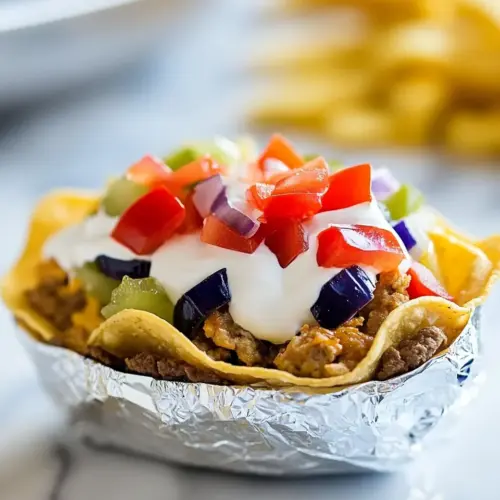
Super Easy Walking Tacos
Super Easy Walking Tacos deliver crispy, savory, and playful handheld tacos with seasoned ground beef, crunchy chips, and bright toppings. This quick and easy crowd pleaser is perfect for summer gatherings or easy weeknight dinners, giving bold flavor in about twenty minutes. Try it for casual entertaining when you want low fuss and high satisfaction.
Equipment
- Large Skillet
- Spatula
- Colander
Ingredients
- 1 lb . ground beef Brown thoroughly to develop rich flavor and provide savory protein for the tacos; crumble into bite-sized pieces and drain excess fat before combining with seasonings. Use as the hearty base that holds other toppings together and absorbs sauce for moistness.
- 1/2 onion, diced Sauté until softened and translucent to add subtle sweetness and aromatic depth; finely dice to distribute flavor evenly throughout the meat mixture. Incorporate early in cooking so natural sugars release and meld with the taco seasoning.
- 2 1/2 tbsp taco seasoning Season generously to build classic taco profile with a blend of spices; sprinkle into the cooked beef and onion, stirring well so flavors coat every piece. Adjust amount to taste to control heat and overall intensity in the filling.
- 6 chips Serve whole or slightly crushed to provide a crunchy vessel for scooping the filling and toppings; choose sturdy chips that can hold the meat without breaking. Use individual chips as portable containers for an easy, hand-held street-food style meal.
- lettuce, diced tomato, shredded cheese, sliced black olives, diced avocado, salsa, etc. Offer fresh, contrasting textures and vibrant flavors such as crisp lettuce, juicy diced tomato, melty shredded cheese, briny sliced black olives, creamy diced avocado, and zesty salsa; combine as desired to personalize each taco. Present as optional toppings so diners can customize sweetness, acidity, creaminess, and crunch.
Instructions
- Brown the hamburger in a large skillet, along with the onion, until fully cooked and crumbled. Drain any fat and return skillet to stove top. Add the taco seasoning and 1/4 cup of water. Stir until moistened and fully seasoned.: The moment the ground beef hits the warm skillet you should hear a steady sizzle, and as it browns small caramelized bits will form on the pan surface which contribute savory depth. You will notice the aroma shift from raw beef to a nutty, roasted scent as the Maillard reaction takes place, and the diced onion should soften and turn translucent, releasing sweet and savory juices that mingle with the meat. Stir occasionally to break the meat into even crumbles, scraping up fond so those browned bits reincorporate into the mixture; they are flavor gold. A key reason to brown thoroughly is texture contrast, and underbrowned meat tastes flatter. Avoid overcrowding the pan, which can steam the meat instead of browning it, and if you smell only a faint aroma you may need slightly more heat to get proper color, but be careful not to burn the onion .
- Serve the taco meat with the bags of chips and all the taco toppings. Let everyone assemble their own tacos by layering the ingredients inside the bag. Enjoy!: When you drain excess fat you sharpen the flavor and prevent the final mixture from becoming greasy, which keeps the chips from becoming soggy too quickly. After pouring off the fat watch for a quick hiss as the skillet returns to temperature, and the remaining fond will reheat and continue contributing flavor. The pan should feel evenly hot to the touch along its exterior, and you may see gentle wisps of steam. One common error is removing too much fat, which strips flavor and leaves the mixture dry; leave a small film to carry the spices. Work carefully to avoid splashes when draining.
- Add the taco seasoning and 1/4 cup of water: Adding a splash of water helps the taco seasoning bloom, releasing fragrant oils and allowing the spices to coat the meat evenly, creating a cohesive sauce rather than dry dusting. You will see the seasoning dissolve into the liquid and form a glossy coating on the meat, with steam carrying a warm, inviting aroma of cumin, chili, and garlic notes. This step builds a saucy texture that clings to each crumb, and the small amount of water prevents the mix from drying out while avoiding excess moisture that soaks chips. If you add too much water the meat will be thin and runny, so measure carefully.
- Stir until moistened and fully seasoned: As you stir, notice the texture change to slightly glossy and saucy, and taste a small amount to check seasoning balance, adjusting only if necessary. The ideal mouthfeel is moist without being soupy, where each bite of ground beef carries spice and salt. This final stirring melds flavors and distributes heat so every chip gets an even portion of seasoned meat. A troubleshooting tip is to simmer gently if the mixture seems underdone, allowing flavors to deepen, but avoid long simmering which can dry the beef. If the mix tastes flat a pinch more seasoning will revive it, but add sparingly.
- Serve the taco meat with the bags of chips and all the taco toppings: Laying out the warm meat beside bowls of chilled toppings creates an attractive spread and keeps textures distinct, with steam from the meat forming a warm counterpoint to crisp chips and cool lettuce . The smells will mingle pleasantly at the serving table, and you will see bright colors from the diced tomato and diced avocado against the deep brown meat. Keep toppings chilled until the last moment so greens stay crisp and avocados remain firm enough to slice. One common mistake is placing warm meat directly over delicate greens, which can wilt them quickly.
- Let everyone assemble their own tacos by layering the ingredients inside the bag: This interactive step turns eating into an experience, and you will notice the joyful sounds of chips rustling as people layer warm meat, cool vegetables, and creamy cheese inside. Encourage stacking in a way that balances weight and texture, such as meat first, then a sprinkle of shredded cheese , followed by fresh lettuce and bright diced tomato , and finishing with salsa or diced avocado . The reason this works well is it prevents chips from getting soggy too fast while ensuring every bite has variety. A common pitfall is overfilling a single chip, which causes breakage and spills, so advise moderate layering for the best eating experience.
Notes
- Make it heartier Add a drained can of chili beans to the seasoned meat for extra body and fiber, which will increase the yield and add a comforting, stew like texture.
- Go lighter Swap in a leaner grind of ground beef or combine half meat and half beans to cut fat while keeping robust flavor and satisfying texture.
- Create a fresher vibe Emphasize bright toppings like extra diced tomato and a squeeze of citrus if you want a more vibrant, salad like finish.
- Turn up the heat Add a pinch more taco seasoning or a few dashes of hot sauce to the meat for guests who like bold, spicy notes.
- Cheesy melt Offer warmed shredded cheese in a small pot so guests can add melty richness that contrasts the crunchy chips.