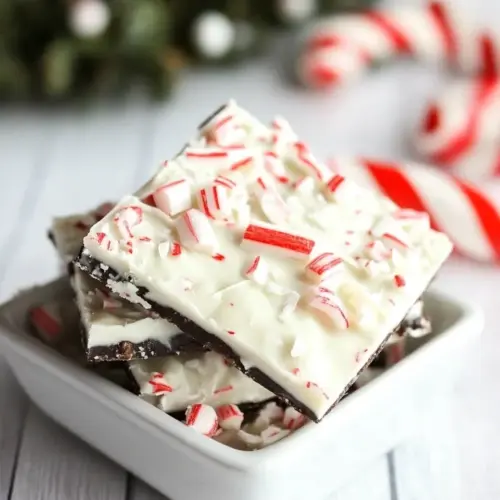
Super Easy 3 Ingredient Peppermint Bark
Super Easy 3 Ingredient Peppermint Bark combines creamy white chocolate, rich dark chocolate, and crunchy candy canes for a festive, easy to make holiday treat. This quick no fuss recipe delivers crisp texture and bright minty flavor, perfect as an easy gift or party nibble, ideal for holiday baking and last minute entertaining.
Equipment
- Large Baking Sheet
- Parchment Paper
- Double boiler or heatproof bowl and pot
- Spatula
- Sharp Knife
Ingredients
- 12 oz dark chocolate morsels Meltable and rich, provides the deep chocolate base that firms into a glossy layer when cooled; temper gently to avoid bloom and ensure a smooth texture. Adds bittersweet flavor that balances the sweetness of the white chocolate and crushed candy canes for classic peppermint bark contrast. Can be melted in a double boiler or microwave in short bursts, stirring frequently for even consistency.
- 12 oz white chocolate morsels Creamy and sweet, creates the contrasting top layer that visually pops against the dark chocolate and adds milky vanilla notes. Melts smoothly to spread over the chilled dark layer, then sets into a firm, pale surface ideal for pressing in crushed candy canes. Use gentle heat and stir frequently to prevent scorching and maintain a glossy finish.
- 6 candy canes, crushed, divided Crunchy and minty, delivers bright peppermint flavor and a festive crunchy texture when sprinkled over the chocolate layers; reserve some finely crushed pieces for decoration. Provides visual contrast with red-and-white flecks and a refreshing palate cleanser between rich chocolate bites. Divide crushed pieces so larger shards add texture while finer bits adhere well to the melted white chocolate.
Instructions
- Prepare a large baking sheet with parchment paper and set aside.: The aroma of clean parchment and the cool feel of a sheet pan under your hands signals preparation, and this step matters because it prevents sticking and helps the bark release cleanly. Press the parchment flat so there are no folds that will imprint the chocolate, and make sure the sheet fits in your refrigerator. A common mistake is placing parchment on a warped pan, which can cause uneven thickness. If your pan is cold it will help the chocolate set more quickly when you pour it.
- Melt dark chocolate over a double boiler. (bring a small pot with 1 to 2 inches of water to a slow boil. Place a metal or glass bowl over the pot of water, make sure it fits on top of the pot without touching the water. Place the chocolate chips inside the bowl and stir frequently until chocolate melts and becomes smooth in texture): You will notice the chocolate first soften, then turn glossy and viscous as it melts, emitting a gentle cocoa scent that is comforting and deep. The double boiler keeps the temperature even, preventing scorching; as you stir with a heatproof spatula you will see streaks vanish into a silky sheen. If the chocolate looks grainy, it may have come into contact with water, so remove it from heat and stir vigorously while keeping it dry. Avoid direct high heat because that will alter texture and flavor.
- Pour melted dark chocolate onto prepared baking sheet and smooth out to an even thickness (about 1/4 inch). Place in fridge to let harden.: When you pour, listen for the soft settling sound as the chocolate levels across the parchment, and use a spatula to coax it into a smooth layer with a glossy top. An even thickness is essential for matching bite texture across pieces; if it is too thin the bark will be fragile, if too thick it will be overly rich. One trap is overworking the surface which can introduce air pockets; smooth with confident, gentle strokes. Place in the fridge to let it harden so the next layer will sit cleanly on top.
- Clean out bowl and melt the white chocolates the same way.: The white chocolate will melt faster and become opaque and glossy; its scent is sweeter and creamier, which signals readiness. Scrape the bowl well so no dark chocolate residue remains, otherwise streaks can form. Keep the heat gentle and stir constantly to reach a smooth texture without overheating. A common error is rushing the heat which can cause separation; slow, steady melting preserves the silky finish you want for pouring.
- Once white chocolate is smooth, place 3 crushed candy canes inside the bowl and stir to combine. Pour over hardened dark chocolate and quickly smooth out.: As you stir the candy canes into the warm white chocolate, you will feel occasional gritty fragments that promise crunch. Pouring quickly helps the white layer adhere, and the contrast between the cool dark underside and the warm white top will be visible as it settles. Work with a steady hand so the swirl is even; if you wait too long the white chocolate will start to set and will not spread smoothly. Avoid pouring too hot because it can slightly remelt the dark layer beneath.
- Sprinkle the remaining crushed candy canes over the wet chocolate. Place in fridge to harden again. After it's hard, use a sharp knife to carefully cut into small pieces. (store in sealed container): As you sprinkle, the pieces will stick and sparkle, making the surface look festive and textured. Chilling until fully firm lets the layers bond while keeping crisp edges, and when you slice the bark you will hear a clean snap if set correctly. Use a sharp knife at room temperature or briefly warm the blade for cleaner cuts, being careful not to melt the chocolate. Store in a sealed container to preserve crispness and prevent the peppermint from softening in humid conditions.
Notes
- Choose quality chocolate: Using good quality dark chocolate and white chocolate morsels affects flavor and melt behavior; chocolates with more cocoa butter melt smoother and set with a better snap.
- Avoid water: Even a drop of water will seize chocolate into a grainy mess; always use dry utensils and dry hands while melting and stirring.
- Control temperature: Keep heat low when melting over a double boiler to prevent scorching and to maintain a silky texture in both chocolates.
- Crush candy canes in a bag: Place candy canes in a sealed bag and crush with a rolling pin to keep bits controlled and to protect your countertops.
- Chill between layers: Refrigerate the dark layer until fully firm before adding the white layer so the layers remain distinct and clean when you cut pieces.
- Use a sharp knife for cutting: A clean, sharp blade yields neat edges; warm the knife slightly under hot water and dry it between cuts for smoother slices.