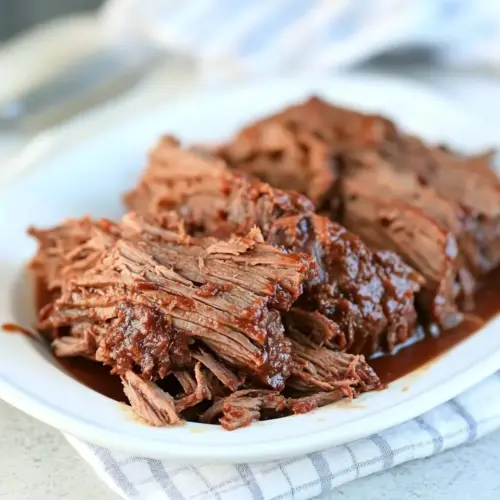
Super Bowl BBQ Beef
Super Bowl BBQ Beef is tender, saucy, and crowd friendly, delivering sticky, savory shredded beef with a sweet tang and crisp coleslaw finish. This easy weeknight dinner or party main gives rich, caramelized flavor and a satisfying texture contrast that invites second helpings, making it the perfect recipe to feed a hungry group and keep things simple.
Equipment
- Slow Cooker
- Mixing Bowl
- Fork
- Whisk
Ingredients
- 3 1/2 pounds beef chuck roast Slow-cook to tenderize and provide the rich, beefy base for the dish; shredding yields fibers that soak up sauce and enhance mouthfeel. Use a well-marbled cut to ensure moist, flavorful results after long braising. Brown before simmering to develop deep caramelized flavors through the Maillard reaction.
- 1 cup water Dilute and deglaze to create the cooking liquid that helps break down connective tissue during braising. Add gradually to control consistency of the sauce and prevent scorching. Maintain a gentle simmer so the roast becomes fork-tender without drying out.
- 1 tablespoon and 1 1/2 teaspoons white vinegar Acidify and brighten to balance the sweetness of the sauce and help tenderize meat by loosening protein bonds. Use the combined amounts called for to create a subtle tang without overpowering other flavors. Add early in cooking to integrate acidity into the braising liquid.
- 2 tablespoons brown sugar Sweeten and add a subtle molasses note to deepen the barbecue profile; it also helps thicken the sauce as it reduces. Stir in so it dissolves fully and caramelizes slightly during cooking. Adjust to taste to maintain a balanced sweet-savory sauce.
- 2 tablespoons honey Provide a floral, fruity sweetness that layers with brown sugar for complexity and gloss in the sauce. Add during cooking so it melts into the sauce and contributes stickiness and shine. Use measured amounts to avoid cloying sweetness.
- 1 teaspoon dry mustard Introduce warm, pungent heat and a hint of sharpness that mimics classic mustard flavors in barbecue. Stir into the sauce to add depth without overpowering other spices. Use sparingly to keep a balanced flavor profile.
- 2 tablespoons Worcestershire sauce Add savory, umami depth and a slight tang that complements beef and enriches the overall sauce complexity. Incorporate early so its flavor melds with the other liquid components. Taste and adjust to ensure a rounded, savory backbone.
- 1 1/2 cups ketchup Contribute sweetness, acidity, and body as the ketchup forms the bulk of the sauce; it helps create a cohesive barbecue flavor. Mix thoroughly with other liquids and seasonings so the tomato base carries the spices evenly. Simmer to meld flavors and reduce excess moisture.
- 1 teaspoon salt Season to enhance natural beef flavors and balance sweetness in the sauce; it also helps extract moisture during cooking for better texture. Add in measured amounts to avoid oversalting, tasting as the sauce reduces. Remember that reduction concentrates saltiness.
- 1/4 teaspoon ground black pepper Add sharp, aromatic heat and a subtle peppery backbone that lifts the sauce. Use sparingly to provide balance without dominating the flavor profile. Grind fresh or use pre-ground based on desired intensity and aroma.
- 1/8 teaspoon cayenne pepper Contribute concentrated heat and a slightly fruity cayenne kick to enliven the sauce and contrast sweetness. Sprinkle in small increments, tasting to reach preferred spiciness. Distribute evenly so heat is consistent throughout the dish.
- 1/4 teaspoon crushed red pepper flakes Introduce flake texture and sustained heat that provides bursts of spiciness in the finished sauce and slaw. Add according to heat tolerance, mixing well so flakes hydrate and release flavor. Use as a garnish or within the sauce for visual interest.
- 2 cloves garlic (minced) Provide pungent, aromatic depth and a savory base note when minced; garlic mellows and sweetens with cooking. Sauté briefly if adding to oil to release its aroma or add directly to the sauce to infuse while braising. Adjust quantity to maintain balance with other aromatics.
- 1 (16 ounce) bag coleslaw mix Offer crunchy, fresh vegetable texture and a crisp counterpoint when tossed with the beef for serving; the mix creates a quick, creamy slaw. Drain any excess moisture to prevent sogginess and toss gently to maintain crispness. Use chilled for a refreshing contrast to warm meat.
- 2 tablespoons diced onion Contribute bite and slight sweetness when diced small, offering textural contrast in the slaw or sauce. Sauté lightly to mellow harshness or add raw to preserve crispness, depending on desired slaw texture. Distribute uniformly for consistent flavor in each bite.
- 2/3 cup Miracle Whip Bind and add creaminess to the coleslaw, mellowing acidity and seasoning while coating vegetables evenly. Chill the dressed slaw to allow flavors to meld and thicken slightly. Adjust quantity for desired creaminess and consistency.
- 3 tablespoons vegetable oil Provide a neutral frying medium for browning aromatics or searing the roast to develop flavor through caramelization. Heat to the proper temperature to prevent absorption and off-flavors, and avoid smoking. Use measured amounts to control splatter and texture.
- 1/2 cup white sugar Sweeten and balance the tang of the slaw dressing while adding body and mouth-coating sweetness. Dissolve fully into the dressing for even sweetness distribution. Adjust to taste to harmonize with vinegar and Miracle Whip.
- 1 tablespoon white vinegar Brighten and add acidic bite to the slaw dressing, helping to cut richness and preserve crispness of vegetables. Combine with sugar and oil to create a balanced vinaigrette-like dressing. Add gradually and taste to prevent overpowering acidity.
- 1/4 teaspoon salt Season the slaw or dressing to enhance overall flavors and provide a subtle savory lift. Use in small amounts to avoid salting out the dressing or wilting the vegetables. Taste and adjust at the end to ensure balanced seasoning.
- 1/2 teaspoon poppy seeds Contribute a delicate nutty crunch and slight visual interest when sprinkled into the slaw dressing; poppy seeds also add mild earthy flavor. Toast lightly for enhanced aroma, if desired, before mixing into the dressing. Distribute evenly for consistent texture.
Instructions
- Place the roast into a slow cooker along with the water. Cover, and cook on LOW for 4 hours, or until beef can be easily shredded with a fork.: The aroma starts subtly, then deepens as the meat releases its juices, filling the kitchen with a warm, savory smell. You want to hear a gentle simmer from the slow cooker and see the roast sitting in a thin pool of liquid, not drowning; that concentration is what develops rich flavor. The reason this gentle, steady heat matters is it dissolves connective tissue slowly, converting collagen into gelatin which gives the shredded beef body and silkiness. A common mistake is lifting the lid frequently, which drops temperature and slows breakdown. If the surface looks dry after a few hours, a spoonful of the cooking liquid can be added around the edges to maintain moisture.
- Shred the beef, removing fat as you go. Remove 1/2 cup of the broth from the slow cooker, and reserve for later. In a medium bowl, mix the vinegar, brown sugar, dry mustard, Worcestershire sauce, ketchup, honey, salt, pepper, cayenne, crushed red pepper and garlic.: As you shred, the texture should transform from coarse to tender ribbons that hold sauce without collapsing. The smell will be concentrated beef with caramel notes from the roast. Reserving broth is key because that concentrated liquid is a flavor booster and a texture lifeline if the meat needs loosening later. Whisking the sauce ingredients together creates a glossy, balanced emulsion where each element plays a role; the vinegar cuts sugar, the Worcestershire deepens umami, and the dry mustard adds lift. A typical pitfall here is not removing enough fat, which can leave the final sandwich greasy, so take time to trim larger pieces.
- Stir into the shredded beef so that the meat is thoroughly coated.: When the sauce meets the strands of beef , you will notice an immediate sheen as it clings to the fibers, and the aroma shifts toward sweet and tangy. Thorough coating matters because it ensures that each bite carries the same flavor profile; uneven mixing results in some bites being bland and others overpowering. Use a fork and gentle folding motions to preserve the meat's texture. Avoid over mixing which can pulverize the strands into mush.
- Cover, and continue to cook beef on LOW for an additional 4 to 6 hours. Add the reserved broth only if necessary to maintain moisture.: During this long finish the sauce thickens and concentrates, and the meat further soaks up flavor. The scent becomes more cohesive, with sugar and vinegar harmonizing. The why here is that extended low heat rounds out sharper notes and integrates layers, producing tender, flavorful strands. Check once midway; if you notice the mixture drying, add small amounts of the reserved broth to restore glossy texture. The easy error is adding too much liquid at once which can make the sauce thin, so add gradually.
- Serve on mini buns, such as King’s Hawaiian rolls and top with coleslaw.: The visual cue you want is glossy meat piled onto soft rolls with a fresh heap of chilled coleslaw on top, the contrast striking. The combination works because the sweet buttery roll supports the savory sauce and the slaw provides crunch and temperature contrast. A common serving mistake is adding the slaw too early, which wilts it; assemble right before serving for the best texture.
- Combine the coleslaw mix and onion in a large bowl.: When you toss the shredded cabbage and carrots with diced onion , you will immediately notice lively, fresh aromas and a crisp sound as the vegetables move in the bowl. This step matters because even distribution of onion ensures every forkful has balanced flavor, and gentle tossing preserves the crunch. Overworking the cabbage can bruise it and make the slaw limp, so use light hands.
- Whisk together the salad dressing, vegetable oil, sugar, vinegar, salt, and poppy seeds in a medium bowl; blend thoroughly. Pour dressing mixture over coleslaw mix and toss to coat. Chill at least 2 hours before serving.: As you whisk, the dressing will emulsify into a smooth, slightly thickened liquid that coats the back of a spoon. The sugar dissolves and the poppy seeds distribute as tiny flecks of texture. Pouring and tossing brings immediate sheen to the vegetables, and chilling amplifies the melding of flavors while preserving crispness. The reason for chilling is it allows flavors to settle and mellows sharp edges; skipping this results in a slaw with raw tasting dressing that has not had time to harmonize.
Notes
- Use reserved broth sparingly, add a tablespoon at a time to loosen the meat rather than pouring in all at once, preserving sauce intensity.
- Sweetness adjustment, if you prefer less sweet sandwiches, reduce the brown sugar by half and taste the sauce before final cooking to balance with vinegar.
- Heat control, to make it spicier, increase cayenne slightly, but do so in small increments to avoid overpowering the other flavors.
- Make ahead, you can cook the roast a day ahead and rewarm gently, which often improves flavor as it allows the sauce to meld overnight in the fridge.
- Coleslaw timing, prepare and chill the slaw at least two hours before serving to let the dressing settle and the crunch remain lively under warm beef.