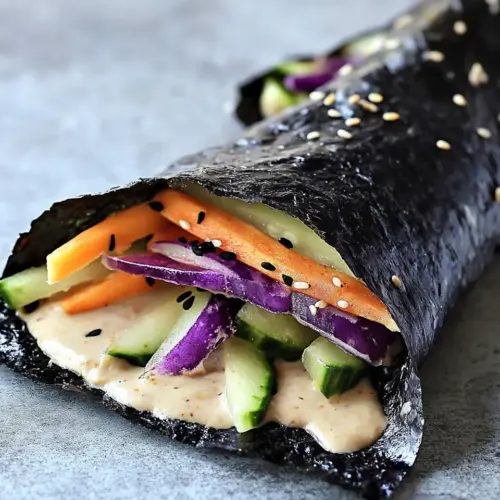
Sunrise Nori Wraps with Spicy Tahini Drizzle
Sunrise Nori Wraps with Spicy Tahini Drizzle are a bright, creamy and crispy handheld delight perfect for easy weeknight dinners or summer lunches. Fresh vegetables, silky avocado, and a nutty, slightly spicy tahini miso drizzle create balanced, layered flavors that are both light and satisfying. Make them for casual gatherings or a quick, healthy meal you will want to repeat.
Equipment
- Blender
- Cutting Board
- Sharp Knife
- Small Bowls
- Serving Platter
Ingredients
- 4 nori seaweed sheets cut into 4-inch squares Provide a sturdy, edible wrapper that holds fillings together and adds a savory umami ocean flavor; cut into 4-inch squares for easy rolling and bite-sized wraps. Offer a crisp, slightly briny contrast to the soft vegetables and creamy avocado while keeping each wrap compact and neat.
- 1/4 small head red cabbage very thinly sliced Add vibrant color and crunchy texture when very thinly sliced, lending a mild peppery-sweet bite that brightens every mouthful. Contribute fiber and visual appeal, helping balance richer elements while maintaining freshness throughout the wrap.
- 1 large carrot peeled and julienned Bring sweet, earthy crunch when peeled and julienned, offering a classic raw-vegetable sweetness that complements savory and creamy components. Provide a tender snap and natural sugars that enhance overall texture and add nutritional beta-carotene.
- 1 small yellow summer squash julienned Contribute mild, slightly sweet summer squash texture when julienned, offering delicate moisture and gentle flavor that melds with stronger components. Help create a balanced filling by adding a tender bite and subtle vegetal notes without overpowering.
- 1 small cucumber julienned Deliver cool, crisp hydration and a refreshing crunch when julienned, helping to lighten the wraps and provide palate-cleansing freshness. Add a faint vegetal flavor and satisfying snap that pairs well with creamy and spicy elements.
- 1 large ripe avocado pitted, peeled, and sliced Provide creamy, buttery richness when pitted, peeled, and sliced, adding smooth texture and healthy fats that bind flavors together. Enhance richness and mouthfeel, balancing acidic and spicy notes while supplying a satisfying, luscious element.
- 2 tablespoons freshly squeezed lemon juice Add bright acidity and freshness when freshly squeezed, helping to prevent avocado browning and lift the overall flavor profile. Balance richness and sweetness while introducing a zesty citrus note that ties the fillings and drizzle together.
- 1 1/4 tablespoons chickpea miso paste Offer deep savory and slightly sweet fermented umami when measured precisely, bringing complexity and saltiness to the drizzle or filling. Act as a flavor anchor that enhances other ingredients without overwhelming their natural tastes.
- 1 tablespoon raw tahini Provide nutty, rich creaminess when measured and mixed into the drizzle, adding a silky texture and subtle earthy flavor. Help emulsify other components and contribute healthy fats that mellow heat and acidity.
- 2 medjool dates pitted Introduce concentrated natural sweetness when pitted and blended, lending a caramel-like depth that balances savory miso and tangy lemon. Help thicken dressings or drizzles while adding a pleasant, rounded sweetness without refined sugar.
- 1 garlic clove minced Deliver pungent aromatic depth when minced, contributing sharp savory notes that cut through richer elements. Enhance the overall savoriness and provide a subtle aromatic lift that complements miso and tahini.
- 1/4 teaspoon crushed red pepper flakes Contribute concentrated heat and a lingering spicy kick when measured, offering a toasted, slightly fruity chili flavor that elevates the drizzle. Add controlled warmth that can be adjusted to taste and contrasts creamy elements.
- Water as needed to thin the drizzle Thin the drizzle to a pourable consistency as needed, allowing adjustments to texture without altering flavor profiles much. Ensure the sauce coats fillings lightly and evenly for easier assembly and a balanced bite.
Instructions
- To make the tahini: Combine all of the ingredients except the water in a blender. Blend, adding water 1 teaspoon at a time as you go, until the mixture becomes a thin sauce.: The aroma of toasted sesame and sweet dates fills the kitchen as you blend, with the tahini creating a lush, silky base. Use a blender so the dates and chickpea miso paste break down completely, yielding a smooth sauce. Start by pulsing to combine, then run the blender on medium so the texture becomes emulsified, and add water 1 teaspoon at a time until the drizzle is pourable. You should smell a toasty nuttiness and notice the sauce glistening as it catches the light. This method matters because a fully blended sauce coats the vegetables evenly, giving every bite that balanced flavor. A common mistake is adding too much water too quickly, which can make the sauce thin and bland; add water slowly and taste as you go.
- To make the wraps: Place the nori sheets on a flat surface.: When the sauce reaches the right viscosity it should flow slowly off a spoon, leaving a thin trail. If the mixture seems grainy, blend a little longer to smooth out fibrous bits from the dates. The lemon in the ingredients will lift the sauce, and you should notice a harmony of sweet, savory, and spicy notes. Keep a spatula handy to scrape down the sides so nothing is wasted, and chill briefly if the sauce feels too warm from blending. Avoid overheating the blender motor by pulsing when needed, as overheating can alter the delicate flavors.
- Add a few pieces of cabbage, carrot, squash, cucumber, and avocado to each sheet. Top each pile of vegetables with a heaping tablespoon of the Spicy Tahini Drizzle, and then roll up the nori sheets into a tube shape.: Lay the nori sheets on a flat, dry surface and orient them so rolling is comfortable for you. Assemble your vegetables in vertical piles near the center, and keep the avocado slices just to the side to avoid squashing. The sound of crisp vegetables stacking together is a good sign you have enough structural contrast. Placing ingredients thoughtfully prevents sliding and results in neat hand rolls that hold together when picked up. One trap is overfilling the sheets, which causes the roll to burst; use restraint and distribute evenly.
- Serve alongside the remaining sauce!: Spoon a heaping tablespoon of the Spicy Tahini Drizzle over each pile of vegetables so it soaks into the ridges of the shredded produce, not pooling on the sheet. You should see a glossy sheen where the sauce touches the vegetables. Rolling should be done with gentle but deliberate pressure, tucking the bottom corner first and folding the sides in, then continuing to roll into a secure tube. Rolling technique matters because it compresses the filling just enough for comfortable eating, without crushing the avocado . A common mistake here is dragging the roll across the board which can tear the nori ; instead lift and curl with your fingers.
- To make the wraps: Arrange the finished handrolls seam side down on a serving platter so they do not unroll. The visual should be a neat row of jewel toned ends, and you may hear a faint crackle from the crisp nori . Serve the leftover Spicy Tahini Drizzle in a small bowl alongside for extra dipping, as it keeps the wraps from feeling dry. This presentation keeps textures intact and invites guests to grab one without fuss. Avoid stacking rolls on top of each other which can make them soggy; give them space.
- Serve alongside the remaining sauce: Offer extra drizzle so each person can adjust heat and creaminess to taste, and mention the little tricks that worked for you, like wetting the edge of the nori to seal. The sensory finish is the tang and spice of the sauce mingling with the freshness of the vegetables, and you may notice guests returning for another roll because the flavors are addictive. Keep remaining sauce chilled if not used immediately. A typical error is leaving the sauce at room temperature too long in warm weather, which can dull the brightness of the lemon juice , so refrigerate any leftovers promptly.
Notes
- Prep a rolling station set with bowls for each vegetable to streamline assembly and keep things tidy.
- Dry the julienned vegetables well so excess moisture does not soften the nori prematurely.
- Adjust sauce thickness by adding water slowly, aiming for a consistency that clings to a spoon yet pours in a steady stream.
- Seal rolls cleanly by moistening the edges of the nori with a fingertip dipped in water to help them stay together.
- Keep leftovers separate with sauce stored in an airtight container in the refrigerator to preserve the fresh textures of the vegetables.