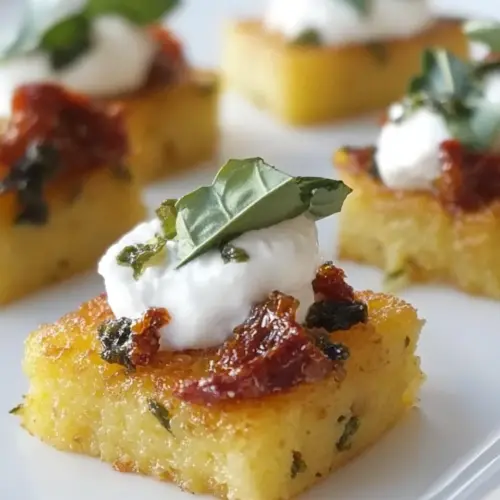
Sundried Tomato Polenta Bites
Sundried Tomato Polenta Bites are creamy, crispy, and full of herbaceous flavor with a crunchy pistachio finish. These easy appetizers combine tender polenta, bright basil pesto, tangy sundried tomatoes, and a dollop of goat cheese for an irresistible bite, perfect for easy weeknight entertaining or party hors d oeuvre. Make ahead friendly for stress free hosting.
Equipment
- Large saucepan
- Slotted Spoon
- Whisk
- 13 x 9-inch baking pan
- Mini processor
- Large Nonstick Skillet
- Round cutter
Ingredients
- 2 2/3 cups whole milk Bring richness and creaminess to the polenta by providing a smooth base that helps cook the cornmeal while adding a subtle dairy flavor. Use whole milk to achieve a tender, custardy texture and prevent the mixture from becoming too dense. Warm gently with the herbs and garlic to infuse aromatics before stirring in the cornmeal for best flavor absorption.
- 1 sprig fresh rosemary Impart a piney, resinous aroma that complements the creamy polenta and brightens the dish with herbal complexity. Bruise the sprig slightly or simmer briefly with the milk to release essential oils, then remove before serving to avoid tough stems. Pair with thyme and garlic to create a savory backbone for the bites.
- 1 sprig fresh thyme Add earthy, slightly floral notes that enhance the savory profile and pair well with rosemary and garlic during the infusion step. Simmer the sprig with the milk so its oils meld into the polenta, providing a subtle depth without overwhelming the other flavors. Remove the stem before chilling to keep the texture smooth.
- 1 clove garlic, peeled & crushed Introduce a pungent, savory punch that infuses the milk with savory depth and an aromatic garlic note. Crush the clove to release allicin, then simmer briefly to mellow sharpness while contributing umami to the polenta base. Remove any large pieces before setting the polenta to ensure even texture in the finished bites.
- 1 cup yellow cornmeal or polenta Serve as the primary dry component that thickens and structures the polenta, offering a slightly sweet corn flavor and grainy yet creamy mouthfeel. Gradually whisk into simmering milk to avoid lumps and cook until tender and creamy, forming the foundation of the bites. Adjust cooking time for desired firmness before cooling and slicing.
- 1/3 cup olive oil (more or less, for frying) Provide the frying medium that crisps the exterior of the polenta bites and adds a fruity, savory note depending on olive oil quality. Use enough oil to shallow-fry or pan-fry the portions until golden and crunchy, then drain on paper to remove excess. Monitor heat to prevent burning and maintain a crisp exterior with a soft interior.
- 1/2 cup (packed) fresh basil Contribute a fresh, aromatic herbaceous lift that adds bright basil flavor and a fragrant finish to the topping or filling. Pack tightly when measuring to capture the full herb intensity and chop or process into a pesto-style mix paired with pistachios and olive oil. Add near the end to preserve vibrant green color and fresh flavor.
- 1/4 cups shelled pistachios Offer a crunchy, nutty element that adds texture contrast and a subtly sweet, buttery flavor when chopped or ground into the basil mixture. Lightly toast if desired to enhance aroma, then chop to sprinkle over or mix into the garnish for the polenta bites. Measure carefully to maintain the intended balance between crunch and creaminess.
- 2 tablespoons freshly grated Parmesan cheese Provide salty, umami-rich complexity that enhances savory flavors and adds a touch of richness to the topping or filling. Finely grate fresh Parmesan to distribute evenly, melting slightly when warmed to bind components and elevate overall taste. Use sparingly to avoid overpowering the delicate herbs and goat cheese.
- 1/3 cup extra-virgin olive oil Deliver a fruity, peppery richness as the finishing oil for a basil-pistachio garnish or to adjust consistency in a dressing. Choose a high-quality extra-virgin olive oil to contribute brightness and mouthfeel, emulsifying with Parmesan and herbs for a cohesive topping. Drizzle or mix to taste for balanced flavor and sheen.
- salt and freshly ground black pepper, to taste Season the dish and enhance all other flavors by adjusting salinity and background taste to personal preference. Use sparingly while cooking the polenta and again when finishing the bites to avoid oversalting, tasting as you go. Grind fresh pepper to add mild heat and aromatic complexity that complements the herbs and cheese.
- 2 ounces goat cheese Bring a tangy, creamy contrast that adds richness and a mildly tart profile to balance the savory and salty elements. Crumble or spread small amounts into the topping or onto each polenta bite to introduce a silky texture and bright dairy note. Soften slightly at room temperature for easier incorporation and better flavor release.
- 1/3 cup sundried tomatoes, packed in oil (drained & cut into small pieces) Introduce concentrated sweet-tangy tomato flavor and chewy texture that pairs well with the creamy polenta and tangy goat cheese. Drain well and chop into small pieces to distribute throughout the topping or mix for bursts of intense umami and acidity. Choose oil-packed sundried tomatoes for optimal flavor and ease of chopping.
- chopped pistachios, optional Add optional crunch and visual appeal while echoing the pistachio flavor used in the garnish, providing a finishing texture on the polenta bites. Sprinkle chopped pistachios over the plated bites for contrast against the creamy cheese and soft polenta, enhancing mouthfeel. Use sparingly to avoid overpowering the delicate balance of flavors.
- sea salt Enhance texture and accentuate flavors by delivering clean, mineral salinity that lifts sweetness and balances richness when sprinkled as a final touch. Use flaky sea salt judiciously at the end to provide bursts of crunch and saline contrast against creamy goat cheese and tender polenta. Apply just before serving to preserve crystals' crunch.
Instructions
- Lightly oil a 13 x 9-inch baking pan. Bring the first 4 ingredients to simmer in a large saucepan over medium heat; simmer 5 minutes. Using a slotted spoon, remove the herbs and garlic. Whisk in the cornmeal in a slow steady stream; return to boil. Reduce heat to low. Simmer until the polenta is very thick, whisking often, about 10 minutes. Turn polenta out into prepared pan; spread to 1/2-inch thick layer- don't worry about making it perfect- just spread it out as even as you can. Let it cool completely. When the polenta is cool, use a 1 to a 1 1/2-inch round cutter to cut out 30 polenta rounds (or as many as you can).: The room will smell faintly of oil when you rub a thin sheen into the pan, and this prevents sticking as the polenta cools and sets. Use just enough oil to coat the surface, wiping away excess so the polenta does not pool in oily spots, which would make the rounds difficult to handle later. If you skip this, the polenta can cling to the pan and tear when removed, so be gentle but thorough when oiling.
- Place the basil, pistachios and cheese in a mini processor. Blend to create a coarse puree. Add olive oil and blend until pesto is smooth. Season with salt and pepper.: As the whole milk , rosemary , thyme , and garlic warm, steam rises and the milk takes on subtle herbal perfume. You should see tiny bubbles at the edges indicating a simmer. This gentle infusion extracts fragrance and savory notes without scorching the milk. Stir occasionally to prevent a skin forming on top, and keep heat moderate to avoid boiling over, which is the most common mistake here.
- Pour about 1/3 cup olive oil into a large nonstick skillet to coat the bottom; heat over medium-high heat. Saute the polenta rounds until they are lightly browned, about 1 minute on each side; transfer to paper towels to drain.: After simmering, the herbs and crushed garlic will have softened and shed aroma into the milk, but they must be taken out so the texture stays smooth. The spoon should come away mostly dry, and the milk will look slightly flavored but clear of solids. Leaving bits behind can make the polenta grainy or introduce overly pungent herb pockets, so be sure to remove them fully.
- Top each polenta round with a small amount of pesto, a chunk of goat cheese and sundried tomato. Add a few chopped pistachios too, if you'd like. Finish them with a sprinkle of sea salt. Serve warm or at room temperature.: As you pour in the cornmeal , whisk continuously to avoid clumps forming. The mixture will thicken quickly and may spit lightly when it reaches a simmer. Whisking ensures a glossy, even texture; if you add the cornmeal too fast, you will trap lumps that are hard to break up later. Keep your whisk moving until the mixture comes back to a gentle boil.
- Reduce heat to low: Lowering to low heat brings the polenta to a gentle simmer, where it can absorb liquid and soften without scorching. At this point you should see the mixture thicken to a very creamy, porridge like consistency and hear a soft bubbling. If the heat remains too high, the bottom can scorch, creating a toasted aroma that may read as bitterness. Patience here results in a tender interior.
- Simmer until the polenta is very thick, whisking often, about 10 minutes: As the mix simmers, its aroma deepens into toasted corn sweetness, and it will pull away from the sides of the pan slightly when stirred. Frequent whisking prevents sticking and keeps the texture smooth. Taste a small spoonful as it cooks; the grains should have lost a raw starchy taste. A common mistake is undercooking, which leaves a gritty mouthfeel, so allow the needed time for full tenderness.
- Turn polenta out into prepared pan; spread to 1/2-inch thick layer: When spread, the hot polenta will give off a comforting steam and begin to set into a soft sheet. Use a spatula or the back of a spoon to smooth it, aiming for roughly one half inch thickness so the rounds will hold together but remain tender. Imperfections are fine, so focus on even thickness rather than perfection. If you try to press it too thin, the rounds will be fragile after cooling.
- Let it cool completely: Cooling causes the polenta to firm up, changing from a spreadable mash to a sliceable set. The surface will stop steaming, and the texture will feel dense to the touch. Chill time varies with room temperature, but do not try to cut warm polenta, as it will crumble. Rushing this stage is the easiest way to end up with misshapen rounds, so be patient.
- When the polenta is cool, use a 1 to a 1 1/2-inch round cutter to cut out 30 polenta rounds: Press the cutter straight down and lift to reveal neat circles with a clean edge. The rounds should hold together firmly; if the centers seem soft, chill the slab a bit longer. Arrange them on a tray while preparing the pesto. Cutting with a dull edge can rag the rounds, so a sharp cutter or a firm press is best.
- Place the basil, pistachios and cheese in a mini processor: The basil releases a bright, green aroma when pulsed, while the pistachios lend nutty perfume and the Parmesan gives an umami backbone. Pulse until they form a coarse paste, watching the texture so it does not turn to a wet slurry. Overprocessing heats the basil and dulls the color, so be deliberate and brief.
- Blend to create a coarse puree: As the mixture grinds, you will notice the color become more vibrant and the texture change from leafy to pasty. This stage preserves small bits of nut for pleasant toothsomeness while ensuring the pesto will cling to the polenta. If your pesto seems dry, add a little oil gradually; if too loose, pulse less. A runny pesto will slide off when you assemble the bites.
- Add olive oil and blend until pesto is smooth: Drizzling in the extra-virgin olive oil creates a glossy, spreadable emulsion that carries flavor across the polenta. The scent will shift to fruity richness, and the texture should be cohesive. Add oil slowly to control thickness. Too much oil makes the pesto slick and heavy, reducing the contrast with the polenta.
- Season with salt and pepper: A balanced pinch of salt and a twist of black pepper will sharpen the pesto, lifting herb and nut flavors. Taste carefully, because the Parmesan already contributes salt. Over seasoning at this point is a common trap, so err on the side of lightness and adjust later if needed.
- Pour about 1/3 cup olive oil into a large nonstick skillet to coat the bottom; heat over medium-high heat: When the oil shimmers and moves easily across the pan, it is ready. The heat should be high enough to brown quickly but not so high that the polenta burns. You will hear a lively sizzle when the rounds hit the pan, and that sound signals the crust will form. If the oil smokes, reduce heat to avoid imparting a burnt flavor.
- Saute the polenta rounds until they are lightly browned, about 1 minute on each side: The rounds should develop a crisp, golden edge and a faint caramelized scent, while the centers remain soft and creamy. Use a spatula to turn them gently so the edges stay intact. If they stick, the oil may not be hot enough or the pan overcrowded, so give them room and maintain even heat. Overcooking will dry the interior, so aim for a quick, confident flip.
- Transfer to paper towels to drain: Resting briefly on paper towels removes excess surface oil and keeps the underside from becoming soggy. The rounds will remain warm and will firm slightly as they rest. Do not stack them while hot, since trapped steam can soften the crust and ruin the crisp texture you worked to achieve.
- Top each polenta round with a small amount of pesto, a chunk of goat cheese and sundried tomato: The finishing assembly brings visual contrast and layered flavor. Place a small smear of pesto so it clings, then a modest piece of goat cheese and a bit of sundried tomato for tang. The aroma at this point is herbaceous, salty and bright. Overloading toppings can make the rounds hard to eat, so balance portions for neat single bites.
- Add a few chopped pistachios too, if you'd like: A sprinkle of chopped pistachios gives a nutty crunch and a pop of color. The small contrast elevates the mouthfeel without competing with the other flavors. Avoid very large pieces that could be a choking hazard or make the bite uneven.
- Finish them with a sprinkle of sea salt: A final dash of flaky sea salt brightens every element and adds a tiny crunch that makes the flavors sing. Add this right before serving for maximum impact. If you salt too early, the salt can dissolve and lose that satisfying burst.
- Serve warm or at room temperature: The rounds are at their best when the crust is still slightly crisp and the toppings have relaxed into the warm polenta. Serving at room temperature preserves structure for transport, while warm offers the fullest aroma. Avoid serving cold, since the polenta can firm up and lose its creaminess.
Notes
- Omit the cheese If you prefer dairy free bites, skip the goat cheese and rely on the pesto and sundried tomatoes for bold flavor, chilling the polenta slightly more so the rounds hold together.
- Make ahead polenta Prepare and chill the polenta slab up to two days in advance, then cut and fry just before serving to save time on the day of your event.
- Swap store bought pesto For a time saving option use high quality store bought pesto in place of the homemade version, adjusting salt to taste because some brands are saltier.
- Reheat without sogginess To rewarm fried rounds, place them in a 375 degree oven for about five minutes to crisp the outside without drying the interior.
- Control oil for lighter bites Use a nonstick skillet with less oil and shallow fry, turning frequently, to reduce absorption while still getting a golden exterior.
- Adjust pesto texture If you like a chunkier topping, pulse the basil and pistachios less so bits remain, offering more chew against the soft polenta.