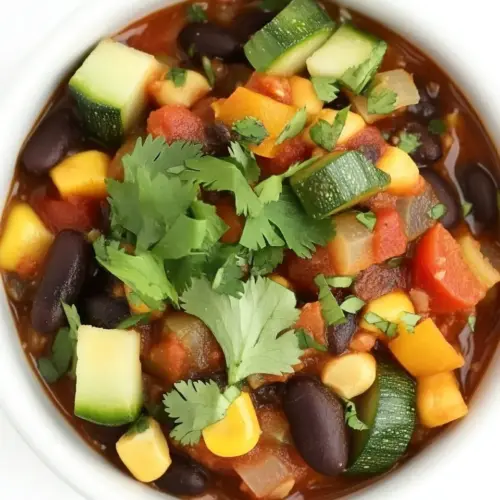
Summer Vegetable Chili
Summer Vegetable Chili is a bright, easy weeknight dinner that balances tender summer squash and zucchini with hearty beans and a tomato broth. This flavorful, adaptable chili is perfect for using garden produce and pantry staples, offering a creamy yet light texture and bold spice notes. Make it for casual dinners or batch cooking, and enjoy bowls that taste even better the next day.
Equipment
- Large Pot
- Knife
- Cutting Board
- Colander
Ingredients
- 1 yellow onion Chop finely and sauté until translucent to build a savory, aromatic base for the chili; provides sweetness and depth that balances spicy notes and acidity.
- 3 -4 cloves garlic Mince and cook briefly with aromatics to add pungent warmth and layered flavor; contributes a subtle sharpness that enhances overall complexity.
- 1 medium zucchini Dice into bite-sized pieces and simmer until tender to contribute mild, slightly sweet flesh and moisture; helps bulk the chili with light, fresh texture.
- 1 yellow summer squash (or another zucchini or mushrooms) Slice or dice and cook until softened to add mild, tender flesh and a delicate sweetness; offers additional bulk and a pleasing contrast to denser beans.
- 1 orange bell pepper Dice and sauté to provide bright, sweet, and slightly fruity flavor; adds color, crunch when lightly cooked, and a fresh bell pepper aroma.
- 2 cups vegetable broth Pour in to deglaze the pan and simmer as the cooking liquid to meld flavors; supplies a neutral savory base and helps achieve desired chili consistency.
- 15 oz . can diced tomatoes (or fire-roasted) Drain or add with juices to contribute acidity, tomato sweetness, and rich umami; helps create a thick, stew-like texture and enhances savory depth.
- 15 oz . can black beans Rinse and add to provide creamy texture, protein, and earthy flavor; contributes body, nutrition, and hearty bite to the chili.
- 15 oz . can pinto beans Rinse and add to provide contrasting creaminess and mild, nutty flavor; balances other beans and vegetables while boosting fiber and protein.
- 1 cup sweet corn (fresh, canned, or frozen) Stir in for bursts of sweetness and texture; adds bright kernels that lighten the mouthfeel and complement savory, spicy elements.
- 2 tbsp . chili powder Sprinkle and toast briefly to infuse the dish with warm, smoky, and earthy heat; acts as the primary spice blend driving the chili character.
- Optional: 1-2 tsp. cumin, 1 tsp. smoked paprika Add sparingly to layer warm, smoky, and aromatic undertones alongside the chili powder; can be adjusted to taste for complexity and depth.
- Fresh cilantro, avocado, hot sauce, green onion, vegan cheese shreds, vegan sour cream, tortilla strips, etc. Garnish and serve to introduce fresh brightness, creaminess, heat, and crunchy textures; allows customization and finishing touches to enhance each bowl.
Instructions
- Dice onion, zucchini, summer squash, and bell pepper.: The sound of a knife rhythmically chopping is oddly calming, and the visual of a tidy pile of diced onion , zucchini , summer squash , and bell pepper promises even cooking. Aim for similar sized pieces so nothing under or overcooks. If your pieces vary, some will become threadbare while others remain firm, which changes the texture balance. A common mistake is chopping unevenly because you are rushing; take an extra minute to steady your cuts and your pot will reward you with uniform tenderness.
- In a large pot over medium-high heat, sauté onion for 7-8 minutes. (I use 3 Tbsp. veggie broth/water for no-oil sauté method.): As the onion softens, listen for a gentle sizzle and watch it shift from opaque to translucent, sometimes picking up a touch of golden color at the edges. This transformation builds sweet, savory notes that are essential for depth. If you use the no oil method with a splash of vegetable broth , add small amounts as needed so nothing sticks, and stir occasionally to promote even browning. Avoid cranking the heat which can burn the edges and introduce sharp bitterness.
- Meanwhile, mince garlic. When onion is translucent, add minced garlic and chili powder (plus cumin and smoked paprika if using). Stir and sauté 1 minute.: Once the onion is translucent, the aroma changes when you add minced garlic and the spice blend. Give the mixture about one minute so the spices bloom and the garlic loses its raw edge, filling the kitchen with a toasty, aromatic scent. You should smell the spices become more fragrant; if you smell a harsh burned note, that means the heat was too high or the garlic sat too long, and it will taste bitter. To avoid that, stir constantly and be ready to lower the heat.
- Add zucchini, squash, and bell pepper. Stir and sauté 1-2 minutes.: When you add the chopped zucchini , summer squash , and bell pepper , the pot will hiss as the moisture hits the hot bottom, and the colors will brighten. Sauté briefly to take the raw edge off while keeping some texture, allowing the vegetables to still hold form in the simmered chili. Overcooking at this stage can lead to a mushy final texture, so aim for a quick toss that softens but preserves bite.
- Add broth, diced tomatoes, corn, and beans (rinsed and drained).: Pour in the vegetable broth and the canned diced tomatoes , then add the corn and the rinsed black beans and pinto beans . You will see the pot go from glossy to a gentle, bubbling stew as the liquids combine. Rinsing the beans removes excess sodium and improves the clarity of the broth. A common oversight here is adding undrained beans which can make the broth cloudy and overly thick, so give them a quick rinse in a colander.
- Increase heat and bring to a light boil. Then cover, reduce heat, and simmer for 20 minutes.: Turn up the heat until you see a light, even boil, then cover and lower to a gentle simmer. The aroma will deepen as the tomatoes and spices marry with the broth, and the vegetables will relax into tenderness. Simmering for about 20 minutes allows flavors to marry without breaking down the squash and zucchini completely. If you simmer too hard, the liquid will reduce too fast and the texture can become pasty, so maintain a gentle simmer and check periodically.
- Salt to taste. Add any desired toppings before serving. (I love avocado & hot sauce.): After simmering, the kitchen will smell layered and lively, and this is the moment to balance with salt . Taste and add gradually, because you can always add more but cannot remove. Finish each bowl with toppings like fresh cilantro or creamy avocado to introduce freshness and contrast. A frequent misstep is over salting early on; always adjust at the end when the flavors have fully integrated.
Notes
- Boost richness Add a 15 oz. can of tomato sauce or 2 to 3 Tbsp. tomato paste during simmering to thicken the broth and add concentrated tomato flavor, stirring until fully incorporated so it does not clump.
- Make it spicy If you like heat, include chopped jalapeno, a pinch of cayenne, chipotle, or a few dashes of hot sauce; introduce these carefully and taste often, since heat levels can escalate quickly.
- Add mushrooms Swap mushrooms for the zucchini and squash or use them alongside for a meatier texture; sauté mushrooms a bit longer to render their moisture and deepen umami.
- No oil saute Use small splashes of vegetable broth to prevent sticking while keeping the dish oil free, replenishing with a tablespoon at a time as needed during the onion stage.
- Topping variety Offer a selection of toppings like avocado, cilantro, vegan sour cream, and tortilla strips so each diner can customize texture and heat to their liking.