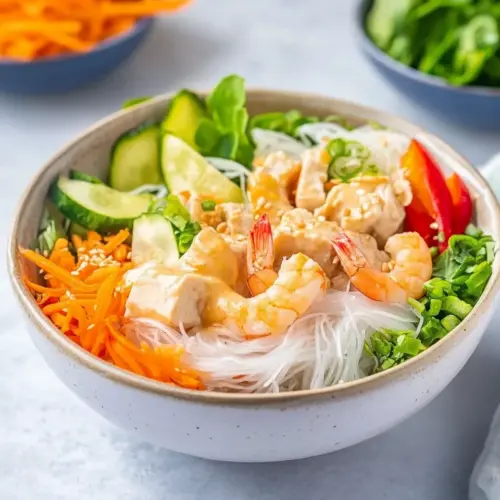
Summer Roll Bowls
Summer Roll Bowls are a bright, creamy, and crunchy meal featuring a rich peanut sauce, tender protein, and fresh vegetables. This easy weeknight dinner is perfect for warm weather, offering vibrant textures and quick assembly. Make it ahead friendly and customizable, ideal for family style meals or a light lunch that still feels satisfying.
Equipment
- Small pot
- Bowl
- Whisk or spoon
Ingredients
- 1/2 onion Slice thinly and sweat gently to form a sweet, savory base that mellows and adds depth to the dressing and cooked components. Cook until translucent to balance sharper flavors and provide a softened texture that pairs well with crunchy vegetables. Reserve a few raw slivers if a fresher onion bite is desired.
- 2 cloves garlic Mince finely to release aromatic oils that underpin the dressing and warm components, contributing pungency and complexity. Briefly cook to tame raw sharpness and help flavors meld with peanut and coconut elements. Use some raw for garnish to add a bright, garlicky finish if wanted.
- 1 pinch chilli flakes Crush or flake sparingly to add smoky heat that lifts the peanut sauce and fresh vegetables without overwhelming delicate flavors. Adjust quantity to control warmth across the bowl and consider toasting briefly for a more rounded spice character. Blend into the dressing evenly for consistent heat.
- 1/2 cup peanut butter Whisk smooth to provide a creamy, nutty backbone for the sauce that brings richness and body to the bowls. Combine with coconut cream, liquids, and seasonings to create an emulsified dressing that coats noodles, chicken, and vegetables. Choose a smooth variety for ideal texture and mixability.
- 1/4 cup coconut cream Spoon in to introduce silky, tropical richness that lightens the peanut butter while adding subtle sweetness and creaminess to the dressing. Emulsify with peanut butter and water to achieve a balanced, velvety sauce that clings to ingredients. Chill briefly if preparing ahead to help maintain consistency.
- 1/2 cup water Measure and add to thin the dressing to a pourable, clingy consistency while allowing flavors to distribute evenly across the bowl. Use warm or room-temperature water to help emulsify with peanut butter and coconut cream. Adjust amount to reach desired thickness for drizzling or tossing.
- 1 tablespoon brown sugar Dissolve to build background sweetness that balances salty and spicy elements in the dressing and marinades. Stir into warm liquids for easier incorporation and taste as you go to avoid over-sweetening. Brown sugar adds subtle molasses notes that deepen the overall flavor profile.
- 1 tablespoon soy sauce Stir in to contribute savory, umami saltiness that enhances both the dressing and any marinated proteins. Use darker or regular varieties depending on preferred saltiness and depth; balance with sugar and citrus to avoid overpowering. Incorporate gradually and adjust to taste.
- squeeze lemon or lime juice Squeeze freshly to add bright acidity that cuts through richness, lifting the peanut-coconut dressing and refreshing the bowl. Use lemon or lime depending on desired citrus character, and add incrementally to avoid over-acidifying. Provide a finishing brightness that ties together all components.
- 400 grams poached chicken breast or cooked prawns Shred or slice and divide across bowls to supply hearty protein and a substantial mouthfeel that complements the fresh vegetables and noodles. Use poached chicken breast or cooked prawns according to preference, seasoning lightly so the dressing can shine. Serve warm or chilled depending on desired contrast.
- 200 grams vermicelli thin rice noodles Soak or cook according to package instructions to provide a tender, springy starch that carries dressing and flavors throughout the bowl. Rinse under cold water after cooking to stop gelatinization and prevent clumping, then portion evenly beneath vegetables and protein. Thin rice noodles absorb sauces nicely when tossed.
- 1 avocado diced Dice and add for creamy, buttery texture and healthy fats that balance crunchy vegetables and tangy dressing. Use ripe avocado to ensure pleasant mouthfeel and scatter across bowls to provide richness in each bite. Squeeze a little citrus over diced pieces to slow browning if preparing ahead.
- 1 carrot finely sliced or grated Julienne or grate finely to contribute crisp, sweet-earthy crunch and vibrant color that contrasts with softer elements. Toss lightly with a touch of dressing or lemon to prevent drying and to integrate flavors. Carrot provides a pleasant textural counterpoint to noodles and proteins.
- 2 cups lettuce shredded Shred or chop to supply a light, leafy base with subtle crunch that refreshes the bowl and bulk without heavy calories. Toss with dressing just before serving to keep it crisp and vibrant. Lettuce acts as a cooling backdrop for spicier and richer components.
- 1 cup red cabbage finely sliced Slice thinly to deliver firm crunch and a peppery-sweet bite that enhances color and texture in the bowl. Mix with other raw vegetables for varied mouthfeel and to create visual appeal. Red cabbage also holds up well to saucing and provides pleasant acidity when dressed.
- 1 cucumber finely sliced Slice into ribbons or rounds to contribute crisp, watery freshness and a cooling element that balances richer dressing and proteins. Cucumber keeps the bowl light and hydrating while offering a mild contrast to spicier components. Salt lightly if desired to draw out excess moisture before serving.
- mint leaves Pluck whole or chiffonade to infuse bright, aromatic notes that refresh each bite and complement the peanut-coconut dressing. Add leaves sparingly to avoid overpowering other herbs, and scatter across bowls for an herbaceous lift. Mint pairs especially well with citrus and crunchy vegetables.
- chilli finely diced Dice finely to introduce fresh, sharp heat that livens the dressing and adds a spicy kick to the bowl as desired. Adjust amount to control overall spice and consider removing seeds to temper intensity. Combine with mint and citrus to balance the peppery notes.
- roasted peanuts chopped Chop or crush to add toasted, salty crunch and nutty depth as a finishing garnish that echoes the peanut butter in the dressing. Scatter over assembled bowls for texture contrast and visual appeal, and keep some aside to maintain crunch until serving.
Instructions
- In a small pot, heat a little oil over medium heat. Sauté the onion and garlic until softened and fragrant, about 2-3 minutes. If you'd like a little heat, you can add chili flakes at this stage for extra flavor.: The moment you begin, notice how the aroma of softened onion and garlic unfolds, warm and slightly sweet, signaling the flavor base is forming. You should see the onion turn translucent and the garlic release tiny bubbles, releasing a glossy sheen on the pan. This gentle sweating draws out sugars, which gives the sauce a rounded, savory backbone later. Use moderate heat so the garlic does not brown, which can make it taste bitter. If the pan gets too hot, remove it briefly from the flame to cool, and then continue, because burnt aromatics will taint the whole sauce.
- Add the peanut butter, coconut cream, and water, stir until melted, combined, and smooth. Once the peanut butter, coconut cream, and water are combined and smooth, you can adjust the sauce's thickness by adding more water a tablespoon at a time.: As you stir in the peanut butter and coconut cream , the mixture will transform from separate parts into a satiny, thick sauce that clings to the spoon. Listen for a quiet simmer and watch the surface become glossy, signs that fats are marrying together. Use a whisk or spoon to break up any lumps, and add more water a tablespoon at a time to reach a pourable consistency, especially if you plan to drizzle. If the sauce splits or feels grainy, reduce heat and whisk vigorously, because overheating can separate the oils and make texture uneven.
- Add the soy sauce, and lime or lemon juice, stir through. Taste, if you haven't added chilli and you wish to, you can add it now.: When you add soy sauce and a squeeze of lemon or lime juice , the sauce brightens and gains savory depth; a small taste will reveal the balance of salty, sweet, and acidic notes. The acid wakes up the peanut richness and prevents the sauce from becoming cloying. If it tastes too salty, counter with a tiny pinch more brown sugar or a splash more coconut cream. A common mistake is adding too much citrus at once which can dominate the peanut profile, so add incrementally and taste.
- Set the sauce aside to cool—note that it will thicken a bit as it cools, so you can add a splash of water if you’d like it to be a bit thinner for drizzling or dipping.: As the sauce cools, feel its texture move from warm and glossy to slightly firmer and clingy, which helps it adhere to vermicelli thin rice noodles and vegetables. If you need a drizzle, add water in small amounts to loosen it gently. Keep an eye on seasoning after thinning, since dilution can mute flavors. The slip here is diluting too much and losing character; always adjust slowly.
- If you have not already, poach your chicken breast or cook your prawns.: When poaching chicken breast , you should feel the surface change from glossy to matte and register a gentle give when pressed; overcooking will dry it out, so remove once the center is opaque and just firm. For prawns , they will curl and turn pink with firm flesh, and a quick chill preserves their snap. A frequent error is leaving proteins in boiling water too long, which makes them stringy and less pleasant in texture.
- Place the vermicelli noodles in a bowl and cover with boiling water for 2 minutes, then drain and rinse with cold water.: The vermicelli thin rice noodles will go from stiff to limp and glossy within those two minutes, and rinsing with cold water stops cooking instantly, keeping them springy rather than mushy. You can feel the smooth, slightly slippery surface after rinsing, which helps them separate when tossed into the bowl. If you skip the cold rinse, residual heat will overcook them and leave you with a clumped, soft mass.
- Thinly slice, grate or shred your vegetables: avocado, carrot, cucumber, lettuce.: avocado, carrot, cucumber, lettuce. : Preparing the produce creates a range of textures, from creamy avocado to crisp cucumber and crunchy carrot . Slicing uniformly helps every bite deliver balance, and you should see vivid colors that make the bowl inviting. Work quickly with avocado to minimize browning, and pat greens like lettuce dry so they remain crisp. A common slip is uneven cuts that lead to some bites being all soft or all crunchy.
- Assemble your summer roll bowls, arrange noodles and vegetables in the bowls, top with chicken or prawns, dress with the peanut sauce then garnish with sliced chilli, chopped peanuts and mint leaves.: Building the bowls is where the contrast comes together visually and texturally, so aim for a balance of color and proportion. Lay the vermicelli thin rice noodles first, add a bed of shredded lettuce and layers of sliced cucumber , red cabbage , and carrot , then nestle the protein on top. Drizzle the peanut sauce so it lightly coats components but leaves pockets of texture, then finish with crunchy roasted peanuts , aromatic mint leaves , and a touch of fresh chilli . Try not to overdress, because soggy greens are the usual pitfall.
- Enjoy!: The first bite should give you a hit of savory peanut, cooling crunch, and a bright citrus note, with textures that shift from creamy to crisp. Take a moment to savor the combined aroma of fresh herbs and roasted nuts, and adjust any elements on the side if you want more heat or acid. The only real mistake now is hesitating to dig in and share the bowls with others.
Notes
- Make the peanut sauce ahead: Allowing the sauce to rest overnight deepens the flavor and makes assembly faster on the day you serve.
- Use room temperature protein: If your chicken or prawns are chilled, bring them to room temperature so they blend with the other ingredients without chilling the bowl.
- Dry your greens: Pat the lettuce and cabbage dry after washing to keep the bowl from becoming watery when the sauce is added.
- Toast your peanuts: Lightly toasting roasted peanuts brings out extra aroma and nutty flavor, amplifying the sauce's peanut notes.
- Prep a garnish station: Arrange sliced cucumber, diced avocado, and chopped mint leaves in small bowls to make assembly quick and visually appealing.