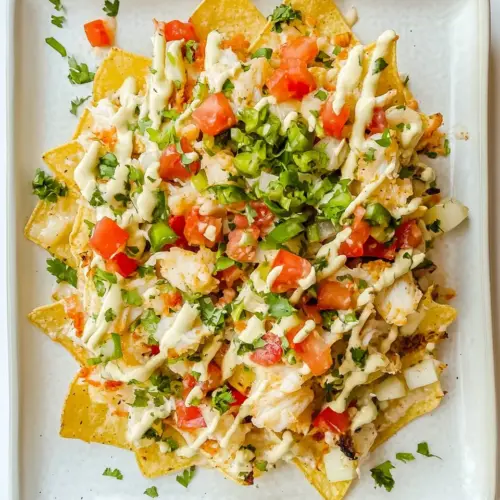
Summer Crab Nachos
Summer Crab Nachos are crispy, creamy, and bright, combining sweet jumbo lump crabmeat with melted white cheddar and fontina, fresh lime salsa, and a hint of heat. This easy weeknight dinner or party appetizer delivers satisfying textures and bold coastal flavors, perfect for summer gatherings and casual entertaining. Make it when you want something impressive but effortless to share.
Equipment
- Oven
- Baking Sheet
- Parchment Paper
- Large Bowl
Ingredients
- 1 large bag of your favorite tortilla chips Provide a salty, crunchy base that holds toppings and contrasts textures; choose a sturdy variety to prevent sogginess when layered with moist ingredients. Offer portability and ease for serving a shared appetizer at gatherings.
- 1 pound jumbo lump crabmeat Add a sweet, delicate seafood flavor and substantial lumps for luxurious bites; handle gently to preserve texture and avoid breaking the pieces. Combine with seasonings and citrus to highlight freshness without overpowering the natural crab taste.
- 1 teaspoon old bay seasoning Season with an aromatic blend of spices to impart savory, slightly spicy, and herbal notes; sprinkle sparingly and taste as you go to avoid overpowering delicate crab. Enhance the coastal profile and pair well with citrus and creamy components.
- 6 green onions, thinly sliced Contribute a mild oniony crunch and bright color while providing fresh, slightly sharp notes that cut through richness. Scatter thin slices over the finished nachos for a crisp, aromatic finishing touch.
- 2 limes, juiced Add bright acidity and citrus brightness to lift flavors and balance richness from cheese and crab; squeeze freshly for the best, most vibrant taste. Use juice to marinate or dress crab gently and to finish the assembled nachos for freshness.
- 1 cup freshly grated white cheddar cheese Melt into a creamy, sharp layer with tangy depth that complements seafood and salty chips; grate freshly to ensure smooth melting and vibrant flavor. Layer evenly for flavorful pockets throughout the nachos.
- 1 cup freshly grated fontina cheese Provide a mild, buttery meltability with subtle nutty notes that blends well with sharper cheeses; use freshly grated pieces for even coverage and smooth texture when melted. Combine with other cheeses to create a balanced, gooey topping.
- 1 cup cherry tomatoes, chopped Introduce juicy acidity and sweet-tart bursts that brighten each bite while adding color contrast across the nachos. Chop uniformly to distribute flavor and prevent watery spots that could weaken chip crispness.
- 1 jalapeno pepper, seeded and diced Bring a bright heat and grassy pepper flavor without overwhelming other components when seeded; finely dice for even distribution and controlled spiciness. Use sparingly if serving to children or heat-sensitive guests.
- 1 large shallot, diced Contribute a mild, sweet onion flavor with a delicate texture that blends seamlessly into fresh salsas or relishes; dice finely to meld with crab and vegetables. Sauté lightly if preferring softened, sweeter notes without losing aromatic complexity.
- 1/3 cup diced radish Offer a crisp, peppery crunch and slight earthiness to add textural contrast and visual appeal; dice small to avoid overshadowing other elements. Use sparingly to maintain balance among fresh ingredients.
- 1/3 cup chopped fresh cilantro Add a bright, herbaceous burst and citrus-like freshness that ties together seafood and cheese components; chop finely to distribute flavor evenly. Use as a finishing garnish to enhance aroma and color.
- kosher salt and pepper Season to taste with coarse salt and freshly cracked pepper to balance flavors and enhance natural sweetness; add gradually and adjust at the end for precise control. Use kosher salt for clean salting and pepper for subtle heat and complexity.
Instructions
- Preheat the oven (or even your grill!) to 400 degrees F. Line a baking sheet with parchment paper.: When your oven warms to 400 degrees F , you will feel the promise of rapid melting and toasting. The preheated oven ensures the cheeses liquefy evenly, creating pockets of gooey cheese that cling to the tortilla chips . As it heats, you may notice a faint dry, warm smell from the oven that signals readiness. A common error is skipping preheating, which leads to uneven melting and cold spots. If you use a grill, you want a consistent medium high heat so the chips do not char too fast while the cheese melts. Line the baking sheet with parchment to catch drips and make cleanup easier.
- Spread the tortilla chips out on the baking sheet, in as much of a single layer that you can.: Parchment prevents sticking and helps you slide the finished nachos to a serving surface. It also keeps the underside of the chips from overbrowning by providing a slight buffer. Press the paper flat so it lays evenly and avoid overlapping too many chips in layers, since too much overlap traps steam. A typical mistake is placing chips directly on the pan, which can lead to cheese sticking and tearing when you try to serve.
- In a large bowl, toss the crab with the old bay, half of the green onion and the juice of 1 lime. Spread the crab mixture out over the tortilla chips.: Arrange the tortilla chips in as much of a single layer as possible so each chip gets some cheese and a bit of crabmeat . Visually, you want an even field of chips with small gaps, not a tall mound. This setup lets heat reach all chips uniformly, preventing soggy centers and burnt edges. Avoid crowding too many chips under others; if chips overlap heavily the ones underneath will stay cold and limp.
- Top the crab with the cheddar and fontina cheese.: This is where the crabmeat picks up seasoning. When you gently toss 1 pound of crabmeat with old bay seasoning , half the sliced green onion , and the juice of 1 lime , the citrus brightens and the spice layers flavor into the lumps. The aroma should be briny and citrusy, and you should still see intact pieces of crabmeat . Overmixing will break the lumps into flakes, losing texture; be gentle and use a light folding motion.
- In a large bowl, combine the remaining green onions, remaining lime juice and the tomatoes, jalapenos, shallots, radish and cilantro. Add a big pinch of salt and pepper. Stir. Add more lime if needed.: Dot or gently spoon the seasoned crabmeat over the chips so you get pockets of crab without burying every chip. You want visual pearls of crabmeat sitting on top of the chips, which will warm and mingle with the melting cheese . The sound here is subtle, just the soft scattering of crab onto the chips. A frequent slip is piling too much crab in one zone which causes uneven heat transfer; aim for even distribution.
- Place the sheet pan in the oven and bake for 8 to 10 minutes, until the cheese is melted and all the chips are warm.: Sprinkle the grated white cheddar and grated fontina over the pan in a fairly even cloud so the cheese can melt into a cohesive layer. You will see the cheeses begin to gloss and then bubble when they are ready. The cheeses create the glue that holds the toppings to the chips, and fontina smooths out the sharpness of the cheddar. A common mistake is using pre shredded cheese with anti caking agents, which can prevent smooth melting; freshly grated cheese melts more uniformly.
- Remove the pan and top with the salsa. Serve immediately!: In a separate bowl, mix the remaining sliced green onion , the juice of the second lime , chopped cherry tomatoes , diced jalapeno , diced shallot , diced radish , and chopped cilantro . Add a big pinch of kosher salt and pepper and stir. This salsa should smell bright, with citrus, herb, and a mild heat from the jalapeno . If the mix tastes flat, squeeze a touch more lime . Avoid making this too far ahead or the tomatoes and radish will release water and dilute the punch.
- Place the sheet pan in the oven and bake for 8 to 10 minutes: As the pan sits in the heated oven, you should watch the cheeses go from matte to glossy to gently bubbling in about 8 to 10 minutes. The edges of some chips may toast to a light golden brown while the cheeses form silky strands. The sound in this stage is subtle, mostly the oven fan and your anticipation. If you leave it much longer, the chips can overbrown and the crabmeat can dry out, so check at eight minutes and adjust as needed.
- Remove the pan and top with the salsa: Once the cheeses have melted and the chips are warm, take the pan from the oven. Immediately spoon the vibrant salsa over the hot nachos so the heat warms the salsa slightly without wilting the herbs. The contrast between warm melted cheese and cool bright salsa is delightful, and the aroma will be citrus forward with herbaceous notes. A common misstep is letting the nachos rest too long before topping, which cools the cheese and reduces the desired textural interplay; serve right away.
- Serve immediately: These nachos are best eaten right after assembly, when the textures and temperatures are at their peak. As the plate sits, the chips closest to the center soften from steam, so immediate serving preserves the crisp to tender contrast. If you must hold them briefly, keep the pan warm in a low oven, but know the ideal experience is fresh from the oven to plate.
Notes
- Swap the cheese ratio Try more fontina if you prefer a creamier melt, or increase the cheddar for a sharper flavor punch. Adjusting the ratio shifts the overall mouthfeel while keeping the basic profile intact.
- Control the heat Leave the jalapeno seeds in for more kick, or replace with a milder pepper to suit kids or spice averse guests. Small changes to the pepper will dramatically alter the perceived spice without changing other flavors.
- Play with chip type Use thicker restaurant style tortilla chips for sturdiness, or a slightly thinner chip for more crisp bite. The chip choice affects texture more than taste, so match it to your serving style.
- Make the salsa ahead You can prepare the tomato, shallot, radish, and cilantro mix an hour ahead and refrigerate. Bring it back to room temperature before topping so the contrast with hot cheese remains pleasant.
- Keep crabmeat lumpier Handle the crabmeat gently and fold rather than stir vigorously to preserve chunks. Those intact pieces are what make the nachos feel elevated and give satisfying texture.
- Garnish for brightness Add a final sprinkle of chopped cilantro and the reserved sliced green onion just before serving to maintain fresh color and aroma.