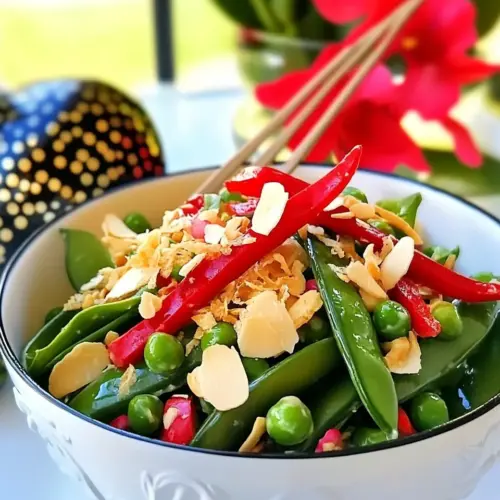
Sugar Snap Pea Salad
Sugar Snap Pea Salad is a bright, crisp spring salad with crunchy sugar snap peas, peppery radishes, and creamy edamame, all tossed in a slightly sweet dressing and finished with chopped peanuts. This easy, vibrant side is perfect for quick lunches and light weeknight dinners, delivering texture and flavor in every bite. Try it when you want a fresh dish that feels both simple and special.
Equipment
- Glass measuring cup or small glass bowl
- Whisk
- Mixing Bowl
- Knife
- Cutting Board
Ingredients
- 1 1/2 cups red radishes Provide a crisp, peppery crunch that brightens the salad and balances sweeter components. Thinly sliced rounds add color contrast and a refreshing, slightly spicy bite. Mildly pungent flavor helps cleanse the palate between richer elements.
- 3 cups sugar snap peas Add a sweet, tender snap and vibrant green color that forms the salad’s main body. Lightly blanched or raw, they contribute juicy texture and mild vegetal flavor that complements the other components. High water content keeps the dish light and refreshing.
- 1 cup cooked, shelled edamame (thawed if frozen) Introduce a creamy, nutty protein element that boosts texture and nutritional value with plant-based protein. Shelled edamame brings a subtle sweetness and smooth bite that contrasts with crunchy vegetables. Thawing if frozen preserves firmness and optimal mouthfeel.
- 2 T sliced green onions (scallions) Contribute a sharp, oniony aroma and subtle crunch when thinly sliced, enhancing overall flavor complexity. Scallions add freshness and a mild allium note without overpowering the salad. Green tops provide color and a light, zesty finish.
- 1/4 cup chopped peanuts Provide a crunchy, salty finish and rich nutty flavor that elevates texture and taste. Coarsely chopped peanuts add satisfying bite and savory depth that contrasts with tender vegetables. Toasting briefly enhances aroma and brings out deeper flavors.
Instructions
- Mix dressing ingredients in glass measuring cup or small glass bowl, whisking well. (I use sugar free or low sugar apricot jam.): Right away you will notice a glossy sheen form as the components emulsify, and a faint fruity aroma if you used apricot jam. Whisk until the mixture is smooth and homogenous; this helps the dressing cling to the vegetables, ensuring even coating. A common mistake is not whisking long enough, leaving syrupy pockets that do not spread, so scrape the sides and whisk in small, quick circles until smooth. The sound is quiet, but you can feel a slight resistance when the mixture comes together, which is the cue it is ready.
- Trim radishes and cut in half-moon slices.: As you slice, the radishes release a sharp, fresh scent that wakes up your senses. Cut them uniformly so each slice offers the same crispness and bite. Use a rocking motion with your knife for clean edges, and keep fingers curled to avoid slips. A mistake to avoid is uneven slicing, which leads to variable texture and some pieces that overpower others; aim for consistent thickness so the radish and pea textures balance.
- Trim Sugar Snap Peas and cut in half on the diagonal.: Trimming removes the stem and any tough strings, then slicing them on the diagonal creates attractive shapes and exposes more surface to hold dressing. You'll hear a satisfying snap when the pea pods are fresh, and their scent is lightly sweet and green. If they squeak between your fingers, they may be older and less crisp, so choose firm pods. A common error is leaving the stems on, which can be chewy; trim carefully for the best mouthfeel.
- Measure one cup of shelled edamame.: Handling the edamame, you will notice a subtle, beany aroma and a soft, slightly waxy texture. Ensuring an accurate one cup measurement keeps the salad balanced and avoids overwhelming the lighter vegetables. If the edamame were frozen, let them thaw and drain fully so they do not water down the dressing. A frequent oversight is using too much edamame, which can tip the salad toward a heavier, denser bite; stick to the measurement for harmony.
- Combine vegetables in bowl, pour over about 1/2 of dressing, and stir to mix until all vegetables are coated with dressing.: When you toss the vegetables, take note of how the dressing clings and glossy sheen appears; this visual cue shows the dressing is working. Stir gently but thoroughly to avoid bruising the peas and radishes, folding from the bottom to distribute dressing evenly. The sound will be soft as veggies move against each other, and the smell becomes layered, a mix of sweet and peppery notes. One mistake is overdressing, which makes the salad soggy; start with half the dressing and add more later if needed.
- You can refrigerate the salad at this point for a few hours. You may want to stir in 1 T more dressing after the salad has been chilled.: Chilling melds flavors and calms the initial sharpness of the radishes, creating a more cohesive salad. The texture will remain crisp if you did not over dress, and the smell becomes mellowed but still fresh. Before serving after refrigeration, I sometimes stir in one extra tablespoon of dressing to revive the gloss and brighten flavors. A common pitfall is leaving it too long uncovered, which can dry the top layer; cover the bowl to keep moisture consistent.
- You will probably not use all the dressing but see below for more ideas to use it.: Adding a small amount post chill refreshes the coat and revives the flavor lift that can dull in the fridge. The additional dressing brings back the gentle shine and balances moisture, so each bite remains lively. Avoid adding too much at once; taste and adjust incrementally. Overdoing it will overwhelm the vegetables and make the peanuts soggy, so proceed with restraint.
- To serve, put salad in serving bowl and sprinkle peanuts over.: Leftover dressing stores well and can liven other salads or act as a glaze for roasted vegetables. Its slightly fruity sweetness makes it versatile in small amounts. A simple tip is to keep it refrigerated in a sealed jar for quick use. A mistake is discarding leftovers; they are convenient and reduce waste, but be sure to label the jar so you remember its contents.
- To serve, put salad in serving bowl and sprinkle peanuts over: The final act of sprinkling peanuts adds a toasty aroma and audible crunch, completing the sensory profile. Present the salad in a shallow bowl so the peanuts remain on top and do not sink into the dressing. The contrast between the shiny coated vegetables and the rough peanut texture is pleasing visually. Avoid mixing the peanuts in too early, as they can soften under moisture; add them just before serving for maximum snap.
Notes
- Freshness first, always choose peas and radishes that are firm and vibrant; limp produce will make the salad less enjoyable.
- Gentle tossing helps preserve the pea pods and radish edges, so fold rather than stir vigorously to maintain crispness.
- Control the dressing by starting with half, taste mid way through, and add more only if needed to avoid a soggy bowl.
- Peanut timing matters, add peanuts at the last minute to preserve crunch and visual contrast on the serving bowl.
- Make ahead strategy involves dressing just half the salad if you plan to store it, then dress fully before serving for fresh texture.