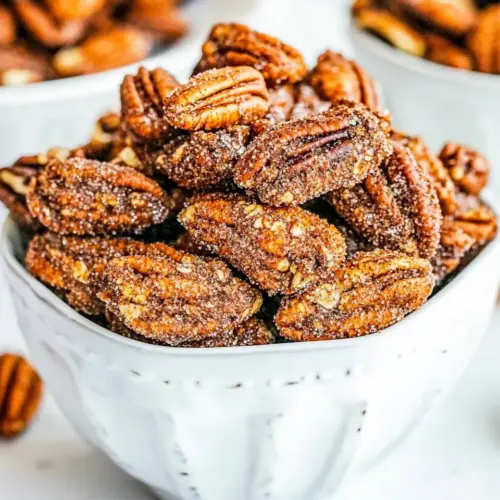
Sugar Pecans
Sugar Pecans are a crisp, cinnamon coated snack that combines buttery toastiness with a sweet crunchy shell. These easy to make pecans are perfect for autumn gatherings, party platters, or a simple pantry treat. With minimal ingredients and a forgiving method, they are an approachable sweet snack to make ahead and enjoy all week long.
Equipment
- Glass Mixing Bowl Set (3 piece)
- Aluminum Baking Sheet (2 pack)
Ingredients
- 2 tablespoon butter (melted) Melted to coat the nuts and help sugars adhere; provides a rich, mellow buttery flavor and aids in creating a glossy, crunchy finish when baked or toasted. Enhances mouthfeel and balances sweetness, contributing to the overall texture of the sugared pecans.
- 2 egg whites Whisked lightly to create a sticky binder and aeration; egg whites help the sugar-cinnamon mixture adhere evenly to each pecan half and contribute slight crispness when cooked. Also adds structure during roasting so the coating sets uniformly without clumping.
- 1/2 cup brown sugar (packed) Packed and stirred into the coating mix to deliver deep, molasses-like sweetness and a hint of caramel complexity; brown sugar helps create a chewy, caramelized exterior on the candied pecans. Provides moisture to prevent the coating from becoming too dry while enriching flavor depth.
- 1/2 cup sugar Granulated sugar added for bright, crystalline sweetness and crunch; it helps form a crisp, crackly shell around the pecans when heated and balances the darker notes of brown sugar. Works with the butter and egg white to achieve a well-textured, sweet coating.
- 1 teaspoon cinnamon (ground) Sprinkled into the sugar blend to introduce warm, aromatic spice and subtle earthy complexity; ground cinnamon complements the sugars and nuts, rounding out the flavor profile. Enhances aroma and provides a classic sweet-spice character to the pecans.
- 4 cups pecan halves Tossed with the coating mixture as the primary base ingredient; pecan halves bring rich, buttery flavor and a firm, crunchy texture that pairs perfectly with the sweet cinnamon-sugar glaze. Serveable as a snack, topping, or gift-worthy confection once coated and toasted.
Instructions
- Prep: Preheat the oven to 350°F. Pour the butter and spread it over a baking sheet.: Preheat the oven to 350°F. Pour the butter and spread it over a baking sheet. : Warm, buttery aromas should be subtle as you pour, and the sheet will look lightly coated; this helps the pecans brown without sticking. I like to pour the melted butter and tilt the sheet so it forms a very thin film across the surface, which promotes even toasting. Expect a faint nutty scent as the butter warms on the metal. If your butter smokes, it is too hot, so remove it from the heat and let it cool briefly before using. A common error is using too much butter, which can cause clumping and uneven browning.
- Toss: In a large bowl, mix the egg whites, sugar and cinnamon. Add the pecan halves and toss until they are fully coated.: In a large bowl, mix the egg whites, sugar and cinnamon. Add the pecan halves and toss until they are fully coated. : You will feel the tacky texture of the egg whites as the sugar and cinnamon cling to the pecan halves , and the mixture should glisten slightly. I find using a large bowl gives the nuts room to tumble so every piece gets covered. Smell the cinnamon as you stir, it should be warm but not overpowering. If the coating seems dry or patchy, gently fold the mixture again rather than adding more egg white which can make the coating dense. A typical mistake here is overmixing, which can break the nuts or create a heavy coating.
- Bake: Spread the pecans onto the baking sheet evenly. Bake for 30 minutes, stirring the pecans every 10 minutes. Check after 20 minutes of baking to make sure they don't burn.: Spread the pecans onto the baking sheet evenly. Bake for 30 minutes, stirring the pecans every 10 minutes. Check after 20 minutes of baking to make sure they don't burn. : As the nuts roast, they will release a toasty, caramel fragrance and the sugar will begin to set, creating a glossy, slightly crackling surface. The visual cue to watch for is an even deepening to a golden brown color without dark spots. When you stir every 10 minutes, listen for a faint crackle as the coating firms up; this indicates progress. If the oven runs hot, rotate the sheet midway and shorten the time slightly to avoid scorching. One error I see often is skipping the periodic stirring, which can lead to uneven color and burnt edges.
- Cool and serve: Cool on the baking sheet for 10-15 minutes before serving.: Cool on the baking sheet for 10-15 minutes before serving. : Cooling allows the sugar to harden into a crisp shell, and you will notice the texture change from slightly tacky to crunchy under the teeth. Leave the pecans on the sheet until they reach room temperature, then give them a gentle break apart if they stick together. The aroma at this stage is rich and sweet with a toasted backbone. If you remove them too soon they may still be soft and can clump, so patience at this point pays off. A frequent mistake is packing them away while still warm, which traps steam and softens the coating.
Notes
- Try different spices — If you want to explore flavor, swap or add spices to the baseline cinnamon. Nutmeg, ground cloves, or a pinch of ginger shift the profile toward warm, holiday notes. For a bolder kick, integrate a small amount of chili powder or cayenne, but introduce heat sparingly so it complements rather than overwhelms the sweet coating.
- Control the sweetness — Adjust the ratio of brown sugar to white sugar to vary depth and caramel character. Increasing brown sugar enhances molasses tones and can make the coating slightly softer, while relying more on white sugar yields a brighter snap. Tasting a small test spoon before baking helps you find the balance you prefer.
- Mind cooling and storage — Fully cooling the nuts on the pan prevents steam from softening the coating. Once cooled to room temperature, store in an airtight container at room temperature for up to one week. Refrigeration extends life to about three weeks, and freezing keeps them longer, but allow them to come back to room temperature before serving for best texture.
- Toast for more depth — Lightly pre toasting the pecan halves for five minutes before coating can deepen their nuttiness. Be careful not to pre toast too long, as they will continue to brown while sugaring; the goal is a subtle toasty note to boost flavor complexity.
- Even coating technique — Use a large bowl and fold gently so each pecan half is evenly coated. If pieces clump after baking, separate them while still slightly warm with a fork rather than smashing them, which preserves the crisp shell.