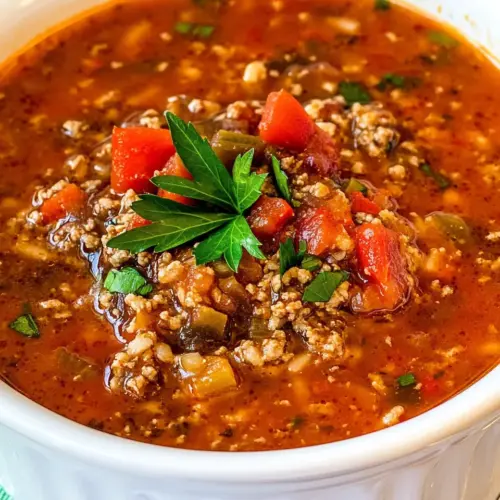
Stuffed Pepper Soup
Stuffed Pepper Soup is a rich, savory, and slightly sweet one pot meal combining browned beef, bright bell peppers, and a tomato broth finished with rice. This creamy, comforting bowl makes an easy weeknight dinner and adapts well to meal prep. It’s a cozy, flavorful reason to simmer a pot and share a warm meal with family or friends.
Equipment
- Dutch Oven
- Large Pot
- Wooden Spoon
Ingredients
- 1 tbsp olive oil Heat and add a fruity, slightly bitter base fat for sautéing onions and browning meat, contributing a Mediterranean flavor and smooth mouthfeel; helps prevent sticking and carries aromatics through the soup. Use at the start of cooking to bloom spices and soften vegetables while providing a subtle richness to the broth.
- 2 lb lean ground beef Brown and add a hearty, protein-rich component that brings savory umami, texture, and substance to the soup; breaks down and melds with tomatoes and broth to form the meat-forward backbone. Cook thoroughly to render fat and develop browned bits for deglazing and deeper flavor.
- Salt and pepper to taste Season and balance flavors by contributing salinity and subtle mineral notes to enhance the other ingredients; helps elevate sweetness, acidity, and umami for a well-rounded soup. Adjust gradually while tasting to avoid over-salting and to complement the beef and tomatoes.
- 1 small diced – yellow or white, about 1 cup Sauté and contribute a mild, slightly sweet onion flavor with a tender texture that forms the aromatic base; releases sugars when cooked to deepen soup complexity. Dice uniformly for even cooking and add early so it softens and melds with the beef and peppers.
- 1 large green bell pepper cleaned and chopped Chop and provide a fresh, crisp vegetal flavor with mild bitterness and bright green notes that mimic classic stuffed pepper fillings; softens with simmering while retaining some texture. Add with the other pepper to maintain color contrast and balance the soup’s sweetness.
- 1 large red bell pepper cleaned and chopped Chop and impart a sweet, fruity pepper flavor and vivid red color that complements the green pepper; softens and releases juices that enrich the broth while enhancing visual appeal. Combine with the green pepper to recreate the stuffed pepper profile in soup form.
- 1/4 c. brown sugar Sweeten and deepen savory elements by adding molasses-like caramel notes that counterbalance acidity from tomatoes; aids in rounding harsh flavors and enhancing overall depth. Add sparingly and taste to achieve a balanced sweet-savory profile akin to stuffed pepper filling.
- 2 tsp Italian seasoning Season and introduce an herbaceous, aromatic blend that layers Mediterranean and Italian flavors, providing thyme, oregano, basil-like notes; enhances the meat and tomato combination. Sprinkle early to allow the dried herbs to hydrate and evenly distribute throughout the soup.
- 2 cloves garlic minced Mince and infuse a pungent, aromatic punch that brightens savory flavors and adds depth; releases aromatic oils when cooked and pairs especially well with beef and tomatoes. Add during sautéing to prevent raw sharpness and to meld into the broth.
- 15 oz tomato sauce Pour and contribute a concentrated tomato base that provides body, umami, and a smooth tomato flavor to the soup; helps thicken and bind the ingredients into a cohesive broth. Stir in with diced tomatoes and simmer to integrate fully into the soup.
- 28 oz diced tomatoes, undrained Include and supply chunky tomato pieces with juices that add texture, acidity, and sweet-savory tomato flavor; the undrained liquid increases the soup’s tomato-forward broth. Simmer to meld flavors and break down some pieces for a balanced consistency.
- 2 c. beef broth Add and create a savory liquid foundation that enhances mouthfeel and deepens beef flavor while controlling soup consistency; supplies saline, umami, and richness without overpowering other elements. Use as needed to achieve desired soup thickness and adjust seasoning afterward.
- 2 c. cooked rice white or brown Fold in and provide comforting starch, absorbing flavors and adding body to the soup while mirroring the classic stuffed pepper filling; contributes chew and heartiness to each spoonful. Add cooked rice towards the end to prevent over-softening and to maintain texture.
Instructions
- Heat oil in Dutch oven or large pot. Add ground beef, salt, and pepper and cook until almost done.: The scent of warm olive oil signals the pot is ready, and it should shimmer slightly when heated; if it smokes, reduce the heat to avoid a bitter taste. I usually let it warm for about 20 seconds so it coats the bottom evenly. This step matters because the hot oil helps the ground beef brown properly, building those caramelized flavors. A common mistake is rushing and adding meat to a cool pot, which causes sticking and a pale, boiled texture instead of a flavorful sear.
- Add diced onion and cook until soft. Add peppers and cook over medium-high heat until soft, about 5-8 minutes.: You will hear a steady sizzle as the ground beef meets the hot oil, and the meat will change from pink to brown in patches. Use a spoon to break it apart so it browns more evenly, and season with salt and pepper early to allow the meat to absorb the seasoning. The why is clear, browned meat adds umami and depth to the broth. Avoid stirring constantly, which prevents proper browning and yields less flavor.
- Add brown sugar, Italian seasoning, and garlic, continue stirring and cook 1 minute. Then add the tomato sauce, diced tomatoes, and beef broth, stir until well combined.: As the aromatic onion hits the pot you should smell a sweet, toasty note as it softens and becomes translucent; this takes a few minutes over medium heat. Softening the onion releases sugars that round out the soup, so be patient. A common pitfall is cooking on too high heat, which can lead to burnt edges and an acrid flavor rather than the gentle sweetness you want.
- Bring mixture to a boil and then reduce to simmer and cover. Cook for 45-60 minutes or until heated through and flavors have had a chance to blend well.: The bell peppers will begin to make a faint sizzling sound and will soften and slightly wrinkle as their water content releases. Cooking them over medium-high heat helps them develop a bit of char and bright flavor without turning mushy. This step contributes texture and color contrast. Overcooking will make them collapse and lose vibrancy, so check their tenderness frequently.
- Stir in cooked rice and serve immediately.: When you sprinkle in the brown sugar and Italian seasoning , you should notice a quick bloom of aroma as the herbs and sugar warm, and the minced garlic will become fragrant within about a minute. This moment deepens the flavor profile by letting the herbs release oils and the sugar mellow acidity. Be careful not to let the garlic brown here, because browned garlic can become bitter and dominate the dish.
- Then add the tomato sauce, diced tomatoes, and beef broth, stir until well combined: Pouring in the tomato sauce , canned diced tomatoes , and beef broth creates a chorus of steam and a bright tomato aroma that should smell tangy and rich. Stirring until uniform ensures every bit of browned fond is incorporated into the liquid, which is key for depth of flavor. If your mixture seems too thick, the broth will help loosen it, but add cautiously in case the canned tomatoes already provide enough liquid.
- Bring mixture to a boil and then reduce to simmer and cover: You will see bubbling across the surface as the pot reaches a boil, and then as you reduce the heat to a gentle simmer the bubbling should become steady and slow. Covering the pot traps steam so flavors meld more fully. This technique allows the tomatoes and seasonings to harmonize; rushing this step will yield a less integrated taste.
- Cook for 45 to 60 minutes or until heated through and flavors have had a chance to blend well: During the long simmer the aroma shifts from sharp tomato to a deeper, rounded stew scent, and the broth will thicken slightly. This slow melding is why the soup tastes layered rather than flat. Stir occasionally to prevent sticking, and if it starts to look dry add a splash of broth. A common error is skipping this slow simmer, which leaves flavors underdeveloped.
- Stir in cooked rice and serve immediately: The final addition of warm, cooked rice should give the soup body and a pleasing contrast of grain against the broth. You will feel the heat and steam lift as you stir it in, and the soup will gain a slightly softer viscosity. I recommend adding rice right before serving to avoid it absorbing too much liquid during storage. If rice is added too early the texture becomes gummy and the broth is absorbed, which is a frequent leftover disappointment.
Notes
- Brown the meat properly, make sure your ground beef develops color rather than steaming. If the pot seems crowded, brown in batches so you build those caramelized bits that deepen the broth.
- Protect the garlic, add minced garlic only after the herbs and sugar have warmed so it becomes fragrant without burning. Burnt garlic brings bitterness that is hard to mask.
- Adjust sweetness carefully, the brown sugar is a balancing act with the canned tomatoes. Start with the listed amount, taste after simmering, and tweak to your preference.
- Hold the rice, if you plan to refrigerate or freeze leftovers, wait to add the cooked rice until serving time so it does not absorb all the broth and become clumpy.
- Freeze without rice, cool the soup completely before freezing and portion into airtight containers. Reheat gently and add freshly cooked rice when serving for the best texture.