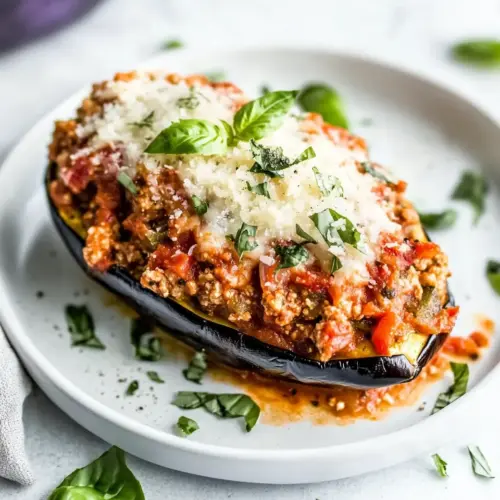
Stuffed Eggplant Parmesan
Stuffed Eggplant Parmesan is a creamy yet savory summer dinner that combines tender eggplant boats with savory sweet Italian chicken sausage, bright basil, and bubbling mozzarella. This easy weeknight dinner features layered textures and bold tomato flavor, making it a crowd pleaser. Try it when you want a satisfying meal that looks elevated but stays simple to prepare.
Equipment
- Large Pot
- Large Skillet
- 9 x 12 baking dish
- Slotted Spoon
- Melon baller or small knife
Ingredients
- 2 medium, 15 oz each white eggplants, stems trimmed off and halved lengthwise Trimmed and halved, provide the meaty flesh and mild flavor that serves as the vessel for the stuffing while offering a tender, roasted texture when baked; white eggplants hold up well to filling and add subtle sweetness that balances savory components.
- 3 links, 8.4 oz sweet Italian chicken sausage, casings removed (I love Premio) Removed from casings and crumbled, supply savory, herbaceous depth with a leaner poultry profile that enriches the stuffing mixture and adds robust umami when browned; sweet Italian chicken sausage contributes spiced notes that complement the tomatoes and cheese.
- 1/2 small onion, finely diced Finely diced and sautéed until translucent, add gentle sweetness and aromatic background that forms the flavor base for the filling, helping to soften and meld with garlic and sausage while providing texture contrast to the eggplant.
- 2 cloves garlic, crushed Crushed and briefly cooked, deliver pungent, aromatic sharpness that brightens the filling and deepens savory flavors; garlic helps build complexity and pairs well with basil and tomatoes to enhance overall aroma.
- 1 1/3 cups crushed tomatoes Crushed and simmered with the filling, introduce bright acidity and natural sweetness that bind the stuffing components together while providing saucy moisture; crushed tomatoes offer a rustic texture that complements the eggplant cavity.
- 5 basil leaves, chopped (plus more for garnish) Chopped and folded into the filling, supply fresh, sweet, and slightly peppery herbal notes that lift the sauce and filling; basil harmonizes the tomato and cheese flavors and can be used as an aromatic garnish for freshness.
- salt and pepper, to taste Measured to taste and added during cooking and finishing, provide essential seasoning to balance acidity, sweetness, and fat while enhancing all other flavors; salt and pepper allow control over the final dish's savory profile.
- 1/2 cup shredded part skim mozzarella cheese Shredded and sprinkled over the stuffed eggplants, contribute creamy, melty texture and mild dairy richness that helps bind the filling and creates a stretchy topping when baked; part-skim mozzarella keeps the dish lighter while still offering desirable melt.
- 4 teaspoons grated Pecorino Romano Grated and scattered before or after baking, deliver salty, tangy umami that sharpens the overall flavor and provides a granular, savory finish; Pecorino Romano adds depth and a piquant note that complements the sausage and tomatoes.
Instructions
- Preheat the oven to 400°F.: The warm, slightly hot oven sets the stage so the stuffed eggplant finishes evenly and the cheese melts into a glossy, golden layer. You should feel gentle heat radiating from the open oven and hear a faint whoosh as the door closes, which means the environment is ready. This initial heat helps create succulent, not soggy, shells. A common mistake is preheating too late, which can extend baking time and dry the filling.
- Bring a large pot of water to a boil.: A rolling boil will give the parboil step enough energy to soften the scooped eggplant quickly. Listen for the lively bubbling and watch for steam; that intensity ensures even blanching. Boiling briefly helps remove bitterness and jumpstarts the tenderizing process so the shells roast rather than collapse. Avoid boiling in a too small pot, which can lower the water temperature and create uneven cooking.
- Hollow out the flesh of the eggplant to create a boat using a melon baller or small knife, leaving a 1/2-inch of the skin all around to create a shell. Roughly chop the scooped out eggplant flesh.: The hollowing gives you uniform boats and chopped flesh for the filling. As you scoop, you should feel a soft give and see pale flesh that will brown when cooked. Leaving about a 1/2 inch of skin maintains structure through baking, preventing watery collapse. A frequent error is scooping too aggressively, which makes the shell flimsy and prone to tearing when filled.
- Drop the eggplant into the boiling water and cook 3 minutes (poking it with a spoon so they stay submerged). Remove with a slotted spoon and set them on paper towels on the counter.: After three minutes the scooped eggplant flesh should smell vegetal and slightly softened, with tiny bubbles clinging briefly when lifted, indicating it is blanched. This step reduces bitterness and firms the flesh so it holds up in the boats. Draining on paper towels removes surface moisture that could make the filling watery. Overcooking here leads to limp, mushy shells, so stick to the brief timing.
- Meanwhile, brown the sausage in a large skillet over medium-high heat, breaking the meat up while it cooks into smaller pieces. Add the onions and garlic and cook on a medium-low heat for about 2-3 minutes, until onions are translucent. Add 1 cup chopped eggplant and cook about 2-3 minutes. Add 1 cup crushed tomatoes, season with salt and pepper and cook 2 to 3 minutes. Remove from heat and stir in fresh basil.: As the sausage sizzles you will hear steady cracking and smell rich, savory notes. Browning creates caramelized bits that deepen taste through Maillard reaction, while the softened onion and fragrant garlic add sweetness and warmth. Adding the chopped eggplant absorbs flavors and softens; when you pour in crushed tomatoes , steam rises and the mixture becomes saucy and fragrant. Finishing off with chopped basil leaves a fresh herbal lift. Be careful not to burn the garlic, which can turn bitter if cooked at too high heat.
- Pour 1/3 cup of crushed tomatoes on the bottom of a 9 x 12 baking dish and place the eggplant boats on top. Season the eggplant with salt and divide the sausage and sauce evenly among the 4 eggplant boats.: Spreading a thin layer of crushed tomatoes prevents sticking and adds moisture under each boat. You should see gentle pooling of sauce and the boats sitting snugly in the dish. Seasoning the shells helps every bite taste balanced, because the shell absorbs flavors during baking. Avoid overfilling, which can cause runoff and uneven baking.
- Top each with 2 tablespoons of shredded mozzarella cheese and 1 teaspoon each of Pecorino Romano cheese. Cover with foil and bake 30 minutes until cheese is melted and eggplant is cooked through.: As the dish bakes the kitchen will fill with bubbling tomato aroma and melting cheese . Peek under the foil after about 25 minutes to check for a glossy melted top and tender eggplant that gives to a fork. The foil traps steam so the filling warms through without drying; removing it for the last few minutes would deepen browning if desired. A common misstep is baking too long, which can dry the filling and toughen the shells, so trust the visual cue of tender flesh and melted, slightly golden cheese.
Notes
- Swap sausages thoughtfully: If you want to adjust flavor intensity, choose a milder or spicier sweet Italian chicken sausage. Browning time may vary with fat content, so drain excess oil to keep the filling from becoming greasy.
- Toast the Pecorino: For a nuttier finish, grate fresh Pecorino Romano just before serving so its sharpness sings against the melty mozzarella. Adding it at the end preserves its bright saltiness.
- Make ahead: Assemble the boats and refrigerate for a few hours before baking. Bring them to room temperature before sliding into a hot oven to ensure even cooking and avoid a chilled center.
- Adjust tomato texture: If your crushed tomatoes are very watery, simmer them briefly to concentrate flavor and prevent a soggy filling. A thicker sauce clings to the browned bits and enriches every bite.
- Garnish with fresh basil: Add chopped or whole basil leaves right before serving to preserve aroma and color. The herb brightens the plate and contrasts the richer elements.