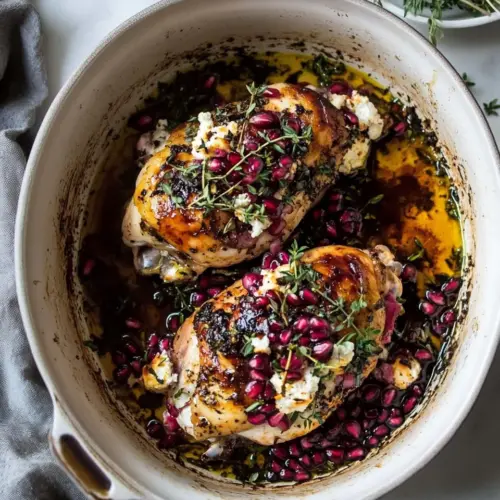
Stuffed Chicken With Goat Cheese And Pomegranate
Stuffed Chicken With Goat Cheese And Pomegranate brings creamy, tangy goat cheese and jewel like pomegranate arils to tender seared chicken, finished with a glossy balsamic reduction for an easy weeknight dinner or elegant fall main. This recipe balances sweet and savory, delivering a crispy sear, a luscious interior, and a bright finishing pop, making it a must try for entertaining or a cozy meal.
Equipment
- Large Skillet
- Baking Dish
- Tongs
- Sharp Knife
Ingredients
- 1 pound chicken breasts 4 small chicken breasts Provide lean protein and form the base of the dish; butterfly or pound to even thickness for stuffing and ensure even cooking. Offer a neutral canvas that pairs well with tangy and sweet fillings and holds moisture when seared and baked.
- 4 ounces goat cheese or dairy-free cream cheese Add creamy, tangy richness to the filling and contribute a smooth texture that contrasts with the chicken; can be used as a dairy-free alternative if needed. Help balance the sweet and acidic components while lending a luxurious mouthfeel to each bite.
- Salt Season savory components to enhance overall flavor and help bring out the natural taste of the chicken and filling. Use sparingly and adjust to taste, especially if other salty elements are present in the recipe.
- Pepper Provide mild heat and depth to the seasoning profile, complementing salt and garlic powder to round out the savory notes. Adjust to personal preference for a subtle peppery finish on the seared chicken.
- Garlic powder Impart aromatic, earthy flavor that enhances the savory profile of the chicken and filling; use a light hand to avoid overpowering delicate goat cheese. Combine with salt and pepper for a balanced seasoning rub before cooking.
- 1 tablespoon olive oil Act as the cooking fat for searing the chicken, promoting browning and preventing sticking while contributing a subtle fruity flavor. Use enough to coat the pan and help develop a golden crust before finishing in the oven.
- 1/4 cups shallots minced, about 3 small shallots Provide mild onion-like sweetness and aromatic depth when sautéed as part of the filling or sauce; mince finely to distribute flavor evenly. Contribute moisture and a subtle savory-sweet backbone that complements goat cheese and pomegranate.
- 2/3 cup balsamic vinegar Create a concentrated sweet-tart glaze for the sauce when reduced, adding complexity and depth to the finished dish. Balance with other liquids and sugars to achieve a syrupy consistency that coats the chicken and complements the filling.
- 2 tablespoons pomegranate juice Boost pomegranate flavor and add bright acidity to the sauce without increasing bulk, enhancing fruity notes and providing color. Use to intensify tartness and support the balsamic reduction for a layered sweet-tart finish.
- 1/4 cup low-sodium chicken broth Add savory, umami richness and help thin and deglaze the pan to capture browned bits for the sauce; choose low-sodium to control overall saltiness. Combine with vinegar and sugar to create a balanced sauce that complements the stuffed chicken.
- 1/4 cup + 1 tablespoon coconut sugar Contribute caramelized sweetness to the balsamic reduction and help create a glossy, balanced sauce; measure precisely as sweetness levels are concentrated when reduced. Adjust slightly if using sweeter or tarter vinegars to maintain harmony with the pomegranate elements.
- Pinch of salt Enhance seasoning subtly when combined with other spices and salts; use as a small adjustment to taste during cooking or final plating. Provide a controlled additional salt boost without overpowering the delicate filling and sauce.
- 1/2 cup pomegranate arils Deliver fresh, juicy bursts of sweet-tart flavor and jewel-like texture as a topping or mixed into the stuffing; add at the end to preserve shape and freshness. Provide visual contrast and a bright, fruity counterpoint to the creamy goat cheese and savory chicken.
- 1/4 cup fresh basil thinly sliced Contribute herbaceous brightness and a fresh aromatic lift when thinly sliced and sprinkled over the finished dish; pair well with the sweet-tart pomegranate and tangy goat cheese. Use sparingly to avoid overwhelming other flavors while enhancing visual appeal.
Instructions
- Preheat your oven to 350°F and spray a large baking dish with nonstick cooking spray. Set aside.: The air in the oven should feel warm and consistent before the chicken goes in, ensuring even cooking through. I always give my oven a minute or two after it signals preheat to stabilize the temperature so the breasts do not overcook at the edges. You should smell the faint warm air and, if your oven has a light, the dish will gleam slightly when ready. A common mistake is placing cold chicken into a not fully preheated oven, which can lengthen cooking time and affect texture, so be patient.
- Using a sharp knife, cut a pocket in the center of each chicken breast, making sure to not cut all the way through the breast.: You should feel the resistance of the meat as the knife forms a pocket, and the surface will bow slightly where the opening is made. Good posture of your hands and a steady, sharp blade prevent slipping and allow a neat pocket, which helps the filling stay inside while searing. A dull knife can tear the meat and cause jagged edges that leak filling. If the pocket feels too tight, slide a finger in gently to enlarge it just enough to hold the cheese.
- Stuff each pocket with about 1 ounce of goat cheese and sprinkle each chicken breast with a pinch of salt, pepper, and garlic powder.: The filling should feel creamy and snug inside, not bulging outward. When you press the seam gently, you should notice no large lumps, only the soft texture of goat cheese . Seasoning the exterior in a light, even way helps develop a flavorful crust during searing, while the interior remains tangy and soft. Overstuffing is the usual pitfall, leading to cheese escaping during the high heat sear, so stick to about 1 ounce per pocket.
- In a large pan, heat 1 tablespoon of olive oil over medium-high heat.: The oil will shimmer and sometimes breathe tiny ripples when it reaches the right temperature, a visual cue that the pan is ready. Properly heated oil ensures you get a quick sear that seals the exterior and helps keep the filling in place. If the oil smokes, lower the heat slightly; smoking oil can impart bitterness. A frequent error is rushing this step, which results in a pale, steamed surface rather than a flavorful sear.
- Add the stuffed chicken breasts to the pan and cook until lightly golden brown on each side, about 1-2 minutes per side. Use tongs to carefully flip the chicken, as it helps to keep all that cheese inside. However, some cheese may ooze out as it begins to warm up, and this is to be expected.: You will hear a soft sizzle and see the edges take on a golden brown color, which indicates the Maillard reaction is happening and flavor is building. Carefully flip with tongs to avoid tearing, and resist the urge to move the breasts constantly so they develop a good crust. Expect a pleasing sound of a steady sizzle; a weak or no sizzle usually means the pan was not hot enough. If you see cheese starting to ooze, that is normal; just manage the sear and keep a gentle touch.
- Once browned, transfer the chicken to the prepared baking dish and set aside.: The browned surface will feel slightly firm to the touch and have a warm, toasted aroma. Transferring promptly prevents overcooking in the pan and makes room for building the sauce in the same skillet, capturing residual flavors. Leaving the chicken in the pan too long can cause uneven cooking and tough edges, so move them to the dish when they reach a warm golden tone.
- Reduce heat under pan used for the chicken to medium and add the shallots. Cook until soft, about 2-3 minutes.: When the shallots hit the warm pan, you should hear a gentle hiss and quickly smell a sweet, savory fragrance as they soften. Softened shallots will lose their raw bite and begin to turn translucent, which takes about two to three minutes. Stir to prevent sticking and keep the heat moderate so they do not brown too quickly, as that would push the flavor into a caramelized territory that can dominate the sauce.
- Add the balsamic vinegar, pomegranate juice, chicken broth, coconut sugar, and pinch of salt. Bring to a boil, stirring constantly, until the sauce just begins to reduce and thicken, about 4-5 minutes.: When these liquids meet the pan, they will sizzle briefly and then begin to harmonize into a glossy mixture. Stirring constantly at first prevents the sugar from scorching and helps the liquids meld into a cohesive sauce. You will notice steam rising and the aroma deepen as the sweetness and acidity balance. A common misstep is leaving the mixture unattended, which can let it reduce too far or burn, so keep a watchful eye and stir gently.
- Pour the sauce evenly over the chicken breasts and bake until they are cooked through, 15-20 minutes.: The sauce should transition from runny to slightly syrupy, clinging to the back of a spoon and leaving a thin trail when you draw your finger across it. You will see the color deepen and the surface take on a glossy sheen. This stage concentrates flavor, so taste cautiously; if it becomes too tangy, a touch more sugar or broth will round it out. Be careful not to over reduce, because the sauce can become sticky or overly sweet.
- Serve each chicken breast drizzled with some of the sauce and sprinkled with pomegranate seeds and fresh basil.: In the oven, the chicken will finish cooking gently, and you may notice the aroma of balsamic and roasted shallot wafting through your kitchen. The internal texture should move from springy to firm but still juicy, and a thermometer inserted into the thickest part should read the safe temperature for cooked chicken . Overbaking is the usual mistake here, resulting in dry meat, so check at the earlier time marker and remove once the center is just cooked.
- Serve each chicken breast drizzled with some of the sauce and sprinkled with pomegranate seeds and fresh basil: The final plate will look jewel like with a scattering of bright pomegranate arils and the fragrant green ribbons of basil . You will hear a soft crunch when you bite into the seeds, followed by creamy, tangy cheese and savory chicken . Present it warm, and taste one bite to check seasoning before serving; if it needs a touch more salt or pepper, add sparingly. A frequent presentation slip is adding the arils too early, which causes them to lose their pop, so add them just before serving.
Notes
- Choose similar sized breasts to ensure even cooking, which prevents dry edges or undercooked centers; if they vary, flatten the larger pieces gently.
- Keep the filling modest, about 1 ounce of goat cheese per pocket, to avoid overflow while searing; excess filling causes a mess and can burn in the pan.
- Preheat the pan so the chicken sizzles on contact, building a nice browned crust that adds flavor; too cool a pan will steam the meat instead.
- Stir the sauce constantly at first to prevent the coconut sugar from sticking and to help the mixture reduce evenly into a glossy glaze.
- Check internal temperature toward the end of baking to avoid overcooking; remove the chicken when it reaches a safe, juicy doneness.