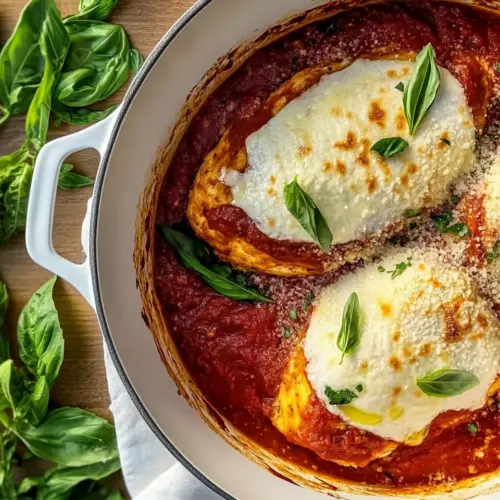
Stuffed Chicken Parmesan
Stuffed Chicken Parmesan is a creamy, crispy and thoroughly comforting entree featuring juicy chicken pockets filled with melty mozzarella and fresh basil, finished with a robust marinara and golden breadcrumb crust. This easy weeknight dinner is flavorful and impressive enough for guests, offering classic Italian American flavors and satisfying textures in every bite, making it a must try for family meals.
Equipment
- Instant read thermometer
Ingredients
- 4 boneless, skinless chicken breasts Flatten and season to act as the main protein base that is stuffed and baked, providing substantial texture and flavor; cook until internal temperature is safe and juices run clear. Handle gently when butterflying to maintain a pocket for the filling and ensure even cooking.
- 14 slices fresh mozzarella cheese (divided) Layer and melt into the stuffed center and overtop for creamy, gooey richness; divide slices between breasts to balance moisture and flavor. Allow slices to brown slightly under heat for a pleasant texture contrast.
- 8 fresh basil leaves (plus more for garnish) Place and chiffonade to add fresh herbal brightness and aromatic lift to the filling and garnish; tuck leaves into the pocket with the cheese to maintain a basil-forward flavor. Reserve a few whole leaves to finish the dish for visual appeal.
- salt and pepper (to taste) Season and balance to heighten flavors and control taste intensity; adjust during preparation and after cooking to suit preference. Use freshly ground pepper for a brighter, sharper heat and salt sparingly if using salty cheeses or breadcrumbs.
- 1 teaspoon Italian seasoning Season and infuse Italian herb notes into the breading and meat cavity to complement tomato and cheese components; sprinkle into the coating mix for consistent flavor. Use as a simple, reliable spice blend to avoid additional individual herbs.
- 2 large eggs Bind and moisten to help breadcrumbs adhere and form a cohesive coating while also contributing slight richness to the stuffing; whisk before dredging for even coating. Use cold eggs for firmer binding and dip each breast thoroughly.
- 1/2 cup Italian breadcrumbs Coat and crisp to provide herby, seasoned texture in the breading mixture; combine with other crumbs for depth and flavor. Press onto the egg-wet surface to create a golden crust during frying or baking.
- 1/2 cup Panko breadcrumbs Crisp and lighten to create an extra crunchy, airy coating element when combined with other breadcrumbs; balances denser crumbs for a flaky crust. Use for textural contrast and to achieve an appealing golden finish.
- 1 cup grated Parmesan cheese Grate and enhance to add savory, umami-rich saltiness to the breading and stuffing components; mix into crumbs or sprinkle over finished chicken for nutty complexity. Use finely grated for even distribution and melting into the crust.
- 1/4 cup olive oil Sauté and enrich to provide a nonstick cooking medium and impart fruity, slightly peppery olive flavor when pan-searing the breaded breasts. Control heat to avoid smoking and to develop an evenly browned exterior.
- 26 ounces marinara sauce (1 jar) Simmer and envelop to supply the classic tomato base that keeps the chicken moist and ties the Parmesan theme together; spoon over stuffed breasts before baking or serve alongside as a saucy accompaniment. Choose a flavorful jarred marinara to complement homemade elements.
Instructions
- Preheat oven to 400°F.: You should feel the kitchen warm up as the oven comes to temperature, which sets the stage for an even finish. A correctly preheated oven ensures the cheese melts and the chicken cooks through without sitting too long in the pan, which helps maintain moisture. Common mistake to avoid is skipping preheat, which prolongs cook time and can dry the meat. If your oven runs hot or cool, use an oven thermometer to confirm the actual temperature for consistent results.
- Cut a slit into the side of each chicken breast, taking care not to cut all the way through. Stuff each chicken with 1 1/2 slices of mozzarella and 2 basil leaves. Secure with toothpicks.: When you make the pocket you can hear the gentle snap of fibrous meat as the knife moves, and the tactile feedback helps you avoid cutting through. The mozzarella should nestle evenly and the basil should sit flat so the filling is balanced. The reason this matters is it creates a contained center that melts without escaping. A frequent error is cutting too deep, which allows the filling to spill out while searing. If in doubt, make a smaller pocket and stuff more conservatively, removing toothpicks before serving to avoid surprises.
- Season both sides of the chicken with salt, pepper, and Italian seasoning.: The seasoning step releases an aromatic note that you can smell immediately, and it draws out flavor from the surface so each bite is seasoned through. Salting early also helps with moisture retention during cooking, improving juiciness. Avoid overseasoning which can overpower the delicate cheese; measure the salt if you are unsure. If you notice uneven seasoning, gently pat the surface to redistribute before breading.
- In a shallow bowl, whisk the eggs together. In a second shallow bowl, whisk together the Italian breadcrumbs and parmesan cheese.: As you whisk the eggs , they should become smooth and slightly frothy, ready to coat the chicken evenly. The breadcrumb and Parmesan cheese mix forms a seasoned bed that will crisp and brown in the oil, adding savory depth. The why here is adhesion and flavor layering; without the egg wash the crumbs will not cling properly. One problem to avoid is soggy crumbs from over wetting the chicken, so shake off excess egg before dredging in crumbs.
- Heat olive oil in a large oven-safe skillet set over medium heat.: As the olive oil warms you should see it shimmer gently, indicating it is hot enough to sear. The hot oil creates an immediate sear on contact, sealing juices and building a golden crust. The technique matters because a proper sear prevents the chicken from absorbing excess oil and becoming greasy. A common misstep is overheating the oil until it smokes, which imparts a bitter taste; keep an eye on the pan and reduce heat if necessary.
- Dredge the chicken in the eggs and then the breadcrumb mixture and place into the oil. Cook 3-4 minutes per side until chicken is golden brown. Remove from the pan and set aside.: When the chicken hits the skillet you will hear a satisfying sizzle, and after a few minutes the crust will develop a warm, toasty aroma and even golden coloration. This browning adds flavor through Maillard reactions and helps the coating hold together during baking. A common mistake is flipping too often, which prevents proper crust formation. Use tongs to flip gently and wait until the bottom releases easily before turning.
- Turn the heat off and add half of the marinara sauce to the pan. Stir to combine. Nestle the chicken back into the sauce. Spoon the remaining sauce evenly over the chicken. Top each chicken with two slices of mozzarella cheese.: Turning the heat off before adding sauce prevents splatter and sudden temperature shock. As the sauce warms in the residual heat it releases a fragrant tomato steam that melds with the seared crust. Nestling chicken into the sauce keeps the underside moist while the top gets sauced and cheesed. If you add cold sauce to a very hot pan it can spit, so let the oil calm before pouring. Be mindful to distribute sauce evenly so each portion bakes in the same amount of moisture.
- Place the entire skillet in the oven and bake for 10-15 minutes, until the cheese is melted and the chicken is cooked through.: In the oven you will see the mozzarella cheese soften and spread, and the tomato aroma will deepen as flavors meld. The internal temperature should reach 165°F for safe, juicy chicken . Baking completes cooking gently so the filling melts without burning the crust. A typical error is overbaking, which dries the breast and turns the cheese rubbery. Use an instant read thermometer to check doneness early, and remove once the target temperature is reached.
- Garnish with chopped basil and serve over pasta, if desired.: The final garnish adds a fresh herbal perfume and a burst of green color that lifts the plate. Serving over pasta gives the sauce a vehicle and makes the meal more substantial. This finishing touch enhances presentation and brightens the palate between bites of rich cheese and tender meat. A mistake to avoid is leaving toothpicks in while serving; always remove them before plating to avoid any accidents. If you are plating for company, let the chicken rest briefly so the juices settle and the filling holds together.
Notes
- Pat chicken dry: Removing surface moisture helps the egg and breadcrumb coating adhere, resulting in a crisp, even crust rather than a soggy layer. Use paper towels and press gently, repeating until the surface is visibly drier.
- Even thickness matters: If breasts are uneven, place them between plastic wrap and gently pound with a meat mallet to even thickness, which ensures uniform cooking and prevents overcooking thin edges while waiting for the center.
- Room temperature cheese: Let the mozzarella cheese sit at room temperature for a few minutes so it melts more readily during baking, producing those desirable stretchy ribbons when sliced.
- Moderate oil temperature: Heat the olive oil until it shimmers but does not smoke to achieve a golden sear without burning the breadcrumbs; adjust the heat as needed if the pan browns too quickly.
- Check doneness with a thermometer: Use an instant read thermometer to ensure the internal temperature reads 165°F so the chicken is safe and still juicy, removing it promptly once that temperature is reached.
- Remove toothpicks before serving: After baking and resting, take out any toothpicks used to secure the pockets to avoid surprises at the table and ensure a clean presentation.