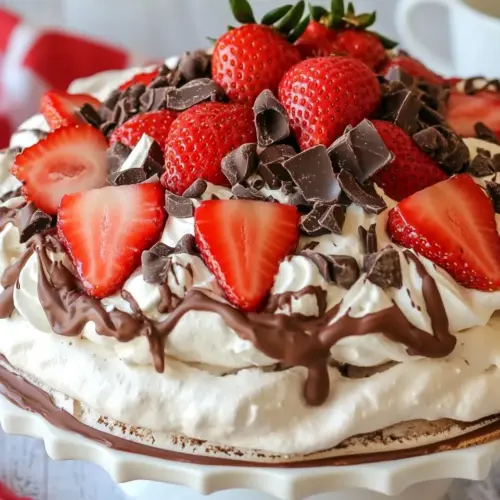
Strawberry Topped Chocolate Pavlova
Strawberry Topped Chocolate Pavlova is a showy, airy dessert with a crisp cocoa-kissed shell, pillowy center, silky mascarpone cream, and bright sugared strawberries. The contrast of textures and the chocolate undertone make it a memorable treat for spring gatherings or easy weeknight celebrations, and it’s worth making when you want an impressive dessert that is surprisingly approachable.
Equipment
- Mixing Bowl
- Electric Mixer
- Offset Spatula
- Baking Sheet
- Parchment Paper
Ingredients
- 6 egg whites, at room temperature Whip to stiff peaks to provide the light, airy base structure for the pavlova; incorporate air carefully so the meringue bakes crisp outside and marshmallow-like inside. Use room-temperature whites to maximize volume and stability during beating, folding gently with other dry ingredients to avoid deflation.
- 1/4 teaspoon salt Season sparingly to enhance overall flavor and help stabilize the whipped egg whites during beating; salt can slightly tighten protein bonds, contributing to a firmer meringue. Dissolve fully when possible by adding early in the whipping process for even distribution.
- 1 1/2 cups superfine sugar (Domino brand has their version with the regular sugars) Sweeten gradually while whipping to create a glossy, stable meringue; superfine sugar dissolves quickly and helps achieve a smooth texture without grittiness. Add in small increments to prevent collapse and to reach the desired stiffness for shaping the pavlova.
- 1/4 cup good quality cocoa powder Darken and deepen the chocolate flavor while contributing a subtle cocoa bitterness to balance sweetness; sift or fold in gently to avoid lumps and preserve airiness. Use a good-quality cocoa to ensure rich color and avoid introducing excess moisture that could affect meringue stability.
- 1 teaspoon raspberry or balsamic vinegar (I used black currant balsamic vinegar) Acidify slightly to stabilize the egg whites and add a bright, complementary flavor note that cuts through sweetness; balsamic or raspberry vinegar can provide a pleasant fruity tang. Add sparingly to avoid overt acidity while still improving volume and texture of the meringue.
- 1/2 teaspoon vanilla extract Aromatize subtly to enhance the dessert's background flavor without overwhelming chocolate or fruit notes; fold in near the end of whipping for even distribution. Use pure vanilla extract for the cleanest taste that complements both the meringue and filling components.
- 2 ounces semi-sweet chocolate, finely chopped Melt for incorporation into the meringue or garnish to add concentrated chocolate richness and smooth texture; finely chopped chocolate melts more evenly and mixes well into warm components. Temper melted chocolate properly if folding into warm cream or drizzling to maintain shine and mouthfeel.
- 1 1/2 cups heavy cream Whip into soft peaks to form the creamy topping that contrasts the crisp pavlova shell with lush, airy richness. Chill before dolloping to help it hold shape, and sweeten lightly if desired to balance tart berries and rich mascarpone.
- 1/2 cup Mascarpone cream Enrich the whipped cream for a tangy, silky mouthfeel that adds body and slight acidity to the topping; mascarpone lends stability and a luxurious texture when blended with cream. Keep chilled and fold gently to preserve volume while creating a cohesive mascarpone-cream mixture.
- 1/2 cup powdered sugar Sweeten and stabilize the cream filling while providing a fine, dissolving texture that blends seamlessly; powdered sugar prevents graininess compared with granulated sugar. Sift before adding to avoid lumps and adjust quantity to taste for desired sweetness.
- 1 teaspoon vanilla Aromatize subtly to reinforce vanilla notes in the cream and balance chocolate and fruit flavors; add during or just before whipping for even distribution. Use pure vanilla extract for a smooth, natural flavor without bitterness.
- 4 cups sliced strawberries, gently tossed with a tablespoon of sugar Macera te lightly with sugar to draw out juices and create a glossy, sweet-tart topping that complements the pavlova; tossing with a tablespoon of sugar enhances natural strawberry flavor and releases syrup. Keep slices uniform for consistent texture and arrange atop the cream just before serving to preserve freshness.
Instructions
- Preheat the oven to 350º. Line the baking sheet with parchment. Draw a 9-inch circle on parchment, then flip the paper over. Set aside.: The initial heat gives the meringue a strong start, while the parchment and marked circle guide your shaping. When the oven is at 350º, you will notice the warm, dry air that helps the meringue form a crisp exterior quickly. Preparing the parchment ahead prevents last minute rushing that can deflate your whites. A common mistake is using a damp or greasy sheet, which prevents proper drying. Make sure the circle is clearly visible through the paper so you keep the meringue within bounds.
- Beat the egg whites till soft peaks form. Add salt, then slowly add the sugar, while continuing to beat, until the meringue is stiff and glossy. Sift cocoa powder over the meringue, then add vinegar, vanilla, and chopped chocolate. Fold well till combined.: As you beat the egg whites , listen for the change in sound as they transition from watery to frothy, then to soft peaks that hold a shape but still slightly melt at the tip. Adding the salt early brightens the flavor. When you add sugar slowly, you feel the meringue thicken and become glossy; the whisk sound becomes higher pitched and steadier. Sifting cocoa powder prevents lumps and gives even color. Folding in chopped chocolate introduces little pockets of richness. A frequent error is adding sugar too quickly which leaves a gritty texture. If you feel any graininess, continue beating until fully dissolved.
- Pile the meringue onto the baking sheet, keeping it within the 9-inch circle. Smooth the top and edges with an offset spatula.: Moving the glossy, cloudlike meringue onto the paper, you will feel its weight, and smoothing should be done gently to keep the interior airy. Use the offset spatula to create slightly higher edges, which helps the center remain a bit marshmallowy when baked. Visually, the surface should be even, with no shiny wet spots. A common slip is overworking the meringue while smoothing, which can deflate it; always use light, decisive motions.
- Place in oven and immediately decrease the temperature to 300º.: Dropping the oven to 300º after the meringue goes in creates a slow, even drying that prevents browning and cracking excessively. You will hear almost nothing once the meringue begins to set, but visually the exterior will become matte and begin to firm. If you leave the oven at too high a temperature, the outside will overcook while the inside remains underdone. Avoid opening the oven during the initial minutes as it can cause uneven surface formation.
- Bake for 1-1/4 hours till dry on edges and top. Pavlova will appear cracked.: During this long, gentle bake, the edges should feel dry and slightly crisp to the touch, and the top will matte and often show cracks, which is normal and attractive. The aroma is faint and sweet, with a whisper of cocoa. If it still feels tacky after the time, give it a bit longer in small increments. A mistake to watch for is underbaking, which results in a soggy shell; prevent this by testing the edges for dryness.
- Turn off the oven, open the oven door, and allow it to cool completely.: Cooling slowly in the warm oven prevents sudden temperature shifts that make the meringue collapse. As it cools, it will contract and the top may crack more, which is expected. You will notice a dry, crisp sound when lightly tapped. A common error is removing the pavlova while it is still warm, which can lead to collapse, so patience is key here.
- To serve, carefully flip onto the serving plate. Whip cream with powdered sugar, and vanilla. Fold in mascarpone. Top pavlova with whipped cream, then sliced strawberries.: The act of flipping the cooled meringue onto a plate is a quiet, triumphant moment; do it gently so the shell does not shatter. Whipping the heavy cream with powdered sugar and vanilla will make a billowy, slightly sweet topping; folding in Mascarpone cream adds silkiness. When you spread the filling, the contrast between the dark shell and white cream is striking. Finally, arrange the sugared strawberries so they glisten. Avoid overwhipping the filling, which can turn grainy, and place the fruit on just before serving to keep it fresh.
Notes
- Keep equipment immaculately clean Ensure bowls, beaters, and spatulas are perfectly dry and free of oil to allow egg whites to reach full volume.
- Add sugar slowly Pouring the superfine sugar gradually helps it dissolve completely and creates a glossy, stable meringue.
- Sift the cocoa Sifting cocoa powder into the meringue prevents clumps and ensures even color and flavor distribution.
- Lower the oven temperature after inserting Reducing to 300º right after placing the meringue ensures slow drying and prevents overbrowning.
- Cool in the oven Allow the pavlova to cool inside the oven with the door ajar to avoid cracks from sudden temperature changes.
- Fold mascarpone gently Incorporating Mascarpone cream into the whipped cream by folding keeps the filling light and velvety without collapsing.