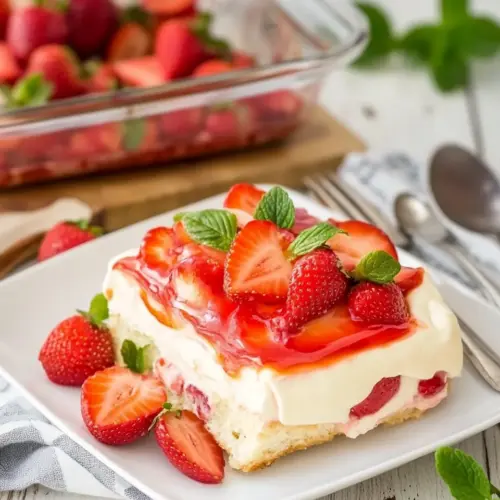
Strawberry Tiramisu
Strawberry Tiramisu is a creamy, fruity twist on the classic tiramisu, featuring vibrant strawberry coulis, silky mascarpone cream, and delicate ladyfingers. This easy make ahead dessert is bright, balanced, and perfect for spring gatherings or an easy weeknight treat. Serve chilled for best texture and a sensational fruity finish that will impress guests.
Equipment
- Blender
- Saucepan
- Large Bowl
- Spatula
- 9 inch rectangular baking dish
Ingredients
- 600 g strawberries, + extra to decorate Rinse and hulled berries provide fresh, fragrant sweetness and vibrant color to the tiramisu; chop or slice to release juices that macerate with sugar for extra syrup. Use both within layers and as a decorative topping to balance the creamy richness and add textural contrast.
- 40 g sugar, approx 1/2 US cup Sweeten and blend with strawberries to draw out juices and intensify flavor; dissolve thoroughly for even distribution without grittiness. Adjust amount slightly depending on berry sweetness to achieve a balanced tart-sweet finish throughout the dessert.
- 2 tablespoons lemon juice Acidic and brightens the fruit mixture while preventing oxidation; stir into sliced strawberries to enhance natural flavor and add a pleasant tang. Use sparingly so the lemon complements without overpowering the delicate mascarpone and zabaglione layers.
- 500 g mascarpone cheese, approx 2 1/4 US cups Rich and creamy base that adds structure, silkiness, and tang to the filling; fold gently to maintain a light, airy texture while providing stability for layering. Chill before assembling if needed to ensure it holds shape between ladyfinger layers and pairs smoothly with the zabaglione.
- 220 g zabaglione, (or whipped cream + 5 tablespoons of sugar) approx 1 US cup Velvety custard or whipped alternative adds sweet, airy lift and lightens the mascarpone for a smoother mousse-like consistency; incorporate gently to avoid deflating. If using zabaglione, its eggy richness deepens flavor; if substituting whipped cream and sugar, ensure sweetening is even and stable.
- 400 g ladyfingers Light, sponge-like biscuits deliver absorbent layers that soak up strawberry juices and meld with creamy fillings; arrange evenly to create classic tiramisu structure. Dip briefly if desired to avoid sogginess and maintain a pleasant bite contrasting the soft cream and fruit.
Instructions
- Place the strawberries in a blender and blend until smooth. Transfer the strawberry puree, sugar and lemon juice to a sauce pan and bring to a boil, removing the foam when necessary. When the sauce has slightly thickened, remove it from the heat and let it cool to room temperature.: On blending, notice the strawberry aroma rise up, sweet and bright, and watch the berries transform into a vivid pink puree. The sound will be a steady whir, and the texture should be completely smooth with no large seed bits. This matters because a silky coulis disperses evenly through the ladyfingers , and seeds would interrupt the mouthfeel. A common mistake is underblending, which leaves grainy bits; scrape the sides and pulse again if needed.
- Place the mascarpone cheese in a large bowl and whisk until creamy. Fold in the zabaglione cream and gently mix until combined and refrigerate until ready to use.: As the mixture heats, you will smell the strawberry concentrate deepen and the steam will carry bright citrus notes from the lemon juice . When it reaches a boil, bubbles will rise steadily and foam may accumulate, which I skim away to keep the sauce clear. This step concentrates flavor and slightly thickens the coulis, giving it body that clings to the ladyfingers . Avoid boiling too hard, which can mute fresh fruit aromas and make the sauce overly reduced.
- Dip each ladyfinger briefly into the strawberry coulis, then place in a rectangular 9-inch baking dish, and continue the process until the whole base is covered with ladyfingers. If necessary, break the cookies to fill the base up.: You want the sauce to coat the back of a spoon without running off immediately, a gentle sheen that signals proper thickness. Cooling prevents the hot coulis from collapsing the whipped components later. Touch the pan carefully to test warmth, and transfer to a shallow dish to speed cooling if needed. A common pitfall is layering while the sauce is still warm, which will loosen the cream and make the assembly watery.
- Spread half of the prepared mascarpone cream gently over the ladyfingers, making sure they're evenly covered. You can use a spatula or large spoon to help you with this.: As you whisk the mascarpone , watch it change from slightly lumpy to smooth and glossy. Work gently to avoid breaking down the fat structure, and stop as soon as it becomes silky. This creates a luxurious base that gives the tiramisu its signature richness. Overwhisking can make it grainy or too loose, so pause and check texture frequently.
- Repeat the process of soaking the ladyfingers in the strawberry sauce, then layer them over the cream, until is fully covered.: Folding in the zabaglione or whipped cream is where air is brought into the mixture, producing a light yet stable cream. Use a spatula to fold with broad strokes, keeping as much volume as possible. The final mixture should be airy but cohesive, with no streaks of raw mascarpone . If you overmix, the cream will deflate and the dessert can feel heavy.
- Finally, spread evenly the remaining mascarpone cream on top of the ladyfingers.: When you dip the ladyfingers , you should hear a soft, wet thud as they touch the coulis, and they will darken slightly. Brief dips are crucial so the cookies absorb just enough liquid to become tender, not soggy. Lay them snugly in the dish to create an even base. A frequent error is soaking them too long, which makes a runny tiramisu, so dip quickly and arrange immediately.
- Place the strawberry tiramisu in the fridge, and allow to set for at least a couple of hours, or overnight. Decorate with chopped strawberries and serve.: Filling gaps with trimmed ladyfingers ensures structural stability and even layers. The broken edges will absorb coulis faster, so place them cut side down. This helps the top layers sit flat and prevents collapsing when you add cream. Avoid overpacking, which can compress the layers and produce a dense texture.
- Spread half of the prepared mascarpone cream gently over the ladyfingers, making sure they're evenly covered: As you spread the cream, notice its silky texture and the contrast it creates against the slightly soaked ladyfingers . Use a low circular motion with a spatula to distribute without tearing the base. The goal is an even, generous layer that creates a soft cushion for the next round. Rushing here can create air pockets or uneven bites.
- Repeat the process of soaking the ladyfingers in the strawberry sauce, then layer them over the cream, until is fully covered: The second soak adds another burst of fruit between the creamy layers, enhancing depth of flavor. Stack the dipped ladyfingers evenly so the dessert feels balanced when sliced. Watch for visual cues, aiming for uniform layers that show through the dish. Common mistakes include uneven dipping that leads to inconsistent texture per bite.
- Finally, spread evenly the remaining mascarpone cream on top of the ladyfingers: The topmost layer should be smooth and even, creating a pleasing finish to decorate. Glide the spatula across the surface to remove ridges and leave a silky sheen. A neat top encourages clean slices and attractive presentation. If you see lumps, gently press them out rather than overworking the cream.
- Place the strawberry tiramisu in the fridge, and allow to set for at least a couple of hours, or overnight: Chilling is when flavors marry and textures stabilize, the ladyfingers soften just enough and the cream firms slightly. Overnight chilling improves slicing and deepens the overall flavor harmony. When you open the fridge, you should notice a consolidated aroma of fruit and dairy. A mistake to avoid is insufficient chilling, which yields loose slices and underdeveloped flavor.
- Decorate with chopped strawberries and serve: Fresh strawberry garnish adds a final burst of color and a pleasant textural contrast. Arrange slices evenly or scatter diced pieces for a rustic look. The aroma of fresh strawberry should complement the coulis and entice guests the moment you present it. Avoid decorating too far in advance, which can release moisture onto the surface and dull the top layer.
Notes
- Quick dip rule The ladyfingers only need a brief dunk, one to two seconds per side, to avoid sogginess and preserve the layered texture.
- Chill time matters Allowing the assembled dessert to rest for several hours, or overnight, helps the flavors marry and makes slicing neater.
- Adjust sweetness Taste the strawberry coulis before layering and tweak the sugar if berries are unusually sweet or tart to keep balance.
- Keep cream airy Fold the zabaglione gently into the mascarpone to retain volume, which lightens the mouthfeel and prevents heaviness.
- Decorate last Add fresh strawberry garnish just before serving to maintain bright color and avoid excess moisture on top.