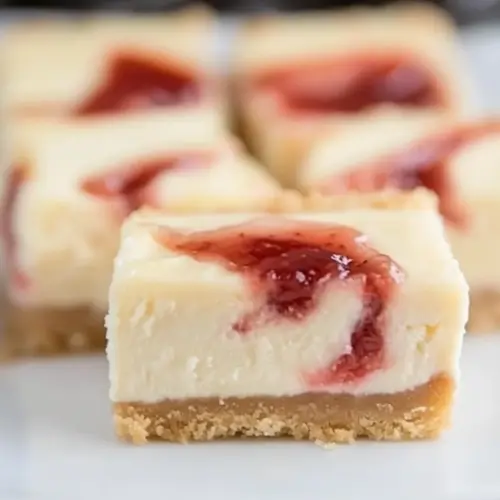
Strawberry Swirl Cheesecake Bars
Strawberry Swirl Cheesecake Bars are creamy and richly textured with a crisp graham crackers crust and bright ribbons of seedless strawberry jam. These easy bars offer a buttery base and silky cream cheese filling that chill into perfect slices, ideal for gatherings or a sweet weeknight treat. Make them ahead for stress free entertaining and enjoy their fruity balance and pretty marbled top.
Equipment
- 8-inch Square Baking Dish
- Electric Mixer
- Mixing Bowls
- Wire Rack
- Aluminum Foil
Ingredients
- 7 whole graham crackers, crushed (about 1 cup of fine crumbs) Provide a crisp, slightly sweet base when crushed into fine crumbs; binds with melted butter to form a sturdy crust that contrasts the creamy filling. Add texture and subtle molasses flavor that complements the cheesecake without overpowering it.
- 6 tablespoons unsalted butter, melted and cooled Melted and cooled to bind the graham cracker crumbs together into a firm crust; offers richness and helps the crust set properly when chilled. Use room-temperature melted butter to evenly moisten crumbs for an even press into the pan.
- 3 tablespoons light brown sugar Add a touch of caramel-like sweetness to the crust mixture; helps balance the tang of the filling and enhances the overall flavor profile. Sprinkle into the crumbs before combining with butter to distribute sweetness evenly.
- 2 tablespoons all-purpose flour Provide a small amount of structure to the crust mixture; helps absorb excess moisture and prevent sogginess at the base of the bars. Sift into the crumb mix for a uniform texture and reliable set.
- Pinch of salt Enhance the overall flavor by balancing sweetness and bringing out other flavors in both crust and filling. Use sparingly in crust and filling to round out sweetness without noticeable saltiness.
- 16 ounce s (453.59 g) cream cheese, at room temperature Soften to room temperature for smooth incorporation into the batter; form the creamy, tangy base of the cheesecake filling and provide richness and body. Beat until silky to avoid lumps and create a velvety texture in the finished bars.
- 2/3 cup (133.33 g) granulated sugar Dissolve into the cream cheese to sweeten and stabilize the filling; contributes to the final set and tenderness of the cheesecake bars. Adjust mixing until sugar is fully incorporated for a smooth, consistent batter.
- 2 eggs, at room temperature Bring structure and help set the filling as it bakes; provide a rich, custardy texture and slight lift. Beat in one at a time to maintain an even emulsion and prevent overbeating that could cause cracking.
- 1/4 cup (57.5 ml) sour cream Add moisture, subtle tang, and a silkier texture to the filling; helps keep the cheesecake tender and prevents it from becoming too dense. Gently fold in to maintain a creamy consistency without adding air.
- 1 teaspoon vanilla extract Impart warm, familiar flavor that complements the sweet and tart elements; enhance the aroma and depth of the filling. Stir in last to preserve its fragrant notes and mix just until combined.
- 4 tablespoons seedless strawberry jam Introduce concentrated strawberry flavor and vivid color for a swirl that adds both taste and visual appeal; create pockets of fruitiness throughout the bars. Drop small spoonfuls onto the filling and gently swirl with a knife before baking.
Instructions
- Make the Crust: Preheat oven to 325 degrees F. Line an 8-inch square baking dish with aluminum foil, allowing excess to hang over the edges of the pan; lightly grease the foil.: Preheat oven to 325 degrees F. Line an 8-inch square baking dish with aluminum foil, allowing excess to hang over the edges of the pan; lightly grease the foil. : You will notice the kitchen warming slightly as the oven comes to temperature, and the act of lining the pan ensures the finished bars lift out cleanly, leaving you with neat squares. Take care to press the foil into corners smoothly so the crust presses evenly later. One common mistake is skipping the greasing step, which can cause the foil to stick and tear, making removal messy. Using foil with overhang gives you a reliable handle to lift the whole pan, which preserves the edges of the bars while keeping them neat.
- In a medium bowl, stir together the graham cracker crumbs, brown sugar, flour and salt to combine. Drizzle the melted butter over the mixture and use a fork to mix it until the entire mixture is moistened. Turn the mixture out into the prepared pan and press into an even layer. Bake until the crust starts to brown, 12 to 15 minutes. Remove from oven and set aside.: As you stir, breathe in the warm, toasty scent of the graham crackers mingling with the caramel notes of light brown sugar . The texture should be evenly moistened, with no dry pockets. Pressing firmly and evenly with the bottom of a measuring cup helps create a compact crust that bakes up crisp around the edges. Watch for subtle color change at the edges to know it is ready; underbaked crust can collapse under the filling, while overbaking will make it too hard to bite.
- Meanwhile, with an electric mixer on medium-high speed, beat the cream cheese until smooth, about 2 minutes. Add the granulated sugar and beat until it is completely incorporated. Add the eggs one at a time, mixing after each addition until well combined. Add the sour cream and vanilla extract and mix until incorporated. Pour the batter over the baked crust.: The sound of the mixer will become a steady hum as the cream cheese transforms from lumpy to silky; scraping down the bowl ensures there are no stubborn pockets. The batter should be glossy and pourable when ready, smelling faintly tangy from the sour cream and sweet from the granulated sugar . Be mindful not to overbeat once the eggs are added, as too much air leads to cracks or an uneven top. A common mistake is using cold cream cheese , which results in lumps, so allowing it to reach room temperature is essential.
- Using a spoon, drop dollops of the strawberry jam all over the surface of the cheesecake batter, then use a toothpick or skewer to gently swirl the jam into the batter. Bake until the edges are set but the center still jiggles slightly, 35 to 40 minutes. Allow the cheesecake to cool completely on a wire rack, about 2 hours. Cover and refrigerate until thoroughly chilled, at least 3 hours. Lift the cheesecake out of the pan and slice into bars. Leftovers can be stored in the refrigerator, in an airtight container, for up to 3 days.: As you dot the top with seedless strawberry jam , you will see bright red islands on the pale filling, and the gentle swirling motion creates marbled veins that look elegant and homemade. The baked aroma is subtle and sweet, and testing for doneness by the slight jiggle at center ensures a creamy, not overcooked interior. Cooling on a wire rack helps release steam so the texture stabilizes, and chilling firms the bars for clean slicing. A common pitfall is slicing too soon, which yields squishy pieces, so patience during the chill stage pays off in neat, satisfying bars.
Notes
- Reduce Sweetness: If you prefer a less sweet filling, slightly reduce the granulated sugar by one to two tablespoons; taste the batter before baking to make sure the balance still feels right.
- Crust Texture: For a firmer crust, press the crumb mixture very tightly and bake until the edges are golden; a well compacted crust prevents crumbling when sliced.
- Jam Distribution: Spoon the seedless strawberry jam in small dollops rather than large spoonfuls to create more delicate swirls and ensure each bite has bits of jam.
- Chill Time: Allow at least three hours of refrigeration to let the filling fully firm up; rushing this step leads to soft, messy slices.
- Room Temperature Ingredients: Always bring cream cheese and eggs to room temperature for a smooth batter; cold ingredients often create lumps and uneven texture.
- Storage: Store the bars in an airtight container in the fridge for up to three days to maintain freshness and texture.