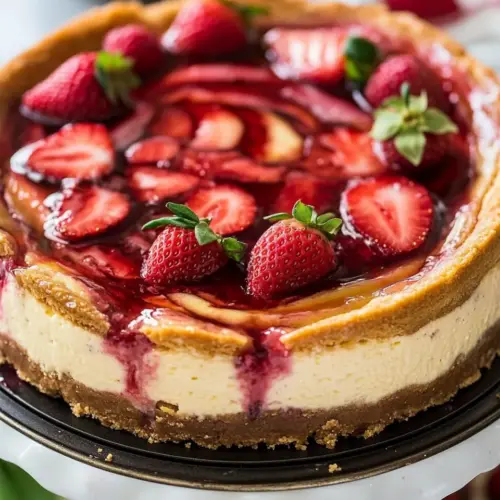
Strawberry Swirl Cheesecake
Strawberry Swirl Cheesecake is a creamy, silky dessert with bright ribbons of strawberry conserve and a custardy center. This easy to share recipe blends tangy cream cheese and light sour cream with a jam like strawberry swirl for a show stopping finish, perfect for spring gatherings and make ahead entertaining. It is elegant, approachable, and worth the wait.
Equipment
- Oven
- Springform Pan
- Saucepan
- Mixing Bowl
- Electric Mixer
Ingredients
- 16 oz low fat/fat free cream cheese Soften and blend to create a creamy, tangy base that provides structure and richness for the cheesecake batter. Use at room temperature to avoid lumps and ensure smooth mixing with eggs and sugar. Low fat/fat free version reduces overall calories while still delivering a pleasant texture.
- 7 floz light sour cream Lighten and add mild acidity to balance the richness of the cream cheese while contributing moisture for a silky mouthfeel. Stir in gently after the cream cheese is smooth to maintain a uniform batter. Using a light sour cream keeps the cheesecake tender without excess fat.
- 3 large eggs Bind and set the cheesecake as it bakes, contributing to firmness and a custard-like texture once cooked. Beat in one at a time to incorporate air and ensure even consistency. Using large eggs provides predictable moisture and structure.
- 1 tablespoon vanilla extract Enhance overall flavor with warm, rounded vanilla notes that complement both the cheesecake base and strawberry swirl. Add during mixing to distribute aroma evenly throughout the batter. Pure extract offers more complex flavor than artificial alternatives.
- 1 tablespoon cornflour Thicken the filling slightly and stabilize the custard for a smoother, less runny final texture when baked. Dissolve or mix well into the batter to prevent clumping. Cornflour helps hold the cheesecake together without altering flavor.
- 1 cup sugar Sweeten and balance the tang of cream cheese and sour cream while aiding in browning and texture. Gradually beat into the mixture to achieve the desired sweetness and a smooth consistency. Adjust distribution to maintain proper sweetness across the cake.
- 1 teaspoon orange zest Brighten the flavor profile with citrus oils that lift the sweetness and add aromatic complexity. Zest finely to avoid bitter pith and fold into batter for subtle citrus notes. Orange zest pairs well with strawberries and enhances overall freshness.
- 1 cup fresh ripe strawberries chopped Provide fresh fruit flavor and vibrant color for the swirl, adding natural sweetness and texture within the cheesecake. Chop uniformly to ensure even distribution and gently fold into the strawberry mixture or batter as directed. Ripe strawberries deliver optimal flavor and juiciness.
- 1/2 cup sugar Sweeten the strawberry mixture to create a jammy swirl that contrasts with the tangy cheesecake filling. Dissolve with the berries and heat if making a compote to concentrate flavor and thicken. Adjust amount for preferred sweetness without overpowering fruit.
- 1/4 cup water Help dissolve sugar and create a syrupy consistency for the strawberry topping or swirl when combined with berries. Simmer briefly with strawberries and sugar to form a cohesive sauce that swirls easily into the batter. Water also aids in extracting fruit juices for better texture.
- 2 teaspoons vanilla extract Boost the strawberry sauce with added vanilla aroma that complements the cheesecake filling and enhances overall depth of flavor. Stir into the cooked strawberry mixture to meld flavors before swirling into the batter. Use pure extract for the best aromatic effect.
- 1/2 cup extra strawberries for topping. Garnish and add fresh fruit brightness on top of the finished cheesecake for a visually appealing presentation and burst of fresh flavor. Slice or halve as desired and arrange decoratively to showcase the strawberry swirl. Extra strawberries provide a fresh contrast to the creamy filling.
Instructions
- Preheat oven 175 C | 350 F. Grease a shallow medium sized round springform cake pan, and dust with a small amount of flour to coat. Shake out excess flour and set aside.: As you begin, the oven should already be generating steady, even heat, which helps the cheesecake cook gently. You will notice a steady hum and warm air when you open the oven, and the interior light will glow warmly. This even heat prevents sudden temperature shocks that cause cracking, so preheating is essential. A common mistake is sliding the cheesecake into a not fully heated oven, which can produce an undercooked center or uneven rise. If you have an oven thermometer, confirm the temperature is accurate before baking.
- Combine strawberries, sugar, water and vanilla in a small saucepan on medium heat. Bring to a low simmer and allow to simmer for about 15 minutes, or until liquid reduces into a thick jam consistency and strawberries are soft.: The lightly greased and floured pan creates a barrier between the filling and the metal, making it easier to release the cheesecake later. When you grease, the pan will gleam slightly, and dusting with flour gives a matte finish. If you skip this, you risk the edges sticking, so be gentle and shake out excess flour. Avoid heavy greasing which can pool and interfere with the crust or sides setting properly.
- Combine cream cheese, sour cream, eggs, vanilla, cornflour, sugar and zest in a bowl. Beat on low speed until smooth and combined.: When you add the fruit to warm liquid, it will begin to soften and surrender juices, creating a fragrant steam and a soft popping sound as the berries break down. Medium heat encourages gentle simmering without burning. Stir occasionally with a wooden spoon to prevent sticking. A common pitfall is using too high heat, which scorches the fruit and yields bitter notes, so keep the flame moderate.
- Pour into prepared pan and spoon half of the conserve over the top in small teaspoon quantities. Reserve the other half of conserve for topping. Swirl conserve around with the back of a knife to create a marble effect.: The mixture will transition from glossy and syrupy to thick and coat the spoon, and the aroma will intensify with a sweet strawberry perfume. Visual cues include bubbling that slows and a deeper red color. If you stop too early, the conserve will be runny and will not hold the swirl, so simmer until spatula trails remain visible. Avoid over reducing which can make the conserve overly sticky and lose fresh brightness.
- Bake in the oven for 40 - 50 minutes, or until just set in centre and golden brown on top.: As you assemble the filling, the room should smell faintly tangy from the citrus and vanilla, and the dairy will give a soft, milky aroma. Use a large mixing bowl so ingredients incorporate evenly. Scrape down the sides as necessary to include all bits of softened cream cheese . If items are too cold they will not blend smoothly, so never skip bringing dairy to room temperature.
- When cheesecake is set and top has slightly browned, turn heat off and set door ajar. Leave cheesecake in the oven for about two hours, remove and allow to cool to room temperature. Place into the fridge to chill for 1 hour or overnight.: Gentle mixing prevents air from being whipped into the batter, which helps avoid cracks and doming as it bakes. You will see the mixture go from shaggy to glossy and uniform, with no lumps of cream cheese remaining. Stop and scrape the bowl several times to ensure an even texture. A common error is beating too quickly, which incorporates too much air; keep speed low and steady.
- Top with remaining conserve and fresh extra strawberries.: The filling will glisten as it fills the pan and hold gentle ripples. Dollop the conserve across the surface so bright red pools appear. This staged distribution ensures color is dispersed across the cheesecake instead of concentrated in one spot. If you pour the conserve in one place you risk uneven swirls and heavy pockets of fruit.
- Reserve the other half of conserve for topping: Putting some conserve aside lets you finish the cheesecake with a fresh, glossy topping after it chills. Keep the reserved conserve at room temperature if serving within the day, or refrigerate for longer storage. A mistake is mixing all the jam into the batter which dilutes pockets of intense fruit flavor and makes the swirl less defined.
- Swirl conserve around with the back of a knife to create a marble effect: Use gentle, deliberate strokes to drag the conserve into the filling, watching the pattern develop into soft marbled ribbons. The visual cue is a clear contrast between pale filling and saturated red, and the conserve should not be forced into the base. Over swirling can muddy the colors, while under swirling leaves large unblended blobs, so aim for balanced, elegant motions.
- Bake in the oven for 40 to 50 minutes or until just set in centre and golden brown on top: As it bakes you will notice a gentle rise and a sweet, toasty scent, with edges setting before the center. The surface should take on a pale golden tint and the center will have a slight wobble when nudged. If you bake too long the cheesecake will dry and crack, so watch the center closely toward the end of the bake time. An oven that runs hot will overbrown the top, so use the lower end of the time range if unsure.
- When cheesecake is set and top has slightly browned turn heat off and set door ajar: Allowing the cake to cool slowly inside an oven with the door ajar reduces sudden temperature changes, which helps prevent cracking and creates a smoother texture. You will notice the wobble in the center calm as the temperature equalizes. A common oversight is opening the oven fully which cools the cake too quickly and stresses the delicate custard.
- Leave cheesecake in the oven for about two hours remove and allow to cool to room temperature: This gradual cooldown produces a denser, silkier interior. The cake will shrink slightly from the pan sides, and the aroma will mellow to a rounded sweetness. If you try to speed this by transferring to a cold surface the center may sink, so patience pays off here.
- Place into the fridge to chill for 1 hour or overnight: Chilling firms the texture so slices hold their shape, and flavors meld for a more cohesive taste. Refrigeration also brings the conserve to a jammy glaze that clings nicely. A frequent mistake is cutting too soon which yields sloppy slices, so plan for adequate chill time.
- Top with remaining conserve and fresh extra strawberries: The final finish should be bright and fresh, with glossy conserve brushed or spooned over the chilled surface and halved strawberries arranged for texture. The visual contrast makes slices pop, and the fresh fruit adds a cool burst against the creamy filling. Avoid adding the topping before chilling, or the moisture can run and dissolve the swirl.
Notes
- Swap sweeteners carefully Substitute sugar with a natural sweetener of choice to reduce calories, but adjust quantity since sweetness power varies, and taste as you go to maintain balance between the filling and conserve.
- Adjust berry intensity For a brighter swirl, increase the conserve cooking time slightly to concentrate flavor, watching to avoid over thickening which can become sticky rather than jam like.
- Texture tweaks If you prefer a denser slice, chill the cheesecake longer; for a lighter mouthfeel, reduce chilling slightly but be mindful that slicing will be trickier.
- Presentation boost Arrange the fresh extra strawberries on top just before serving to keep them vibrant and to prevent the fruit from releasing moisture that can soften the surface.
- Make ahead strategy Bake and chill the cheesecake a day in advance, then add the conserve and fresh strawberries the day of serving for maximum freshness and ease.