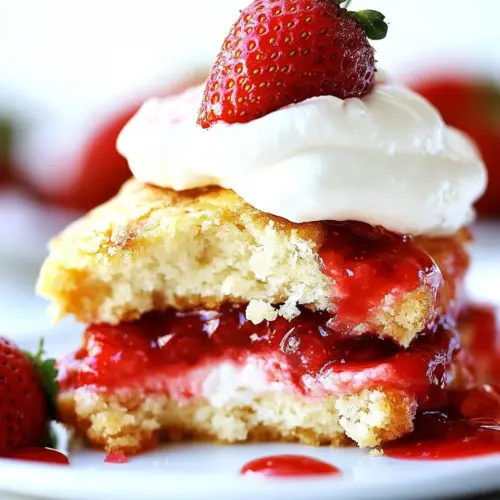
Strawberry Shortcake
Strawberry Shortcake is a classic summer dessert that pairs juicy macerated strawberries with flaky biscuits and lemon curd whipped cream for a bright, creamy experience. This easy crowd pleasing treat balances sweet and tart, and is perfect for picnics, brunch, or celebrations. Make components ahead for stress free assembly and enjoy a timeless, show stopping dessert.
Equipment
- Food Processor
- 2 1/4 inch round cutter
- Baking Sheet
- Wire Rack
- Medium metal or glass bowl
- Saucepan for double boiler
- Whisk
- Mixer or whisk for cream
Ingredients
- 2 1/2 pounds strawberries, hulled (8 cups) Prepare berries by hulling and slicing to release natural juices and provide a fresh, fruity base for the shortcake. Use the specified weight for consistent sweetness and texture throughout the filling and topping.
- 6 tablespoons granulated sugar Sweeten sliced strawberries by tossing with granulated sugar to macerate and draw out syrup that enhances flavor and juiciness. Allow time for the sugar to dissolve and mingle with the fruit for a glossy, ripe finish.
- 1/2 cup plus 1 tablespoon half and half see DIY notes Measure half and half precisely to add moisture and tenderness to the dough while contributing a mild dairy richness. Use the specified amount to balance fat and liquid for optimal biscuit crumb structure.
- 1 large whole egg lightly beaten Lightly beat the whole egg to incorporate and add structure, moisture, and color to the dough while aiding in binding ingredients. Use sparingly as directed to avoid overworking the batter and ensure tender biscuits.
- 2 cups all-purpose flour Sift or measure all-purpose flour to provide structure and body to the shortcake dough, balancing protein for a tender crumb. Use accurately to maintain the right dry-to-wet ratio and avoid dense results.
- 3 tablespoons sugar, plus 2 for sprinkling Add sugar to the dry mix to lightly sweeten the biscuits and support browning during baking, while reserving additional sugar for sprinkling to create a crisp, sweet crust. Adjust distribution of sugar to control overall sweetness.
- 1 tablespoon baking powder Combine baking powder with the dry ingredients to leaven the dough, creating rise and a light, airy texture in the shortcakes. Ensure freshness of the powder for reliable lift and an even crumb.
- 1/2 teaspoons salt Incorporate salt to enhance flavors and balance sweetness, boosting overall taste without making the biscuits salty. Dissolve salt evenly to avoid pockets that could create unpleasant flavor bursts.
- 8 tablespoons unsalted butter cut into 1/2 inch pieces, chilled Cut chilled unsalted butter into small pieces to distribute evenly through the flour, creating flaky layers as the butter melts and steams during baking. Keep butter cold to preserve pockets that yield tender, laminated texture.
- 1 large egg WHITE only lightly beaten Whip the egg white lightly to use as a wash for glazing or for folding into components that benefit from a slight lift and sheen. Apply carefully to achieve uniform surface color and subtle gloss on baked shortcakes.
- 1 large egg Beat the whole egg to enrich fillings or dough, contributing structure, moisture, and a custardy richness depending on its application. Use at the stage specified to integrate smoothly without overmixing.
- 1 large egg YOLK only Reserve the egg yolk to brush pastry or enrich custard-like components, adding color, richness, and a glossy finish when applied to the surface. Use yolk separately to control texture and appearance precisely.
- 3 tablespoons unsalted butter Melt or soften unsalted butter to incorporate into fillings or sauces for added creaminess and depth of flavor without excess saltiness. Use measured butter to harmonize fat levels and enrich the mouthfeel.
- 1/2 cups sugar Measure sugar for a filling or sauce to provide sweetness and help thicken through dissolution and slight reduction, enhancing the shortcake’s overall flavor profile. Keep proportions exact to avoid watery or overly sweet results.
- 3 tablespoons fresh lemon juice Squeeze fresh lemon juice to introduce bright acidity that balances sweetness and elevates the strawberry flavor, preventing cloying richness. Strain if needed to remove seeds and deliver clean citrus notes.
- 1/2 teaspoon lemon zest Grate lemon zest to impart concentrated citrus oils that intensify aroma and flavor with minimal acidity, complementing both fruit and cream components. Add zest sparingly to avoid overpowering delicate flavors.
- 1 pinch salt Add a pinch of salt to highlight and round out flavors in sauces or cream, enhancing complexity with a subtle savory counterpoint. Use minimal amounts for balanced seasoning without detectable saltiness.
- 1 cup heavy cream chilled Chill heavy cream and whip to soft or firm peaks to create a light, airy topping that provides rich, creamy contrast to the sweet strawberries and tender cake. Keep cream cold for better volume and stability during whipping.
- 1 tablespoon sugar Dissolve sugar into whipped cream or sauces to control sweetness and stabilize the whipped texture while preventing graininess. Add gradually and taste to achieve the desired level of sweetness.
- 1 teaspoon vanilla extract Stir in vanilla extract to provide warm, aromatic background notes that complement strawberries and cream, rounding out the flavor profile. Use pure extract sparingly to avoid masking fresh fruit nuances.
Instructions
- Lemon Curd (may also use store-bought): Whisk egg and egg yolk in medium bowl, set aside. Melt butter in medium metal or glass bowl set over large saucepan of simmering water. To this metal bowl, whisk in sugar, lemon juice, lemon zest, and salt; gradually whisk in egg mixture. Whisk until thick and thermometer inserted into curd registers 170°F to 175°F (it will continue to thicken upon standing). Transfer to small bowl. Cover with plastic wrap and freeze 30-45 minutes (until cold) or refrigerate for up to 24 hours in an airtight container until ready to use.: When the curd is heating over the simmering water you will notice the aroma of lemon brighten the kitchen, and the mixture will take on a velvety sheen as you whisk. The reason heating gently in a double boiler is important is to avoid scrambling the egg while allowing the sugar to dissolve and the curd to thicken slowly to the right custard like texture. Watch for the thermometer to reach 170°F to 175°F, that temperature gives you a curd that will cling to a spoon without breaking apart. One common mistake is rushing the heat, which can yield a grainy curd, so keep the water simmering but not boiling and whisk constantly to maintain a smooth emulsion.
- Strawberries: Using potato masher, mash 2 cups strawberries in a large bowl. Cut all remaining strawberries into 1/4 inch thick slices. Stir sliced strawberries and sugar into crushed strawberries. Refrigerate mixture until sugar has dissolved and strawberries are juicy, at least 30 minutes up to 24 hours. The longer the strawberries chill, the more juices they release. If you chill closer to 24 hours, you may need to drain off some excess juices although you definitely keep some (seeps into the biscuits – yum!).: As you mash two cups of strawberries with the potato masher, you ll hear soft crushing sounds and smell a burst of sweet berry perfume, signaling juices releasing. The mashed berries form the syrupy base while the remaining sliced berries provide texture and bright pockets of fruit. Letting them sit with sugar for at least thirty minutes allows the sugar to draw out juices and soften the fruit but avoid letting them sit too long or they will become overly soft; if they produce too much liquid, drain a bit to prevent soggy biscuits. A common pitfall is slicing too thinly which causes the berries to disintegrate when combined, so aim for firm quarter inch slices.
- Biscuits: In a large bowl, whisk half-and-half and whole egg together. Set aside.: Mix half and half and whole egg : When you whisk the half and half with the egg , you re creating a rich liquid that helps bind the dough and add tenderness. The blended liquid should feel cool to the touch and pour smoothly; this temperature helps keep the butter cold when combined with the flour. If the liquid is too warm the frozen cubes of butter will start to soften prematurely, so pause if your kitchen is warm. A frequent error at this stage is overheating the liquid which undermines the flaky layers, so keep everything chilled.
- In food processor, pulse flour, 3 tablespoons sugar, baking powder, and salt until combined, about 5 pulses. Scatter butter over top and pulse mixture until it resembles coarse meal, about 15 pulses. Stir flour mixture into half and half/egg until large clumps form. Form the dough into a ball and place on a lightly floured surface, parchment paper, or nonstick mat.: Pulse flour mixture with butter : As you pulse the flour , sugar, baking powder, and salt with the cold cubed butter the mixture will go from powdery to a coarse meal dotted with pea size lumps, a texture that indicates trapped cold fat ready to create steam in the oven. This step matters because those little bits of butter form the layers in the baked shortcakes. If you over process and create a uniform paste, you ll lose flakiness, so stop pulsing once you see varied crumbs and bits of butter.
- Pat dough into 9×6-inch rectangle about 3/4 inch thick. Using floured 2 1/4 inch round cutter (you can use the top of a glass), stamp out 6 dough rounds. Reshape dough and cut out 2 more. Space rounds at least 1 1/2 inches apart on parchment paper or nonstick mat lined baking sheet. Refrigerate for 20 minutes.: Combine dough and form rectangle : When you stir the flour mixture into the cold liquid, large clumps should form rather than a smooth homogeneous dough; these clumps mean the dough has pockets of fat and air which produce lift. Transfer to a floured surface and press gently to retain those clumps while shaping; the dough should feel slightly tacky and cool under your hands. Working too long will warm the dough and flatten the rise, so be swift but gentle in shaping to the nine by six rectangle.
- Preheat oven to 425 degrees F.: Cut rounds and chill : As you stamp out rounds, a clean edge indicates proper pressure and a sharp cutter, and you ll hear a soft click. Spacing them on the parchment gives air circulation and chilling the rounds for twenty minutes firms the butter so the biscuits bake with better layers. A common oversight is twisting the cutter which can seal edges and prevent even rising, so press straight down and lift straight up to keep the rounds uniform.
- Brush tops of rounds with egg white and sprinkle evenly with remaining 2 tablespoons sugar (it will seem like a lot of sugar but is SO good). Bake at 425 degrees F for 12-14 minutes or until tops of biscuits are golden. Transfer biscuits immediately to wire rack to cool. If not using immediately, store in airtight container once cooled.: Preheating until the oven is at a steady high heat ensures the biscuits receive an immediate burst of temperature that lifts and browns them. You ll notice a warm, toasty smell as the oven reaches temperature which signals readiness. Skipping a full preheat can cause weak rise and dense texture, so give the oven enough time to stabilize.
- Lemon Curd Whipped Cream: Beat heavy cream, sugar, and vanilla extract on medium low for 1 minute. Increase speed to high and whip until medium peaks form, about 3 minutes. Gently fold cooled Lemon Curd into Whipped Cream until completely combined.: Brushing with lightly beaten egg white gives a glossy finish and helps the sprinkling sugar caramelize into a crisp top, adding contrast to the tender interior. During baking you ll hear faint crackles and the tops will acheive a golden color which is your visual cue they are done, usually twelve to fourteen minutes. Remove immediately and transfer to a rack so steam escapes, preventing soggy bottoms; leaving them on the hot sheet will continue cooking the base and can dry them out.
- Assemble: Split each biscuit in half and place biscuit bottom on individual plates. Spoon equal portions of strawberries onto biscuits followed by dollops of Lemon Curd Whipped Cream, then place biscuit tops. Serve immediately.: While whipping the chilled heavy cream with sugar and vanilla extract , you ll first notice a soft, billowy texture then a firmer structure as medium peaks form. Folding the cooled lemon curd into the whipped cream adds tang and color swirls, creating a silky, lemon kissed cream that holds shape without being heavy. Overwhipping is a typical mistake, which can lead to grainy or curdled cream, so stop once medium peaks form and fold gently to maintain airiness.
- Assemble: As you split each biscuit, the exposed interior should show light, layered crumb ready to absorb some berry syrup; spooning warm juice and sliced strawberries onto the bottom creates a succulent base and a satisfying contrast of temperatures and textures. Add a generous dollop of Lemon Curd Whipped Cream , crown with the biscuit top, and serve immediately so the layers remain distinct. If you assemble too early, the biscuits can become overly saturated, so build just before serving for the best balance between tender biscuit and juicy fruit.
Notes
- Chill everything: Keep your butter, bowl, and ingredients cold so the biscuits bake up flaky rather than dense.
- Make lemon curd ahead: Lemon curd can be refrigerated for up to twenty four hours which takes pressure off assembly time and intensifies flavor.
- Control maceration: Taste the strawberries after about thirty minutes and adjust sugar if the berries are naturally very sweet; you want some syrup but not a puddle.
- Freeze unused biscuits: Flash freeze cooled shortcakes then bag them for up to three months, reheat at low oven temperature before serving for near freshly baked texture.
- Whip cream gently: Whip on medium low to medium for best silkiness and avoid overwhipping which leads to grainy texture.
- Use a sharp cutter: Dip the cutter in flour and press straight down without twisting to keep edges clean and ensure even rise.