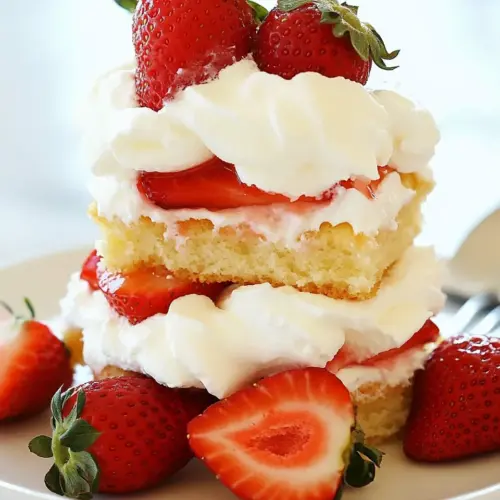
Strawberry Shortcake
Strawberry Shortcake is a classic spring dessert that combines juicy strawberries, tender shortcakes, and billowy whipped cream. Bright, slightly sweet, and texturally playful, this easy recipe is perfect for a casual gathering or a special brunch. With flaky biscuits and a glossy berry syrup, it is a reliable favorite you will want to make again and again.
Equipment
- Mixing Bowls
- Pastry blender or fork
- Baking Sheet
- Parchment paper or Silpat
- Stand mixer or hand mixer
- Biscuit cutter
Ingredients
- 1 1/2 pounds strawberries, stemmed and sliced or quartered Rinse and hull before slicing or quartering to ensure even pieces for maceration; release juices that flavor the shortcakes and topping. Combine with sugar to draw out natural sweetness and create a bright, saucy filling that balances the rich cream and biscuit.
- 1/3 cup granulated sugar Sweeten evenly when sprinkled over fruit to macerate and enhance strawberry juices; dissolves into the fruit to create a syrupy consistency. Adjust amount to taste to control overall sweetness of the topping and filling.
- 3 cups all-purpose flour Provide structure and body to the shortcakes by forming the flour-based dough; develops the crumb when mixed with leaveners and fat. Measure and sift if needed to ensure consistent texture and to avoid lumps in the batter.
- 1/4 cup granulated sugar Add additional sweetness to the shortcake dough to balance the rich butter and cream while gently caramelizing on top during baking. Distribute sugar evenly so the biscuits brown attractively and maintain a pleasant crumb.
- 2 tablespoons baking powder Leaven the dough by producing lift and lightness when mixed with wet ingredients; creates airy, tender shortcakes. Measure carefully to avoid metallic taste and ensure even rising during baking.
- 1 teaspoon salt Enhance overall flavor and balance sweetness by adding a touch of savory contrast; helps bring out other flavors in the dough and filling. Dissolve evenly in dry ingredients to ensure uniform seasoning.
- 3/4 cup cold unsalted butter, cut into small pieces Cut into cold dough to create flaky layers and tender pockets throughout the shortcakes; contributes richness and structure as it melts during baking. Keep cold until mixing to maximize flakiness and avoid greasy texture.
- 1 1/3 cups cold heavy cream Provide moisture and tenderness to the biscuit dough while activating leaveners for a light interior; cold cream helps produce a delicate crumb. Use measured amounts to achieve the correct dough consistency without becoming too wet.
- 1 teaspoon pure vanilla extract Add a warm, aromatic flavor to both dough and whipped components enhancing overall sweetness profile; small amounts go a long way in rounding flavors. Stir into cream or dough to evenly distribute its fragrance.
- 2 tablespoons heavy cream, for brushing on shortcakes Brush onto the tops of shortcakes before baking to promote golden browning and slight gloss; adds a bit of richness to the crust. Apply evenly to encourage attractive color and surface texture.
- Turbinado sugar, for sprinkling on shortcakes Sprinkle on top of shortcakes for a coarse, sparkling finish that adds crunch and visual appeal; resists melting, providing texture contrast. Use sparingly to avoid overpowering sweetness while elevating presentation.
- 1 cup heavy whipping cream Whip to create a light, airy topping that complements the sweetened strawberries and biscuits; provides a creamy, cooling contrast to the assembled dessert. Chill equipment and cream for best whipping volume and stability.
- 3 tablespoons confectioners’ sugar Sweeten and stabilize whipped cream while smoothing texture and preventing over-whipping; dissolves quickly to avoid graininess. Incorporate gradually while whipping to achieve desired sweetness and lift.
- 1 teaspoon pure vanilla extract Add aromatic depth to whipped cream, enhancing vanilla notes and rounding overall flavor; small amount provides marked improvement in taste. Mix in during whipping to evenly distribute the flavor.
- Pinch of salt Enhance and balance sweetness and vanilla in whipped cream with a small amount of savory contrast; helps lift flavors and prevents cloying sweetness. Dissolve into cream to create a subtle, well-rounded finish.
Instructions
- Slice or quarter the strawberries and place them into a large bowl. Cover with granulated sugar and stir. Cover and refrigerate the strawberries while you make the shortcakes so they can get juicy.: As the strawberries sit with the sugar, they begin to exude a bright, ruby syrup that smells floral and sweet, and you will notice their texture soften just enough to be spoonable. This maceration is important because it concentrates the berries flavors and creates a natural syrup that will soak into the shortcakes, so patience matters here. Stir gently to avoid bruising the fruit, and cover the bowl to keep the aroma contained in the refrigerator. A common mistake is adding the berries to the shortcakes immediately, which leaves them dryer and less flavorful. If the fruit seems watery, give it another 10 to 20 minutes; it should be glossy and fragrant when ready.
- Preheat oven to 425 degrees F. Line a large baking sheet with a Silpat baking mat or parchment paper. Set aside.: When the oven reaches 425 degrees F , you will smell a warm, toasty note in the kitchen that signals readiness to bake. Lining the sheet prevents sticking and promotes even browning on the bottom of your shortcakes. Make sure the rack is centered so heat circulates evenly. A misstep here is preheating to the wrong temperature, which can either burn the exterior before the inside cooks or leave the biscuits pale and underdone. Give the oven the full time it needs to come to temperature for the best rise and color.
- In a large bowl, sift together the flour, sugar, and baking powder. Mix in the salt. Add the small pieces of cold butter and use a pastry blender, fork, or your clean hands to cut the butter into the dry ingredients. Mix until you have pieces that are the size of peas.: The dry mix should smell faintly of sweet flour and warm baking powder. Cutting the cold butter into the flour creates small pockets of fat that steam in the oven, producing flakiness. Aim for pea sized butter bits, because anything larger will leave greasy pockets, and anything smaller will make the dough dense. If you are using your hands, work quickly so body heat does not melt the butter. A typical error is overworking the mixture until it becomes paste like, which reduces tenderness. Stop when you see those little butter pebbles dotted through the flour.
- In a small bowl, stir together the cold heavy cream and vanilla extract. Pour the mixture over the flour mixture and stir until just combined. Turn out onto a lightly floured surface and lightly knead the dough together to incorporate all of the crumbly dough pieces. Do not overmix.: The cold heavy cream should feel chilled and slightly thick; when combined with vanilla it adds fragrant richness. Pouring it over the dry mix and folding gently preserves those butter pockets. Light kneading brings the dough together, and you will know it is done when it holds shape but still looks slightly shaggy. Overmixing activates gluten in the flour , making biscuits tough, so be economical with your strokes. If the dough seems too dry, fold in a little more cream, but sparingly.
- Press the dough into a circle, about 1-inch thick and cut into rounds, using a biscuit cutter. Place the biscuits on the prepared baking sheet, about 2 inches apart. Place the pan in the refrigerator and chill the biscuits for 20 minutes before baking.: Pressing gently keeps the layers intact and creates even rise. When you cut rounds, you will feel the dough give and you should see visible butter specks. Chilling on the sheet firms the butter so the shortcakes hold their height during baking, resulting in a tender interior and golden exterior. A frequent oversight is skipping the chill step, which can flatten the biscuits. While chilling, tidy your workspace so you can brush and finish them quickly for the oven.
- Use a pastry brush to brush the chilled biscuit tops with heavy cream. Sprinkle tops generously with turbinado sugar.: The brush stroke should be light and even, leaving a glossy sheen that helps the tops brown and the turbinado sugar to adhere. The coarse crystals will caramelize slightly, giving a pleasant crunch. If you brush too much cream, the sugar can dissolve and the crust will be less crisp, so aim for a modest coating. The visual payoff is worth the small care taken here, as the tops will blister and sparkle in the oven.
- Bake the biscuits until golden brown, about 15-20 minutes. Let cool completely.: As they bake, the kitchen will fill with a warm, buttery aroma and the tops should become golden and slightly crisp. The interior should be tender and pull apart easily. Use visual cues more than the clock because oven performance varies. Removing them too early yields doughy centers, while leaving them too long dries them out. Letting them cool ensures the crumb sets properly, making them easier to split and assemble without crumbling.
- While the biscuits are cooling, make the whipped cream. In the bowl of a stand mixer, whip the heavy cream, sugar, vanilla, and pinch of salt together until the cream reaches stiff peaks.: As you whip, the mixture moves from glossy liquid to billowy texture, increasing in volume and taking on a soft sheen. The sound of the mixer will change as the cream thickens, and you can test peaks by lifting the whisk; stiff peaks should hold sharply without collapsing. Adding a pinch of salt brightens the sweetness. Overwhipping is a common pitfall, which causes the cream to become grainy and eventually break into butter, so stop as soon as peaks hold.
- To assemble the shortcakes, cut the biscuits in half horizontally. Spoon the strawberries over the bottom of the biscuit and add a dollop of whipped cream. Top with the other biscuit half. Add more strawberries and whipped cream on top, if desired. You can also break up the biscuits and top them with strawberries and whipped cream or leave them whole and add strawberries and whipped cream on top.: When assembling, the syrup from the strawberries should glisten and gently soak into the biscuit base, creating a moist, flavorful bite. The contrast between the warm biscuit and cool cream is lovely, but allow biscuits to cool enough to avoid melting the whipped cream . A common assembly error is piling too much filling which makes them messy to eat; aim for balance so each component shines. Serve on a shallow plate to catch any juices, and enjoy the complex textures in every mouthful.
Notes
- Freeze ahead: You can freeze unbaked shortcakes on a lined sheet then transfer them to a freezer bag for up to a month; bake from frozen at 425 degrees F for 23 to 26 minutes to enjoy fresh tasting biscuits anytime.
- Warm presentation: Serve biscuits slightly warm by reheating in a low oven for a few minutes so the berries' syrup seeps beautifully into the crumb without melting the whipped cream.
- Layered trifle: Break biscuits and layer them in a glass with macerated strawberries and whipped cream for an elegant, make ahead option that feeds a crowd.
- Less sweet berries: If your strawberries are very sweet, reduce the sugar used for macerating to let the fruit's natural flavor come through more vividly.
- Extra crunch: Sprinkle chopped toasted nuts on top for a contrasting texture, adding a nutty aroma that pairs well with buttery shortcakes.
- Split method: Instead of cutting the biscuits fully, slice most of the way through to create a hinge for easier assembly and prettier presentation.
- Stabilize cream: Add a tablespoon of confectioners’ sugar or a teaspoon of cornstarch to help whipped cream hold longer if it needs to sit out for serving.