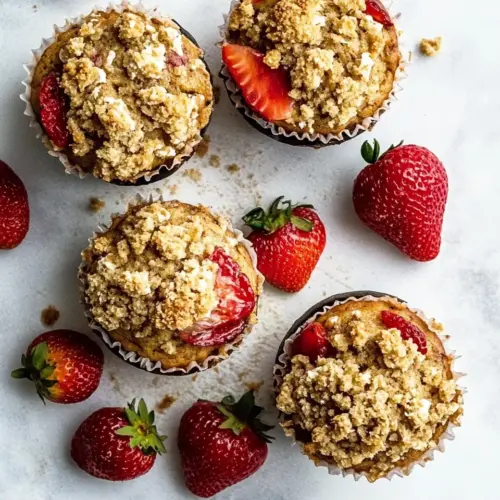
Strawberry Ricotta Muffins
Strawberry Ricotta Muffins are tender, slightly creamy, and studded with bright chopped strawberries, offering a perfect balance of soft crumb and crunchy topping. These easy to bake muffins use ricotta for moisture and a turbinado sugar finish for texture, making them ideal for breakfast or a relaxed brunch. Try them warm with preserves for an irresistible treat that’s worth making today.
Equipment
- Large Bowl
- Medium Bowl
- Muffin pans
- Tulip style paper liners
- Wire Rack
- Whisk
- Spatula
- Scale
Ingredients
- 3 cups (376 grams) all-purpose flour, divided Sifted and measured to provide structure and bulk, this flour forms the base of the muffin batter and contributes to crumb and texture; dividing it helps combine dry and wet ingredients without overmixing and ensures proper hydration of other components.
- 2 teaspoons (10 grams) baking powder Leavening agent that helps the muffins rise by creating carbon dioxide when heated; measuring accurately ensures an even lift and light, tender crumb without a metallic aftertaste.
- 1 1/2 teaspoons (4.5 grams) kosher salt Seasoning that balances flavors and enhances sweetness while tightening gluten slightly; kosher salt regulates yeast activity in recipes and brightens the overall profile of the muffins.
- 1/2 teaspoon (2.5 grams) baking soda Chemical leavener that reacts with acidic components to produce additional lift and tenderness; included in small amount to fine-tune rise and crumb in conjunction with baking powder.
- 1 cup (200 grams) granulated sugar Sweetener that contributes bulk, sweetness, and aids browning through caramelization; granulated sugar also helps retain moisture and improves the muffin crumb and shelf life.
- 1 cup (225 grams) whole-milk ricotta cheese Creamy dairy that adds moisture, richness, and a tender crumb while supplying fat and protein for structure; ricotta also contributes a subtle tang and helps keep the muffins soft for days.
- 1/4 cup (57 grams) unsalted butter, melted Fat that adds richness and flavor while contributing to moistness and tender crumb; melting the butter allows even distribution through the batter and enhances mouthfeel.
- 1/4 cup (56 grams) neutral oil Neutral-flavored fat used to increase moisture and tenderness without altering flavor; oil helps keep the muffins soft and extends freshness compared with butter alone.
- 3 large eggs (150 grams), room temperature Binder and leavening contributor that adds structure, richness, and emulsification; room-temperature eggs incorporate more air when mixed and help set the muffin’s crumb during baking.
- 2 teaspoons (8 grams) vanilla extract Aromatic flavor enhancer that deepens sweetness and rounds out other flavors; vanilla extract adds warm, floral notes that complement the strawberries and ricotta.
- 1 3/4 cups (301 grams) chopped fresh strawberries, patted dry Fresh fruit that provides brightness, natural sweetness, and bursts of juice; chopping and patting dry concentrate flavor and prevent excess moisture from weighing down the batter.
- 2 cups (250 grams) all-purpose flour Additional flour used likely for a streusel or topping, giving structure and crumb to an accompaniment; its presence helps create a contrasting crunchy texture when combined with butter and sugars.
- 6 tablespoons (72 grams) granulated sugar Sweet granulated component for a topping or streusel that adds crispness and caramelizes under heat; it helps balance the richer brown sugar and butter in the topping.
- 6 tablespoons (84 grams) firmly packed light brown sugar Moist sweetener that contributes deep caramel notes and chewiness; firmly packed brown sugar adds flavor complexity and helps bind the topping into crumbs.
- 1 1/2 teaspoons (4.5 grams) kosher salt Seasoning that enhances contrast in the topping or streusel and balances sweetness; repeating kosher salt ensures the topping’s flavors are bright and not cloying.
- 3/4 cup (170 grams) unsalted butter, melted Melted butter that binds topping ingredients, promotes browning, and creates a crisp, rich streusel; its higher quantity yields a buttery, crunchy contrast to the tender muffin.
- 1 1/2 teaspoons (6 grams) vanilla extract Liquid flavoring that provides aromatic warmth and complements the vanilla in the batter; adding vanilla to the topping layers the flavor throughout the finished muffin.
- 1/4 cup (44 grams) chopped fresh strawberries Small amount of fresh fruit reserved for topping or garnish to add fresh strawberry flavor and visual appeal; chopped berries sprinkled on top provide a burst of color and texture.
- 2 tablespoons (24 grams) turbinado sugar Coarse sugar that adds sparkle, extra crunch, and attractive caramelized texture to the muffin tops; sprinkling turbinado before baking gives a satisfying bite and glossy finish.
- Strawberry preserves*, to serve Sweet spread served alongside for additional strawberry flavor and spreadable moisture; preserves offer concentrated fruit sweetness and can be brushed on warm muffins or served at the table.
Instructions
- For batter: In a large bowl, whisk together 2 3/4 cups plus 2 tablespoons (360 grams) flour, baking powder, salt, and baking soda.: The aroma of dry ingredients is faint but clean, almost floury, and whisking them aerates the mixture so the leaveners are evenly distributed. This matters because even distribution prevents pockets of baking powder or soda that could cause uneven rising. A common mistake is under whisking, which can leave clumps of leavening; take a few extra seconds to stir until the mixture looks uniform and pale. You should not dampen any of these dry ingredients yet, so your bowl remains light and free flowing. When you scoop a bit between your fingers, it should feel powdery, not grainy, which tells you the flours and salts are well incorporated.
- In a medium bowl, whisk together granulated sugar, ricotta, melted butter, oil, eggs, and vanilla until well combined. Add sugar mixture to flour mixture, folding just until dry ingredients are moistened.: When you whisk the ricotta with the sugars and fats, the mixture becomes glossy and slightly thick, releasing a creamy scent that suggests richness to come. Folding the wet into the dry with a spatula, rather than vigorous stirring, preserves air and prevents overdeveloped gluten which would toughen the muffins. The batter will remain lumpy, which is intentional for tender results. A frequent error is overmixing, creating a smooth batter, which leads to dense muffins; stop folding the moment you no longer see dry streaks.
- In another medium bowl, toss together strawberries and remaining 2 tablespoons (16 grams) flour; stir into batter just until combined. (Batter will be lumpy; do not overmix.) Cover and refrigerate for 30 to 45 minutes.: Coating the strawberries with a bit of flour helps them stay suspended in the batter rather than sinking to the bottom, and you will notice the fruit dusted and slightly matte before folding in. Once incorporated, chilling the batter hydrates the flour and tightens the mixture, which in turn promotes a taller rise and a more tender crumb. The cold batter may thicken and feel denser, but that is expected. Avoid skipping the chill step, as a warm batter often spreads and yields flatter tops.
- For topping: In another medium bowl, whisk together flour, granulated sugar, brown sugar, and salt until well combined. Stir in melted butter and vanilla until mixture is well combined and crumbly. Cover and refrigerate.: When the butter meets the dry sugars and flour, the mixture transforms into irregular, clumpy crumbs that smell toasty and sweet, hinting at caramel notes. Chilling keeps the topping firm until you are ready to apply it, which helps it maintain distinct crumbs during the initial hot blast of the oven. If the topping becomes too wet, add a little more flour to restore a crumbly texture, since a greasy topping will melt away and not produce the desired crunch.
- Preheat oven to 400°F (200°C). Line every other cup of 2 (12-cup) muffin pans with tulip-style paper liners. Fill empty cups halfway with water.: The oven's initial 400°F heat gives the muffins a quick burst of steam and oven spring, producing taller domes; you will smell a faint sweetness as the surface sets. Using tulip liners encourages straight sides and tall domes because they support the batter. Filling alternate cups with water stabilizes the pan and helps heat distribute evenly, preventing the outer muffins from baking faster than the inner ones. A typical mistake is skipping the water cups, which can cause uneven baking depending on your oven's hot spots.
- Divide batter among prepared muffin cups (about 1/2 cup or 115 grams each).: As you portion the batter, it should feel slightly thick and heavy but still scoopable; use a scale for consistency if you can, or a 1/2 cup scoop. Even distribution is key to uniform baking times and matching dome shapes. A visual cue is that the batter sits slightly above the rim of the liner, ready to expand without overflowing. Be careful not to underfill, as underfilled cups produce small muffins, and overfilling causes spillover and misshapen tops.
- Bake for 5 minutes. Reduce oven temperature to 375°F (190°C), and bake for 5 minutes more. Working quickly, sprinkle 1/4 cup (36 grams) lightly packed topping onto each muffin. Sprinkle strawberries and turbinado sugar on top. Bake until a wooden pick inserted in center comes out clean, 13 to 15 minutes more. Let cool in pans on wire racks for 15 minutes. Serve warm with preserves. Store in an airtight container for up to 3 days.: The first high heat stage sets the exterior rapidly, giving lift and structure, and you will hear a soft crackle as the crust forms. Lowering the oven temperature prevents overbrowning and allows the interior to finish cooking. Sprinkling the chilled topping and extra strawberries right after reduces sinking and ensures a crunchy finish, while turbinado sugar adds sparkling crunch. Work briskly during this transfer so the oven temperature drop timing is accurate, because delays can affect rise and texture.
- Bake until a wooden pick inserted in center comes out clean 13 to 15 minutes more Let cool in pans on wire racks for 15 minutes Serve warm with preserves Store in an airtight container for up to 3 days: As the muffins finish baking, their aroma deepens and the tops take on a golden hue with caramelized pockets where sugars concentrated. A clean pick indicates the interior has set while remaining moist; if crumbs cling, they need another minute or two. Letting them cool briefly in the pan allows the structure to stabilize so they lift out cleanly, and transferring to a wire rack prevents sogginess from trapped steam. Avoid sealing hot muffins in a container, or condensation will soften the crisp topping. For serving, warm and spread a touch of preserves for an extra burst of fruit.
Notes
- Make ahead: Refrigerate the batter overnight for an easy morning bake, then portion and bake as directed for taller muffins and convenience.
- Line choice: Use tulip style liners to promote tall domes and neat sides, which are ideal for gifting or formal brunch displays.
- Fruit handling: Pat chopped strawberries dry and toss with a little flour to prevent them from sinking and coloring the batter uniformly.
- Topping swap: If you prefer less sugar, use half the turbinado and omit the extra surface strawberries, relying on the interior fruit for brightness.
- Texture tweak: Blend half the ricotta with a whisk to break up curds for an even silkier crumb, while keeping the other half intact for creaminess.