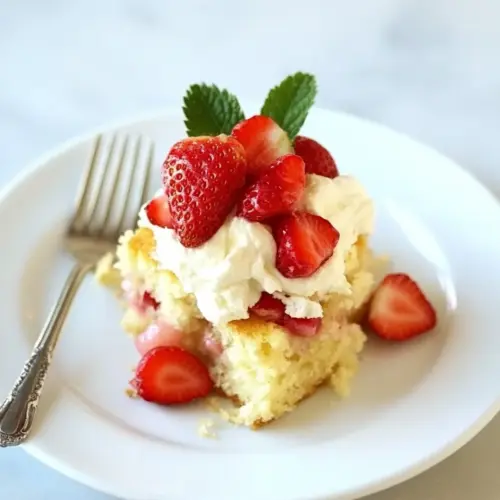
Strawberry Rhubarb Shortcake
Strawberry Rhubarb Shortcake is a bright spring dessert with flaky pastry and juicy macerated fruit. The tart rhubarb cuts through sweet strawberries for a lively contrast, while a buttery shortcake and cloud of whipped cream finish each bite. This easy yet impressive treat makes a lovely option for a casual gathering or an easy weeknight dessert you will want to repeat.
Equipment
- Mixing Bowl
- Baking Sheet
- Parchment Paper
- Measuring Cups
- Cookie Cutter
Ingredients
- 16 ounces strawberries hulled, washed, chopped Hulled, washed, and chopped strawberries provide bright sweetness and juicy texture to balance the tart rhubarb; macerating them with sugar helps release their juices and create a saucy topping. Use ripe berries for maximum flavor and vibrant color in the finished shortcake.
- 2 tablespoons granulated sugar Granulated sugar helps macerate the strawberries and adds sweetness to the fruit mixture; it also contributes to overall balance between tart and sweet flavors. Sprinkle evenly and allow time for the sugar to draw out juices for a saucier filling.
- 2 cups all-purpose flour All-purpose flour forms the structure of the shortcake, providing the base for tender, flaky biscuits when combined with fat and liquid. Measure carefully and mix gently to avoid overworking the dough, which can make the shortcakes tough.
- 2 tablespoons sugar Sugar adds a touch of sweetness to the shortcake dough and helps with browning during baking; it also enhances overall flavor without overpowering the fruit. Use the specified amount to maintain the intended balance between sweet and tart notes.
- 1 tablespoon baking powder Baking powder acts as the leavening agent that creates lift and a light, tender crumb in the shortcakes by producing carbon dioxide during baking. Ensure it is fresh for reliable rise and an airy texture.
- 1/4 teaspoons salt Salt enhances and rounds out the flavors in both the shortcakes and the fruit filling, balancing sweetness and brightening other ingredients. Use the specified small amount to avoid salinity while improving overall taste.
- 2 teaspoons orange zest Orange zest imparts a fragrant citrus aroma and subtle brightness that complements the strawberries and rhubarb, lifting the dessert’s flavor profile. Finely grate the zest to distribute its oils evenly throughout the dough or fruit mixture.
- 5 tablespoons unsalted butter cut into small pieces and chilled Unsalted butter cut into small chilled pieces provides flakiness and rich flavor when incorporated into the flour, creating tender layers as it melts during baking. Keep the butter cold to ensure distinct pockets of fat for a light, flaky shortcake.
- 1 cup chopped rhubarb Chopped rhubarb brings tartness and a firm texture that contrasts the sweet strawberries, forming the classic strawberry-rhubarb flavor combination. Cook or macerate briefly with sugar to soften and balance its sharpness before assembling.
- 1 large egg Large egg binds the shortcake dough, adds richness, and helps with structure and color in the finished biscuits. Beat lightly and incorporate with the wet ingredients for an even distribution through the dough.
- 3/4 cup cold heavy cream plus extra cream to brush the tops Cold heavy cream provides moisture, fat, and tenderness to the shortcake dough, contributing to a rich, delicate crumb; extra cream brushed on top helps with browning and texture. Keep the cream cold until mixing to maintain flaky layers.
- 1 teaspoon vanilla extract Vanilla extract adds warm, sweet aromatic notes that complement both the fruit filling and the shortcakes, enhancing the overall flavor complexity. Add it to the wet ingredients to distribute its flavor evenly.
- Turbinado sugar for sprinkling on top of shortcakes Turbinado sugar for sprinkling on top of shortcakes gives a crunchy, caramelized finish and attractive sparkle when baked; it also adds a hint of molasses flavor. Sprinkle just before baking for best texture and appearance.
- Whipped cream for serving Whipped cream for serving offers a light, creamy contrast to the fruity filling and tender shortcakes, balancing tartness with smooth sweetness. Serve freshly whipped and lightly sweetened to complement the strawberry-rhubarb flavors.
Instructions
- In a medium bowl, add the strawberries and sugar. Stir until strawberries are coated. Refrigerate strawberries until serving time. Center a rack in the oven and preheat the oven to 400 degrees F. Line a baking sheet with parchment or a silicone mat.: The first sensory cue is the shine on the strawberries as they begin to release juice, a gentle syrup that smells brightly of fruit and sugar. This step mellows the berries and creates a saucy component that will contrast with the pastry. While the strawberries sit, the kitchen fills with a sweet, fresh aroma; that is your signal to prepare the dough. A common mistake is to let the berries sit too long at room temperature, which can make them overly soft and watery, so chilling preserves texture. Also, preheating to 400 degrees F ensures the shortcakes start baking immediately, helping them rise properly.
- Whisk the flour, sugar, baking powder, salt, and orange zest together in a large bowl. Drop in the butter and, using your fingers, toss to coat the pieces of butter with flour. Use your fingers or a pastry blender, cut and rub the butter into the dry ingredients. You will have some small pea size pieces of butter and that is fine. Stir in the chopped rhubarb.: As you whisk the dry mix, inhale the citrus perfume from the orange zest , which lifts the whole batter. Rubbing in the chilled butter yields a gravelly, sandy texture with visible pea size bits, and you should still see little flecks of solid butter among the flour; those pockets are what create flaky layers. When you stir in the chopped rhubarb , the mixture gains pink flecks and a rustic look. Avoid overworking the fat into the flour, because if the butter melts, the shortcakes turn dense instead of tender.
- In a small glass measuring cup or bowl, whisk together the egg, heavy cream, and vanilla extract. Pour mixture over the dry ingredients and stir with a spatula just until the dough comes together. The dough will be sticky. Still in the bowl, gently knead the dough by hand, just until the dough comes together.: The liquid mixture should smell faintly of vanilla extract and feel cool to the touch. Pouring it over the dry mix will produce a shaggy, tacky dough that clings slightly to the spatula. Kneading in the bowl by hand creates a cohesive mass without overdeveloping gluten, so stop when the dough holds together. If you overmix, the dough will become tough and lose its tender lift; use light, folding motions and resist the urge to keep working it.
- Lightly dust a work surface with flour and turn out the dough. Pat the dough into a circle. Gently roll out the dough. You want the dough to be about an inch thick. Cut the dough into shortcakes using a cookie cutter, biscuit cutter or glass bottom. Place the shortcakes on the prepared baking sheet, about 2 inches apart.: When you turn out the dough, you will hear a soft, floury whisper as it meets the board, and the surface should feel cool and slightly tacky. Patting and rolling to about an inch gives you the ideal balance between flaky interior and a tender crumb. Pressing too thin will lose the flaky lift, while too thick will lengthen baking and might leave the center doughy. When cutting, press straight down without twisting to keep edges neat, and place the rounds with space so heat can circulate and the edges brown evenly.
- Brush the shortcakes with cream and sprinkle with turbinado sugar. Bake for 12-14 minutes, or until golden brown. Transfer shortcakes to a rack and cool to cool to room temperature.: Brushing with extra cream gives a glossy sheen and helps the coarse turbinado sugar adhere, creating a gentle crackle as it bakes. During the bake you will hear a soft whisper from the oven and the aroma will shift to warm, toasty notes. Look for golden tops and slightly darker edges as the cue to remove them; an uneven color means your oven has hot spots, so rotate the sheet if necessary. A common pitfall is opening the oven frequently, which can cause the shortcakes to bake unevenly. Move them to a rack to cool so steam does not make the bottoms soggy.
- Serve shortcakes with strawberries and whipped cream.: The final sensory payoff is the contrast of textures and temperatures, the cool, fruity syrup against warm, flaky pastry and billowy whipped cream . Spoon a generous heap of the chilled strawberries onto the split shortcake and top with a cloud of whipped cream , so each bite combines crisp edge, tender interior, juicy fruit, and creamy finish. A frequent mistake is to assemble too early, which softens the pastry; serve promptly to preserve the texture contrast.
Notes
- Chill the butter and cream: Keep the butter and heavy cream cold until the moment they are used to preserve pockets of fat that create a flaky crumb.
- Use ripe but firm strawberries: Choose strawberries that are fragrant and red throughout, so they macerate into syrup without becoming mushy.
- Measure flour with care: Spoon and level all-purpose flour to avoid a dry, heavy dough that will not rise properly.
- Pat, do not overwork: When forming the dough, handle it gently; excess kneading develops gluten and makes the shortcakes tough.
- Brush with cream for color: Brushing the tops with additional cream and sprinkling turbinado sugar yields a glossy, caramelized finish that is visually appealing and texturally delightful.
- Serve soon after assembling: Assemble the shortcakes just before serving so the pastry retains its flakiness and does not become soggy from the fruit juices.