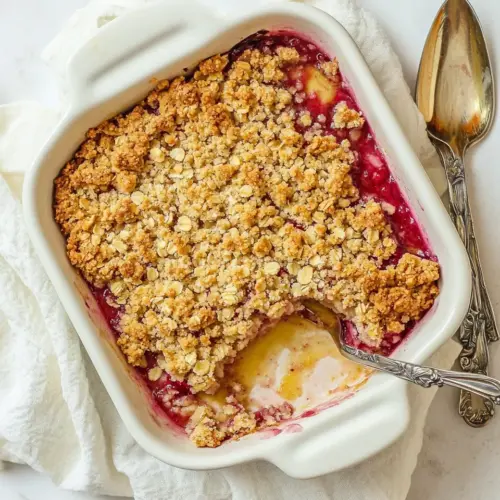
Strawberry Rhubarb Crisp
Strawberry Rhubarb Crisp brings together tart rhubarb and sweet strawberry with a crunchy oat topping for a creamy yet crispy comfort dessert. This easy, vegan friendly dish is perfect for spring gatherings and makes an excellent easy weeknight dessert that feels special. Make it to enjoy bright fruit, warm spice, and a golden, buttery crumb.
Equipment
- Food Processor
- (9-inch) Glass Pie Plate
- Oven-safe glass baking dish (8-inch / 20 cm)
Ingredients
- 1 pound strawberry Provide natural sweetness and bright berry flavor while softening during baking; balances tartness from rhubarb and contributes to a juicy filling once macerated and heated.
- 1 cup rhubarb (cubes) Add firm tartness and structure when cubed, releasing pectin and moisture that contrasts strawberries; cooks down to a tender consistency that complements the crisp topping.
- 1/4 cup coconut sugar Sweeten the fruit mixture with a lower-glycemic alternative to granulated sugar; helps draw out juices and caramelize slightly as the crisp bakes for a deeper flavor.
- 1 tbsp corn starch Thicken fruit juices as they release during baking to prevent a runny filling; creates a glossy, slightly gelled texture that helps the fruity mixture set when cooled.
- 1 tsp cinnamon optional Enhance warm, cozy flavor with a touch of spice; used sparingly for aromatic depth and to complement the natural sweetness of the strawberries and sugar.
- 1 cup rolled oats Provide chewy texture and hearty body to the topping while absorbing butter and sweetener; toasts slightly in the oven adding nutty flavor and structure.
- 1/2 cup almond flour or 1/2 cup oat flour (for nut-free) – tested with both! Contribute tender crumb and slight nuttiness to the crisp topping; almond flour imparts richness while oat flour offers a gluten-free, nut-free alternative with a milder taste.
- 1/4 cup coconut sugar Add sweetness to the topping or filling depending on use; reinforces caramelization and balances the tart fruit for a well-rounded dessert profile.
- 1 stick dairy-free butter Bind the topping ingredients while providing richness and a golden crisp when baked; dairy-free butter ensures vegan compatibility and promotes a flaky, tender texture.
- 1 tsp cinnamon optional Impart warm spice to the topping with a subtle aromatic finish; optional cinnamon elevates overall flavor and pairs particularly well with oats and baked fruit.
Instructions
- Wash the strawberries. Cut the leaves off, then cut them into quarters.: The first thing you will notice is the fragrant berry aroma as you rinse and handle the strawberry . Quartering releases bright juices and ensures the pieces soften uniformly while baking. Keep an eye out for overly soft or bruised berries and remove them, because they can turn the filling too watery. A common mistake is overcrowding the cutting board which can lead to uneven cuts, so give yourself room to work.
- Wash the rhubarb and cut them into 0.5-inch (less than 1 cm) slices.: Fresh rhubarb has a vivid color and a slightly tart, vegetal scent when cut. Slicing into even half inch pieces ensures they become tender in the same time it takes the strawberry to soften. If pieces are too large they may remain fibrous, and if too thin they can disintegrate into the filling. Avoid using wilted stalks, as they offer less structure.
- Preheat oven to 350 F (180 degrees).: When the oven reaches 350 F , you should feel a warm, dry heat coming from the door as you open it. A correctly preheated oven promotes even baking so the topping browns just as the filling bubbles. Skipping preheating can lead to uneven texture where the topping browns too slowly and the filling overcooks. Always use an oven thermometer if your oven runs hot or cool.
- Add half of the rolled oats and all other ingredients to the food processor (almond or oat flour, coconut sugar, dairy-free butter (should be fridge cold, not room temperature)). Mix until they get to a breadcrumb-like texture.: As the processor runs you will hear a steady hum and smell warm, toasty notes from the coconut sugar combining with dairy free butter . The mixture should clump into coarse crumbs that resemble breadcrumbs. Achieving that texture matters because too fine a mix will yield a dense topping, while too coarse a mix will not bind. A typical error is using soft butter, which creates a paste rather than crumbs; keep it cold for the right result.
- Add the remaining rolled oats and only pulse to combine. We want the oats to remain more or less intact.: Pulsing preserves some whole rolled oats , which give chew and visible texture to the topping. You should see distinct oat flakes against the breadcrumb-like base. Over-processing removes that character and makes the topping homogenous, so be conservative with pulses. One mistake is running the processor continuously which pulverizes the oats.
- Scatter the fruit pieces in a shallow oven-safe dish and sprinkle them with coconut sugar, cornstarch, and cinnamon. Stir with a spatula until combined.: When you toss the fruit with coconut sugar and corn starch , the pieces glisten and begin to cling together, signaling that the thickener is coating the juices. This coating helps the filling set rather than running. Mix gently so you do not macerate the fruit too much; aggressive stirring can crush berries and make the filling overly loose. Watch for uneven distribution of cornstarch which can leave thick pockets.
- Scatter the crisp topping evenly over the fruit using your fingers.: Using your fingers to distribute the topping gives you tactile feedback, letting you feel if one area has too much or too little coverage. The contrast between the tart, glossy fruit and the dry, crumbly topping is clear under your hands. Be careful not to press the topping into the fruit, because compacting it will reduce crispness. A common oversight is piling topping at the center and leaving edges bare, which causes uneven browning.
- Bake for 20 minutes or until the crisp topping turns golden brown. Serve it warm with vanilla ice cream that melts all over it. Enjoy!: As it bakes, you will hear gentle bubbling from the filling and smell a warm, toasty aroma when the coconut sugar and dairy free butter begin to brown. The topping should be golden and slightly firm to the touch, and the fruit should be visibly bubbling at the edges. If the topping browns too quickly, tent the dish with foil to prevent burning while the filling finishes. Undercooking leaves the corn starch unactivated and the filling watery, so ensure the juices are simmering.
- Serve it warm with vanilla ice cream that melts all over it. Enjoy!: The ideal serving temperature is warm enough that a scoop of cold topping like vegan vanilla melts slightly on contact, creating a creamy contrast to the crisp. You will see steam rise and hear little sighs of contentment as spoons scrape through the layers. One mistake to avoid is serving it straight from the oven to very young children, because it may be too hot. Let it rest a few minutes for safer serving and better texture.
Notes
- Cold butter matters: Keep the dairy free butter fridge cold and cut into pieces so the processor creates coarse crumbs, not a paste, which leads to a flakier topping.
- Gentle pulsing preserves texture: When you add the remaining rolled oats, use quick pulses so some flakes stay whole, contributing to the topping's satisfying chew.
- Watch the sugar balance: The recipe uses coconut sugar in both the filling and topping, which caramelizes nicely; taste the fruit first and adjust the topping sugar if your berries are exceptionally sweet.
- Keep an eye on the oven: Because ovens vary, check the crisp at 15 minutes to prevent overbrowning and tent with foil if needed while the filling finishes bubbling.
- Layering choice: The recipe can be made as a single layer or doubled for a thicker filling; both work well but a double layer may need an extra few minutes of bake time until bubbling.