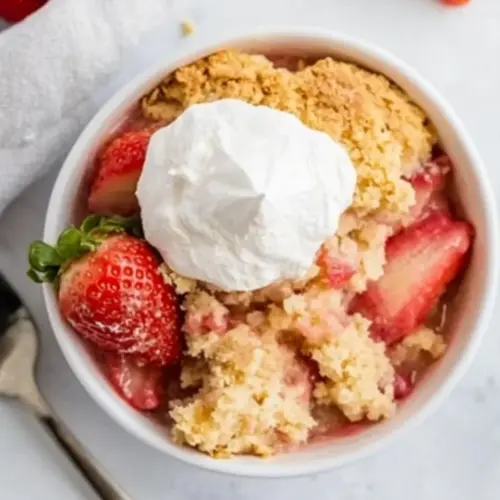
Strawberry Rhubarb Cobbler
Strawberry Rhubarb Cobbler bursts with tangy rhubarb and sweet strawberries, topped with a flaky, golden biscuit style topping. The texture is a lovely contrast of jammy fruit and crisp edges, perfect for easy weeknight desserts or relaxed weekend gatherings. This simple, comforting cobbler is a seasonal favorite that always earns seconds.
Equipment
- 9 X 13 baking dish
- Large Bowl
- Rigid pastry cutter
- Wooden Spoon
- Cooling rack
Ingredients
- 6 cups chopped (1/2" pieces) rhubarb (I recommend using stalks that are bright to deep red in color, about 3/4" thick.) Provide tart, fibrous structure and bulk to the filling; chopped into 1/2" pieces, rhubarb softens and releases juices that balance sweetness while maintaining a pleasant texture when baked.
- 2 cups chopped (1/2" pieces) strawberries Offer concentrated sweetness and fresh berry flavor; chopped strawberries meld with rhubarb, contribute moisture, and add bright color and natural pectin to help set the filling.
- 1 tablespoon fresh lemon juice Brighten and enhance the fruit flavors with acidity; fresh lemon juice balances sweetness, activates pectin for better thickening, and lifts the overall flavor profile of the cobbler.
- 1 cup granulated sugar Sweeten the fruit mixture and help macerate the berries and rhubarb; granulated sugar draws out juices to create a syrupy filling and controls tartness.
- 1/4 cup cornstarch Thicken and stabilize the fruit juices into a cohesive filling; cornstarch prevents the cobbler from becoming watery by creating a glossy, gelled consistency as it cooks.
- 2 cups all-purpose flour Provide the base structure for the topping; all-purpose flour forms the crumb and gluten network that supports fat and leavening to create a tender cobbler crust.
- 1 cup granulated sugar, plus 1 tablespoon to sprinkle over the top Sweeten the topping and balance the tart filling; additional granulated sugar is incorporated into the dough for flavor and a lightly sweet crust, with extra for sprinkling a crisp top.
- 2 teaspoons baking powder Leaven and lighten the topping; baking powder produces gas bubbles during baking, helping the cobbler topping rise and achieve a tender, airy texture.
- 1/2 teaspoon Morton kosher salt Season and enhance overall flavor; Morton kosher salt brings out the sweetness and balances the taste in both filling and topping components.
- 3/4 cup cold unsalted butter, cut into cubes Create a rich, flaky topping by cutting into the flour; cold unsalted butter in cubes produces steam during baking, yielding tender layers and a buttery flavor.
- 1 tablespoon pure vanilla extract Add warm, aromatic depth and roundness to the topping; pure vanilla extract enhances sweetness perception and complements the fruit without overpowering it.
- 1/3 cup hot water (just use very hot water from the faucet, do not boil the water) Loosen and bind the topping dough while partially dissolving sugar; hot water helps hydrate ingredients, ensuring a cohesive dough that bakes into a tender crust.
Instructions
- Preheat oven to 350°F.: The air in the oven should feel warm and steady as it approaches temperature, which sets up even baking for both the filling and the topping. Preheating ensures the cobbler begins cooking immediately, helping the topping set and the fruit juices to thicken properly. A common mistake is putting the dish into an oven that is not fully preheated, which can cause the topping to take too long to brown while the filling becomes overcooked, so wait for the oven indicator before sliding the dish in.
- In a large bowl, stir together rhubarb, strawberries, lemon juice. Add sugar and stir to combine. Then sprinkle cornstarch over the top and stir to combine again.: When you combine the rhubarb , strawberries , and lemon juice , you should hear a soft swish as the fruit moves and begin to smell bright, citrus lifted berry aromas. The lemon juice wakes up the fruit flavors and prevents the filling from tasting flat. Stirring gently preserves some texture in the fruit; vigorous stirring can bruise the berries and create excess liquid, so handle with care.
- Transfer filling mixture, along with any accumulated juices, to a 9" x 13" baking dish. Spread into an even layer. Set aside.: As the sugar meets the fruit, you will notice it drawing out juices and becoming glossy within minutes, creating a lightly syrupy coating. This maceration helps the sugar dissolve and mingle with the fruit flavors. If you skip allowing the sugar to start dissolving, you risk an unevenly sweet filling with pockets of undissolved sugar, so give it a few gentle stirs to incorporate fully.
- In a large bowl, whisk flour, 1 cup of the sugar, baking powder, and salt. Add cold, cubed butter and use a rigid pastry cutter to cut the butter into the dry ingredients until you have pea-sized crumbs.: The moment you dust the cornstarch into the fruit, it will seem powdery, but as you stir it in the juices it becomes invisible and starts to thicken. This is the part where the filling will begin to look glossy and slightly thicker. Make sure the cornstarch is evenly distributed, because clumps will cause uneven thickening; whisk or stir thoroughly but gently until the mixture looks uniform.
- Add hot water to a liquid measuring cup, then add the vanilla to the measuring cup. Drizzle this over the cobbler mixture. Then use a wooden spoon to very quickly fold it together. It's important to not overmix or press this into a smooth dough – you want to have some of the dry flour mixture still showing through, so it looks a bit shaggy and you can still see lumps of butter. It should be moist and "clumpy".: Pouring the filling into the baking dish should create a spread of ruby red juices and chunky fruit. Spread it into an even layer so that the filling cooks uniformly. If you leave the fruit piled, some areas may finish sooner and scorch at the edges; smooth it gently so the surface is consistent but do not press it down hard.
- Dollop the cobbler topping over the strawberry rhubarb filling in an even layer, leaving 1" of strawberry rhubarb filling exposed around the edge. Do not press or spread the cobbler topping – the top should have a rough appearance.: When the filling is even, you will notice the surface sheen and the way the juices sit around the pieces. Setting it aside gives you time to prepare the topping without rushing, which helps maintain the butter temperature. A rushed topping can overwork the dough, so take a moment to clear your workspace.
- Sprinkle remaining tablespoon of sugar evenly over the cobbler topping.: The dry mixture should look pale and uniform, and when you whisk you create a light aeration that contributes to a tender texture. The baking powder needs to be well distributed so the topping rises evenly. If you discover lumps, sift briefly or whisk until smooth, because unmixed leavening can leave pockets that change the texture.
- Bake for 60-65 minutes, or until the filling is thickened and bubbling at the edges and the cobbler topping is golden. Remove from oven to a cooling rack and let rest for at least 15 minutes before serving. Enjoy with scoops of vanilla ice cream.: The kitchen will feel slightly cool as you work the cold butter in; those pea sized bits are the goal, and when held between your fingers they should feel cool and slightly tacky. Those butter pieces create steam during baking that yields flaky pockets. Avoid using warm hands or overworking the mixture, or the butter will melt and the topping will become dense.
- Add hot water to a liquid measuring cup, then add the vanilla to the measuring cup.: The hot water warms the vanilla and helps the topping come together quickly without melting the chilled butter . You will notice the aroma of vanilla bloom as it mixes with the water. Do not use boiling water, as it could prematurely soften the butter when added to the flour mixture.
- Drizzle this over the cobbler mixture.: As the hot water and vanilla hit the dry mixture, the surface will take on a damp, pebbled look instead of forming a smooth dough. Drizzling ensures you do not overhydrate one spot, which would make parts of the topping gummy. If you add all the liquid in one spot, you risk dense patches, so distribute it across the bowl as you go.
- Then use a wooden spoon to very quickly fold it together.: Folding briskly with a wooden spoon gives you a shaggy, clumpy texture. The bowl will sound slightly hollow as you move the spoon, and the mixture should look moist with visible lumps of dry flour and butter. This quick touch prevents gluten development, which keeps the topping tender. Overmixing here is the most common error, producing a tight, breadlike texture, so stop as soon as the dough holds together in clumps.
- It's important to not overmix or press this into a smooth dough – you want to have some of the dry flour mixture still showing through, so it looks a bit shaggy and you can still see lumps of butter.: The shaggy appearance is the target; it will bake into a beautiful, textured topping. The contrast between dry bits and moist clumps is essential for outward crispness and interior tenderness. If you try to mold it into a uniform ball, you will lose the delightful biscuit quality.
- It should be moist and "clumpy".: At this stage, the mixture should feel damp but not sticky, with cold butter peeking through. That moisture level allows steam to form and create lift during baking. If it feels too wet, sprinkle a touch more flour; if too dry, add a teaspoon of water at a time until clumps form.
- Dollop the cobbler topping over the strawberry rhubarb filling in an even layer, leaving 1" of strawberry rhubarb filling exposed around the edge.: When you drop spoonfuls of topping onto the filling, the surface will look irregular and inviting. Leaving the edge exposed helps the fruit bubble up and caramelize along the rim. Resist the urge to spread the topping evenly; the rough peaks will brown more attractively and provide lovely textural contrast.
- Do not press or spread the cobbler topping – the top should have a rough appearance.: That roughness creates crunchy high points and tender valleys. Pressing flattens the butter pockets and prevents proper steaming, resulting in a denser finish. Keep the appearance rustic, and you will be rewarded with a dynamic crust.
- Sprinkle remaining tablespoon of sugar evenly over the cobbler topping.: The final dusting will caramelize slightly as it bakes, giving a sparkling finish and subtle crunch. Even distribution ensures no overly sweet or underwhelming spots. If you skimp on this, the top can look matte and miss that pretty finishing touch.
- Bake for 60-65 minutes, or until the filling is thickened and bubbling at the edges and the cobbler topping is golden.: As it bakes, you will see the filling bubble gently at the edges and the topping turn a warm golden color. The bubbling indicates the cornstarch has activated and the juices are thickening. Beware of taking it out too early, as the filling will still be loose; underbaking leads to a watery center, so look for steady bubbling and a deeply golden top.
- Remove from oven to a cooling rack and let rest for at least 15 minutes before serving.: Resting lets the filling settle and finish thickening, and the steam subsides so the cobbler sets. You will notice the aroma deepen during this short rest. Serving too soon often results in a runny serving, so be patient for a clean scoop.
- Enjoy with scoops of vanilla ice cream.: The warm cobbler paired with cool vanilla ice cream creates a classic contrast in temperature and texture. The creamy ice cream mellows the tart rhubarb and highlights the sugared top. If you skip the ice cream, consider a dollop of whipped cream for a lighter finish.
Notes
- Swap sugar levels by reducing the cup in the filling by a quarter if your strawberries are very sweet; this keeps the tart and sweet balance intact.
- Adjust fruit ratio if you prefer a sweeter result, increase the strawberries by a half cup and decrease the rhubarb accordingly to maintain the overall volume.
- Chill your butter longer for flakier topping, return the cubed butter to the fridge for five to ten minutes after cubing if your kitchen is warm.
- Sparkling finish use the final tablespoon of sugar to create a crunchy, jewel like top that looks beautiful when baked.
- Thickener tweaks if you prefer a slightly silkier filling, dissolve the cornstarch in a tablespoon of cold water before tossing with the fruit to avoid any lumps.
- Make ahead assemble the filling a day ahead and store covered in the refrigerator, then add the topping and bake when you are ready to serve.
- Small batch option halve the recipe for a 9 inch square dish if you do not need a large quantity; baking time may be slightly reduced, so watch for bubbling and a golden top.
- Presentation idea transfer to individual ramekins for single serve portions, which reduce baking time and make charming gifts for guests.
- Steam control bake on a middle rack to promote even browning and prevent the bottom from cooking too quickly while the top remains pale.
- Serving warmth reheat leftovers briefly in a 300°F oven to revive the topping before adding ice cream or cream.