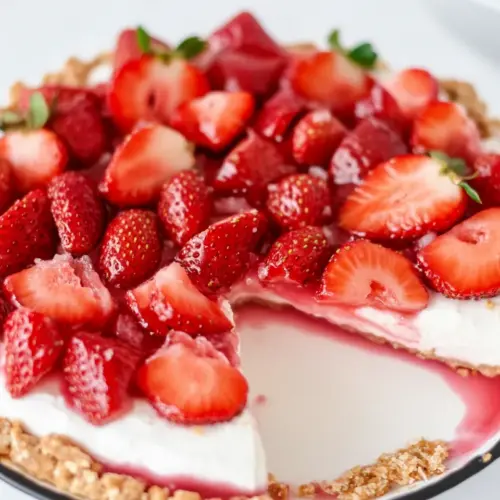
Strawberry Pretzel Pie
Strawberry Pretzel Pie is a creamy, crispy, easy crowd pleaser that layers a salty pretzel crust with a silky cream cheese filling and glossy strawberry topping. Bright fresh strawberries and a sweet glaze create a stunning finish, making it perfect for spring gatherings or casual potlucks. Make it ahead for a stress free dessert that slices beautifully and keeps guests coming back for more.
Equipment
- Food Processor
- Mixing Bowl
- Hand mixer or stand mixer
- 9-inch pie plate
- Saucepan
Ingredients
- 2 cups strawberries washed and sliced Washed and sliced to provide fresh berry flavor and texture, adding natural sweetness and bright color to the filling. Helps balance the sweet and salty components while offering tender fruit pieces that set within the gelatin mixture.
- 1 cup water Added to dissolve powdered gelatin and sugar, supplying the necessary liquid for the glaze and helping the filling set properly. Also helps extract fruit juices when combined with strawberries for enhanced flavor infusion.
- 1/3 cup granulated sugar Stirred with water and cornstarch to sweeten the glaze and balance tartness, contributing to the overall sweetness level of the dessert. Also aids in drawing out strawberry juices and creating a glossy finish when heated.
- 1 tablespoon cornstarch Mixed with water and sugar to thicken and stabilize the strawberry glaze, forming a clear, glossy layer that helps hold sliced fruit in place. Provides smooth texture and helps the filling achieve the proper gelled consistency.
- 3 ounces strawberry Jell-O (1 box) Dissolved into the hot liquid to set the strawberry glaze and contribute concentrated strawberry flavor and color. Acts as the primary gelling agent to ensure the topping firms properly and holds fruit on the pie surface.
- 1 1/2 cups crushed pretzels Crushed to form the crunchy base, supplying salty, toasty flavor and structural support for the pie. Combined with melted butter and sugar to create a compact crust that contrasts the creamy filling.
- 1/4 cup sugar Added to the crushed pretzels to sweeten and balance the salty crunch, helping to create a more dessert-like crust. Works with melted butter to bind the crust and provide caramelized notes when chilled.
- 1/2 cup butter melted Melted and mixed into the pretzel crumbs to bind them together, giving the crust moisture and helping it hold its shape. Also contributes richness and a slight buttery flavor that complements the salty pretzels.
- 6 ounces cream cheese softened Softened and beaten into the filling to create a smooth, creamy base that adds tang and richness to the pie. Provides body and stability so the whipped topping and glaze adhere properly while lending slight tartness.
- 2 cups Cool Whip Folded into the cream cheese to lighten and aerate the filling, creating a fluffy, stable texture that contrasts with the crunchy crust. Adds sweetness and a cool, creamy finish that complements the strawberry topping.
- 1/3 cup granulated sugar Sprinkled into the cream cheese mixture to add sweetness and help balance the filling's tanginess, contributing to overall flavor harmony. Also helps slightly stabilize and sweeten the whipped filling without altering texture significantly.
Instructions
- Preheat the oven to 350 degrees Fahrenheit.: You will smell the warm kitchen air change as it approaches temperature, which helps the crust set quickly when baked. Preheating ensures even heat distribution, which matters because an underheated oven can leave the crust soft instead of crisp. A common mistake is placing the pie in too early, which results in an unevenly baked crust, so wait until the oven signals ready.
- Add the pretzels to a food processor and blend them for a minute or 2 until they are all finely crushed.: The sound shifts from distinct clacks to a steady grinding hum as the pieces turn into fine crumbs, and the texture should feel sandy, not powdery. Fine but not flourlike crumbs help the crust pack and hold their crunch. Avoid overprocessing into dust, or the crust will become too dense and lose its pleasant bite.
- Add the crushed pretzels, melted butter, and sugar in a mixing bowl and mix until combined. Press the mixture into a 9 inch pie plate.: You will notice the mixture darken slightly as the butter coats the pretzels , and the scent becomes nutty and toasty. Pressing firmly ensures the crust binds so the pie slices cleanly; use the bottom of a measuring cup for even pressure. If you press lightly, the slices may crumble when served, so aim for a compact, even layer.
- Bake the crust in preheated oven at 350 degrees Fahrenheit for 10 minutes. Remove and let cool.: As it bakes the aroma turns warm and toasty, and the surface firms and darkens slightly. Cooling is essential because a too warm crust can melt the filling, causing the layers to blend rather than stay distinct. A typical error is rushing the cool time, which yields a soggy base, so let it reach near room temperature before proceeding.
- In a mixing bowl with an electric mixer (hand or stand), beat cream cheese with sugar until smooth. Fold in Cool Whip. Spread over cooled pretzel crust. Make sure to get it all the way over to the edge. Refrigerate for 30 minutes.: The beaters will hum and the texture becomes glossy as the sugar dissolves into the softened cream cheese . Folding in the Cool Whip produces a billowy filling with a cloudlike texture that contrasts the crust. Chilling helps the filling firm so the berries do not sink; avoid overbeating which can make the filling runny or lose volume.
- While the pie is cooling in the fridge, combine the water, sugar and cornstarch in a saucepan. Bring to a boil and cook for two minutes. Add strawberry Jell-O and stir until dissolved. Remove from heat and let cool for 15 minutes.: The saucepan will steam gently and the mixture will thicken, going from translucent to a slightly glossy syrup as the cornstarch activates. This step creates a stable glaze that will set atop the strawberries . Stir constantly to prevent scorching, and watch for lumps; stirring too slowly can make the glaze grainy, so keep a steady motion.
- Place sliced strawberries on top of the cream cheese layer. SLOWLY pour Jell-O mixture over strawberries in an even layer. Refrigerate until set about 4 hours.: The berries should fan slightly and create a vibrant red layer that gleams when the cooled glaze is poured. Pouring slowly prevents the berries from floating or shifting, and the chilled filling helps the glaze spread evenly rather than sinking in. A common slip is using glaze that is too hot, which will melt the filling and blur the layers, so ensure it has cooled to lukewarm before pouring.
- Store in the fridge until ready to serve.: The refrigerated pie will firm and the flavors will meld, with the crust maintaining its crunch against the creamy center and glazed strawberries . Keeping it covered preserves texture and prevents the pie from absorbing other fridge aromas. One mistake is leaving it uncovered which can dry out the edges, so wrap gently with plastic wrap for best results.
Notes
- Chill the bowl and beaters: Cooling your mixing bowl and beaters slightly keeps the Cool Whip from deflating while folding, preserving a light filling.
- Pulse pretzels to a sandy texture: Aim for fine crumbs that pack well but still have a little grit so the crust retains crunch without feeling gritty.
- Press crust with a flat bottom: Use a measuring cup base to apply even pressure across the crust, which helps uniform baking and clean slices.
- Temper the glaze: Let the hot glaze cool until it is warm, not hot, to avoid melting the chilled filling and to keep the berry arrangement intact.
- Slice with a hot knife: Run a sharp knife under hot water and dry it before slicing for smoother cuts through the layered pie.