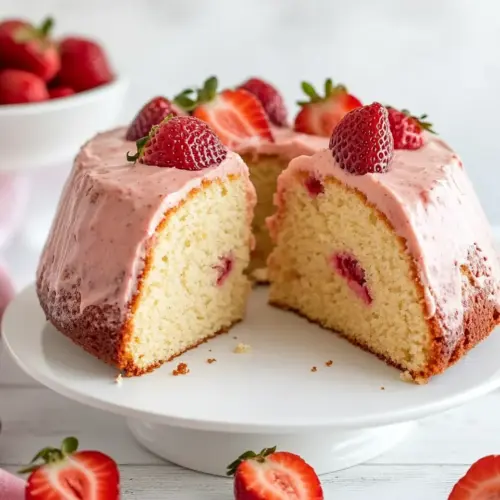
Strawberry Pound Cake
Strawberry Pound Cake is a rich, tender loaf bursting with fresh berry flavor and a glossy strawberry glaze. The dense crumb from all purpose flour and butter meets moist tang from sour cream, creating a delightful contrast that is perfect for brunch or a special dessert. It slices beautifully for sharing, and its bright fruity notes make it a spring favorite you will want to bake again.
Equipment
- Bundt Pan
- Mixing Bowls
- Stand mixer
- Blender
- Measuring Cups and Spoons
- Cooling rack
Ingredients
- 3 cups plus 2 tablespoons all-purpose flour divided Measured and sifted to provide structure and body to the cake batter; used in divided portions to incorporate dry ingredients gradually and maintain a tender crumb. Adds bulk and absorbs moisture from fats and liquids, helping the loaf hold its shape during baking.
- 1/2 teaspoon baking soda Leavening agent that reacts with acidic components to create lightness and slight rise; used sparingly to avoid creating large air pockets. Balances texture by aiding in oven spring and ensuring an even crumb throughout the pound cake.
- 1/2 teaspoon salt Seasoning that enhances overall flavor and controls sweetness perception; disperses evenly to accentuate other ingredients without being noticeable. Helps strengthen gluten slightly and balances the batter for a well-rounded taste.
- 1 cup unsalted butter (2 sticks), at room temperature Creamed to incorporate air and provide richness, flavor, and moisture; contributes to a tender, fine crumb when beaten with sugar. Provides fat that interferes with gluten formation and carries flavor throughout the cake.
- 3 cups sugar Beaten with butter to create a light, aerated base and add sweetness; helps achieve volume and a tender texture when properly creamed. Also contributes to caramelization and crust color during baking.
- 1 cup sour cream Adds moisture, subtle tang, and acidity which interacts with leavening to improve texture; contributes to a moist, dense crumb characteristic of pound cake. Helps tenderize the batter and balances the sweetness for depth of flavor.
- 6 eggs room temperature Beaten and added to provide structure, moisture, and emulsification; yolks enrich the batter while whites contribute to lift when incorporated properly. Room temperature eggs blend more evenly, resulting in a uniform texture and stable emulsion.
- 1 teaspoon vanilla Added for aromatic flavor and to round out sweetness; enhances all other flavors subtly without dominating the profile. Provides a warm, familiar note that complements the strawberries and buttery base.
- 2 cups fresh strawberries quartered Folded in to distribute fresh fruit flavor and tender pockets of juicy texture; adds bursts of natural sweetness and freshness within the cake. Chopping into quarters helps prevent sinking and ensures even fruit distribution.
- fresh strawberries for topping, optional Used as an optional garnish to add fresh color and texture on top of the finished cake; can elevate presentation and provide extra fruitiness with each slice. Sliced or whole berries add a bright, fresh contrast to the rich pound cake.
- 1/4 cup pureed strawberries about 6-7 strawberries Pureed to infuse concentrated strawberry flavor, color, and moisture into the batter or glaze; provides a natural fruit base for swirl or icing. Measurements approximate the puree yield from whole berries to ensure consistent taste and hydration.
- 2 cups powdered sugar Whisked into a glaze or dusted for sweetness and finish; dissolves into liquids to create a smooth, sweet coating for the cake. Provides a bright, sweet contrast and a glossy finish when combined with the pureed strawberries or liquid.
Instructions
- Preheat the oven to 325 degrees Fahrenheit. Butter and flour a bundt pan. Set aside.: Warmth from the oven is the first audible sign the bake has begun, a soft hum that promises browning. You should feel the oven heat through the door if you hold your hand near it, and the air will smell faintly warm. Buttering and flouring the Bundt Pan ensures the cake releases cleanly, the flour forming a thin barrier between pan and batter, which helps the outer crust brown evenly. A common mistake is skimping on the flour after butter, which can cause sticking, so be thorough and tap out excess flour. If your batter starts to sit while the oven preheats, it will be fine for a few minutes, but try not to delay long enough that the butter softens too much in the batter.
- In a mixing bowl, whisk together 3 cups of flour, baking soda, and salt to remove lumps. Set aside.: When you whisk these dry ingredients, you create a uniform pale mixture with no visible clumps, and the surface will look slightly aerated. This is important for even distribution, so you do not get pockets of baking soda or salt in the cake. You should hear a faint rustle as the whisk moves through the flour, and the mixture should feel light between your fingers, not chalky clumpy. A typical error is to skip this step and then overmix batter trying to break up lumps, which tightens gluten and yields a tougher crumb.
- With an electric mixer or stand mixer, beat butter and sugar together until light and fluffy. Add in sour cream and beat until combined. Alternate adding flour mixture and eggs; beat until just combined. Quickly beat in vanilla.: As you beat butter and sugar , the mixture will turn paler and you will notice it becomes airy, almost mousse like, capturing tiny air pockets. Adding sour cream introduces moisture and a slightly tangy smell that rounds the sweetness. Alternating the flour and eggs keeps the batter cohesive and prevents separation, and you should stop mixing as soon as streaks disappear to avoid developing gluten. The batter should be glossy and thick, and the sound of the mixer will deepen as it encounters the heavier batter. Overworking here causes a dense, chewy cake, so be gentle and patient.
- In a bowl, toss together strawberries and 2 tablespoons of flour. Fold the strawberries into the batter.: Tossing the strawberries in flour creates a light coating that helps them suspend in the batter rather than sinking. You will notice the fruit pieces pick up a soft dusting and the color deepens slightly. Folding, rather than beating, preserves the berries' shape and prevents color from bleeding too much into the whole batter. Listen for a quiet, soft pat as the spoon moves through the batter, and the visual cue is a marbled pinkness where berries are distributed. A frequent slip is stirring vigorously, which breaks the fruit apart and can make the batter overly pink and thin.
- Transfer the batter to the prepared pan and bake in preheated oven for 1 hour 15 minutes or until golden and a toothpick inserted into the center comes out clean. Let cool in bundt pan for about 10 minutes before turning out onto a wire rack to cool completely.: When you slide the pan into the oven, the batter settles and you may hear the oven fan hum. After about one hour you will see the top turn a warm golden color and the edges pulling slightly from the pan. The cake should feel springy if gently pressed and a tester will come out clean or with a few moist crumbs. Cooling for 10 minutes is key so the structure firms, then turning onto a Cooling Rack prevents steam from making the bottom soggy. A common error is leaving it too long in the pan, which can cause condensation and sticking, so check the 10 to 15 minute window and unmold carefully.
- Take 6-7 strawberries and puree them in a blender. You should end up with 1/4 cup of liquid, if you don’t add a couple of strawberries. Mix the strawberry puree and the powdered sugar together until well combined.: As you puree the strawberries , you will see the pulp become a vibrant pink liquid, and the blender's sound will shift to a steady, smooth tone. The aroma of bright berry will intensify, filling the kitchen with a fresh, fruity scent. Aim for about 1/4 cup of liquid, adding a berry or two if needed to reach the volume, and strain if you prefer a silkier glaze. One mistake is using very watery berries that dilute the flavor, so choose ripe but not overly soft fruit for the best color and concentration.
- Once cool, drizzle the glaze on top of the cake. Top with fresh sliced strawberries if desired.: Combining the puree with powdered sugar transforms the liquid into a glossy, pourable glaze. Whisk until smooth, and you will notice the mixture thicken slightly and shimmer under the light. The smell will be intensely strawberry and sweet, and the texture should coat the back of a spoon. If it is too thin, add a touch more powdered sugar ; if too thick, a drop of puree or water will loosen it. Avoid adding too much liquid at once, which can make the glaze runny and not cling to the cake.
- Once cool, drizzle the glaze on top of the cake. Top with fresh sliced strawberries if desired.: Drizzling the glaze releases a soft sheen across the cake, and the pale pink stream will run down the ridges of the Bundt Pan shape, pooling in crevices then setting slightly. The contrast between the glossy glaze and the matte crumb is visually pleasing, and adding fresh strawberries gives texture and a bright bite. Serve on a plate at room temperature for the best mouthfeel. A typical mistake is glazing while the cake is still warm, which can make the glaze slide off instead of setting, so ensure the loaf is fully cooled before adding the finishing touches.
Notes
- Storage: Store the cake in an airtight container in the refrigerator because of the fresh strawberries, it will last a few days while staying moist.
- Freezing: Freeze the cooled cake wrapped tightly in plastic wrap and then in an airtight container without the glaze, it thaws overnight in the fridge and you can add the glaze before serving.
- Room temperature servings: Remove the cake from the fridge about 30 minutes before serving to let the texture soften and flavors open.
- Glaze consistency: If the glaze is too thick, add a small splash of strawberry puree, if too thin, sift in more powdered sugar until it coats the back of a spoon.
- Ripeness of strawberries: Use ripe but firm strawberries for the best texture, overly soft berries can make the batter too wet and cause sinking.