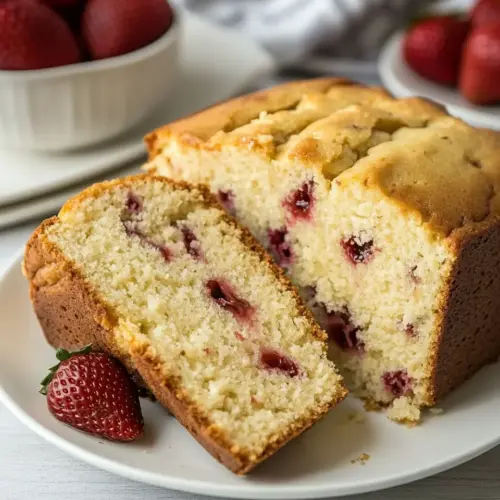
Strawberry Pound Cake
Strawberry Pound Cake is a buttery, tender loaf studded with bright diced strawberries and a hint of almond, offering a soft, moist crumb and fragrant aroma. This easy classic yields a reliably rich texture with simple techniques that home bakers can trust, perfect for brunch, tea, or a relaxed dessert that feels special.
Equipment
- Stand mixer
- 9 x 5 x 3 1/2 inch loaf pan
- Parchment Paper
- Wire Rack
- Spatula
- Sifter
- Measuring Cup
Ingredients
- 2 sticks butter, at room temperature Cream thoroughly to provide the cake with rich flavor and tender crumb; beat until light and fluffy to incorporate air for structure. Ensure butter is at room temperature so it blends smoothly with sugar and creates even texture throughout the batter.
- 1 1/3 cups sugar Sweeten and tenderize the batter while helping to aerate when creamed with butter; sugar controls browning and contributes to crust color. Measure precisely to maintain proper balance between sweetness and cake structure.
- 3 eggs, at room temperature Bind and leaven the batter while adding moisture and richness; beat in individually or with others to incorporate air for lift. Use room-temperature eggs to ensure even mixing and a stable emulsion with the fat.
- 3 egg yolks, at room temperature Enrich and strengthen the custardy texture while adding additional fat for tenderness; yolks help emulsify and deepen flavor. Separate carefully to avoid white contamination and whisk briefly before adding to batter.
- 1 teaspoon vanilla Enhance overall flavor profile with warm sweet notes and help round out the other extracts; add towards the end of mixing to preserve aroma. Use pure vanilla for best depth and authentic cake flavor.
- 1/4 teaspoon almond extract Introduce a subtle nutty aroma to complement vanilla and strawberries; a small amount prevents overpowering the cake. Add sparingly and adjust to taste to avoid altering batter balance.
- 1 1/2 cups diced strawberries (about 1/4-inch cubes) Provide fresh, fruity flavor and dispersed moisture while contributing texture and visual interest; fold gently to avoid crushing and releasing excess juice. Dice uniformly to ensure even distribution throughout the cake.
- 1/4 teaspoon table salt Balance sweetness and strengthen gluten formation slightly to improve crumb structure; salt elevates other flavors when mixed into the dry ingredients. Dissolve evenly to prevent pockets of salty taste in the finished cake.
- 1 1/2 cups cake flour Create a tender, delicate crumb by using a low-protein flour that reduces gluten development; sift or aerate to remove lumps and ensure lightness. Measure by spooning into the cup and leveling for accurate quantity and texture.
Instructions
- Preheat oven to 325 degrees. Grease a 9 x 5 x 3 1/2-inch loaf pan, then line with two strips of parchment paper, perpendicular to each other to cover the inside surface of the pan. Set aside.: The warm air of the oven should feel steady and even, not aggressively hot, which is why a moderate 325 degrees produces a slow, gentle rise and an evenly baked interior. You will notice a faint, welcoming scent when the oven reaches temperature and the method ensures the top browns slowly rather than cracking sharply. I recommend placing a rack in the center so heat circulates evenly. A frequent misstep is preheating to too high a temperature, which can lead to overbrowning before the center sets.
- In a stand mixer, beat the butter for a few seconds until smooth, then on medium-high speed, slowly pour in sugar and beat until very light in color and fluffy. This could take up to 5 minutes. Scrape the bottom of the bowl as needed.: The soft sound of parchment smoothing into a pan gives you a visual cue you are ready. This cross pattern supports the loaf for easy removal and keeps the sides pristine. Greasing beneath the parchment ensures it adheres, preventing slipping when you transfer the batter. If you skip parchment, the cake may cling and break when you try to lift it.
- In a large Pyrex measuring cup with a spout, whisk together the eggs, egg yolks, vanilla, and almond extract. With the mixer on, drizzle the egg mixture in slowly, and mix until well combined, scraping the bottom of the bowl as needed. Mix in the salt.: When you cream the softened butter the texture changes from tacky to silky, and as you add sugar the mixture turns pale and increases in volume, which you can both see and hear as the mixer softens into a steady hum. This aeration is the foundational lift for the loaf, creating tiny air pockets that expand during baking. A common error is undercreaming, which yields a denser loaf, or overbeating once eggs are added, which can collapse the structure.
- Remove the bowl from the mixer and fold in the strawberries.: The glossy sheen of the whisked eggs signals they are ready, and adding them slowly helps the batter emulsify, preventing separation. As you drizzle, the batter takes on a satiny texture and the aroma of vanilla and almond extract becomes noticeable. If you pour too quickly, the mixture can curdle, so patience here preserves a smooth, cohesive batter.
- Put 1/2 cup of the flour into a wire sieve or sifter and sift over the batter, then fold in carefully with a spatula. Repeat with another 1/2 cup, then the final 1/2 cup of flour.: A sprinkle of salt seems small but it lifts and sharpens the sweetness, and you will sense the depth it provides as the batter comes together. The salt dissolves and integrates quickly, subtly enhancing other flavors. Forgetting to add it can leave the loaf tasting flat and one dimensional.
- Scrape the batter into the prepared pan, and smooth the top of the batter.: After the batter is combined, fold in the diced strawberries gently so you keep those bright pieces intact and avoid overworking the batter. The contrast between the pale batter and red fruit is visually satisfying and the soft, cool pieces add little bursts of juice. Be careful to fold with a light hand, as vigorous stirring can break the fruit and release too much moisture.
- Bake for 70-90 minutes or until a toothpick inserted into a few spots in the center of the cake comes out clean. Remove to a wire rack and cool for about 10 minutes. Using the parchment to remove, lift the cake out of the pan and place it on the rack to finish cooling.: Sifting the cake flour over the top keeps lumps from forming and allows you to fold the dry ingredient in gradually, preserving the batter's airiness. You should see delicate streaks disappear as the flour blends, and the texture should remain light rather than gluey. Rushing this step or dumping all the flour at once risks overmixing and developing gluten, which would toughen the crumb.
- Scrape the batter into the prepared pan and smooth the top: The act of scraping reveals a dense, glossy batter that settles into the pan with a quiet thud, and smoothing the surface helps it rise uniformly. Use a spatula to level the top so it bakes evenly, and you will notice a slight sheen as it settles. Ignoring this can produce an uneven dome and irregular bake.
- Bake for 70 to 90 minutes or until a toothpick comes out clean: The kitchen will gradually fill with a warm, fruity aroma as the loaf bakes, and you will see the top take on a light golden color. Baking slowly at 325 degrees allows the center to set without the exterior overbrowning. Test in several spots with a toothpick so you check the true center; pulling it too early can result in a gummy interior, while leaving it too long risks dryness.
- Remove to a wire rack and cool about 10 minutes then lift out using parchment and finish cooling on rack: After removing the pan, the gentle hiss of steam escaping signals the crumb is finishing its bake. Letting the cake rest for about 10 minutes before lifting prevents cracking or tearing. Using the parchment straps, lift the loaf and place it on a rack to cool completely so air circulates around the cake. Cutting too soon traps heat and can lead to a gummy texture, so patience here ensures clean slices.
Notes
- Use room temperature ingredients — Allow the butter, eggs, and egg yolks to warm to room temperature so they combine smoothly, yielding a silkier batter and more reliable rise.
- Pat the strawberries dry — After dicing the strawberries, blot them gently on paper towel to remove excess moisture which prevents the crumb from becoming soggy and keeps the fruit from sinking too much.
- Measure flour correctly — Spoon the cake flour into a measuring cup and level it off rather than scooping directly, which can compress the flour and lead to a dry loaf if too much is included.
- Don’t overmix after adding flour — Fold the sifted cake flour in gently until just combined to avoid developing gluten, which would toughen the cake’s tender crumb.
- Use a center strip of foil if browning too fast — If the top begins to color before the middle is set, tent a narrow strip of foil over the center to slow browning while the interior finishes baking.
- Cool before slicing — Let the loaf cool on a wire rack until it is nearly at room temperature before slicing for the cleanest cuts and best texture.