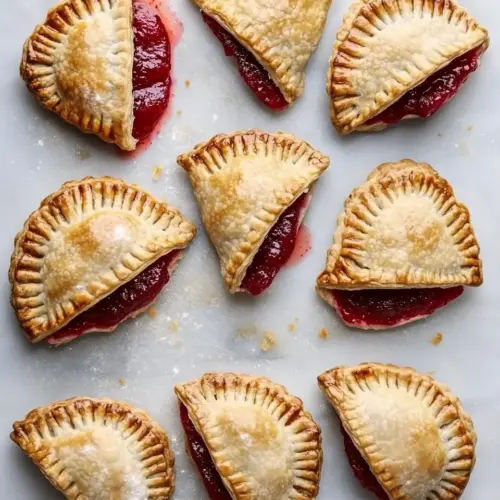
Strawberry Plum Hand Pies
Strawberry Plum Hand Pies are flaky, jammy, and easy to love, combining sweet strawberries and tart plums into portable buttery parcels. The glossy filling and crisp All-Butter Piecrust create a satisfying contrast, perfect for an easy weeknight treat or a picnic dessert, making them a recipe you'll return to again and again.
Equipment
- Medium Saucepan
- Small Bowl
- Baking Sheet
- Parchment Paper
- Rolling Pin
- 4-inch round cutter
- Fork
- Wire Rack
Ingredients
- 1 1/4 cup (186 grams) chopped fresh plums (about 2 medium plums) Provide sweetness and juicy body to the filling while contributing a slightly tart flavor; chop to even pieces to ensure consistent cooking and release of juices that meld with other fruit components.
- 1/2 cup (100 grams) granulated sugar Add bulk sweetness and help balance the fruit acids; dissolve into the fruit mixture to create a syrupy consistency and aid in caramelization during baking.
- 2 teaspoons (10 grams) fresh lemon juice Brighten the filling with fresh acidity to balance sweetness; stir in to lift flavors and help preserve color while contributing a subtle citrus note.
- 1/4 teaspoon kosher salt Enhance overall flavor by amplifying sweetness and reducing bitterness; use sparingly to avoid overpowering and to accentuate the fruit profile.
- 1 cup (140 grams) quartered fresh strawberries Contribute fresh strawberry flavor and texture while adding natural sweetness and moisture; quarter evenly so they soften and hold shape during baking.
- 2 tablespoons (16 grams) cornstarch Thicken the fruit juices into a glossy filling while preventing a runny texture; mix with sugar or liquid first to avoid clumping and cook until clear.
- 1/2 teaspoon (2 grams) vanilla extract Impart a warm, aromatic undertone that enhances the fruit flavors; add toward the end of cooking to retain its delicate fragrance.
- All-purpose flour, for dusting Prevent sticking and facilitate rolling and shaping of dough by dusting surfaces; use lightly to avoid altering dough hydration and texture.
- All-Butter Piecrust (recipe follows) Form the buttery flaky shell that encases the filling and provides structure; keep chilled and handle gently to maintain layers and achieve a tender crust.
Instructions
- In a medium saucepan, bring plums, sugar, lemon juice, and salt to a boil over medium heat, stirring frequently; cook, stirring occasionally, until plums begin to soften and release juice, about 5 minutes. Stir in strawberries.: As the pot heats, you will hear a gentle bubbling and notice the fruit breaking down and releasing deep colored juices, with steam carrying a fragrant, fruity perfume. This step concentrates the flavors and mellows raw edges, so listen for steady bubbling and watch for the fruit to collapse, which indicates readiness. A common mistake is to walk away and let the mixture scorch, so stir frequently and keep the heat at medium to avoid caramelizing the sugars too quickly.
- Carefully transfer about 1/4 cup (60 grams) juice from pan to a small bowl; whisk in cornstarch until smooth. Stir cornstarch mixture into fruit mixture; cook, stirring frequently, until mixture is thick and translucent, 2 to 3 minutes. Remove from heat, and stir in vanilla. Let cool completely.: The sensory change here is dramatic, as the filling shifts from watery to glossy and syrupy, and the vanilla adds a warm aroma once folded in off the heat. You will feel the mixture thicken under your spoon and hear a quieter simmer when the cornstarch activates. Avoid adding the cornstarch directly to the hot pan without pre mixing, which can create lumps; whisk it into reserved juice first for a smooth finish.
- Line a baking sheet with parchment paper.: The parchment keeps the pies from sticking and makes cleanup effortless, while the sheet provides a stable surface for even baking. You can feel the textured paper under the pies and enjoy the neat presentation it provides. A typical oversight is skipping the parchment and having pies stick or tear when you try to remove them.
- On a lightly floured surface, roll All-Butter Piecrust to 1/8-inch thickness. Using a 4-inch round cutter, cut dough, rerolling scraps once. Spoon 1 tablespoon (20 grams) cooled fruit mixture into center of each round.: Rolling to the right thickness gives you a delicate, layered crust that browns evenly and flakes. You should see thin concentric layers in the dough and feel the pliability as you cut rounds. Spoon the filling into the center so there is room to seal; overfilling causes leaks. A frequent slip up is rolling the dough too thin or too thick, which results in underbaked centers or a doughy crust.
- In another small bowl, whisk together egg and 1 tablespoon (15 grams) water; brush onto edges of dough. Fold dough in half over filling, pressing edges together to seal. Using a fork, crimp as desired. Place pies on prepared pan. Refrigerate until firm, at least 20 minutes.: The egg wash acts like an edible glue and gives a glossy finish when baked, while chilling firms the butter in the crust to prevent spreading. You will notice the dough feel firmer after chilling and the edges will hold a crisp crimp when baked. Do not skip the chill step, or pies can puff unevenly and leak; an error is to bake straight away when the butter is warm and the pies lose shape.
- Preheat oven to 375°F (190°C).: Preheating ensures the oven is consistently hot so the crust begins to set and brown upon entry, producing flake and a golden color. You may smell a faint warmth in the kitchen as the oven stabilizes, and an oven thermometer can confirm accuracy. Baking into an oven that is not fully preheated can lead to pale, underbaked crusts, so always wait until the set temperature is reached.
- Brush egg wash onto dough. Cut a few small slits in dough to let steam escape.: Brushing egg wash now enhances browning and creates an attractive sheen, while slits let steam escape so the filling stays in the pastry rather than bursting out. You will hear tiny pops as steam releases early in baking and smell a toasty, sugary scent. Avoid sealing slits too tightly or skipping vents, which often causes pies to burst and leak during baking.
- Bake until golden brown, about 15 minutes. Let cool on pans for 10 minutes. Serve warm, or let cool completely on wire racks. Store in an airtight container for up to 3 days.: In the oven you will notice the crust turning a warm golden and a sweet perfume of cooked fruit fills the air, with light crisping at the edges. Allowing a brief rest on the pan helps the filling settle, then transferring to a wire rack prevents sogginess. A common mistake is slicing or packing them away too soon, which can make the filling run and the crust soggy; patience yields the best texture.
Notes
- Choose ripe but firm fruit, because underripe fruit will be tart and overripe fruit can make the filling runny; aim for plums and strawberries that give slightly when pressed.
- Pre mix cornstarch with juice, which prevents lumps and ensures the thickening agent disperses evenly in the hot fruit mixture.
- Keep everything cold when working with the dough; warm butter will cause the crust to slump and lose flakiness, so chill assembled pies before baking.
- Watch the oven closely in the final minutes of baking, since small hand pies can go from golden to overdone quickly; rotate the sheet if your oven has hot spots.
- Use an egg wash sparingly for shine without burning; a thin layer gives color and helps slits seal but too much can darken edges prematurely.
- Allow pies to rest briefly on the pan before moving to a rack, which stabilizes the filling and reduces the chance of a burst or leak when handled.