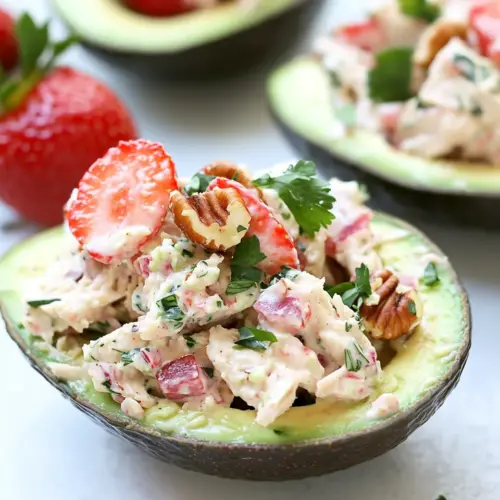
Strawberry Pecan Chicken Salad in Avocado Bowls
Strawberry Pecan Chicken Salad in Avocado Bowls combines tender poached chicken, creamy avocado, and juicy strawberries with crunchy pecans for a bright, creamy, and slightly crunchy salad that works as an easy weeknight dinner or elegant lunch. The tangy greek yogurt dressing keeps it light and refreshing, making it a perfect summer recipe to make again and again.
Equipment
- sauce pan
- Colander
- Large Bowl
Ingredients
- 1 1/2 pounds boneless, skinless chicken breasts Cooked and shredded or cubed to provide the primary protein and hearty base for the salad, offering substance and satiety to each avocado bowl. Use tender, well-seasoned chicken for best texture and flavor integration with the creamy dressing. Prepare by poaching, grilling, or baking until fully cooked and allow to cool before combining with other components.
- whole garlic clove Mildly aromatic and minced to add a subtle savory note that brightens the dressing and overall salad without overwhelming the fruit. Crush or finely grate to distribute flavor evenly through the yogurt mixture and chicken. Adjust the amount based on desired pungency.
- 1 1/4 cups fresh strawberries coarsely chopped Sweet and slightly tart, coarsely chopped to contribute bright color, juicy bursts, and fresh acidity that contrasts the rich avocado and creamy dressing. Select ripe, fragrant berries and chop just enough to maintain texture without becoming mushy. Gently fold into the salad to avoid bruising.
- 1/4 cup coarsely chopped pecans Crunchy and toasted if desired to introduce a nutty flavor, textural contrast, and richness that complements the creamy components and fruit. Chop coarsely so pecan pieces remain distinct and add bite in each forkful. Lightly toast in a dry skillet to deepen flavor before adding.
- 1/4 teaspoons salt Balances and enhances overall flavors by amplifying sweetness from strawberries and rounding savory elements; dissolve and taste to achieve proper seasoning. Use judiciously to avoid over-salting, and adjust at the end if needed. Sprinkle evenly when mixing the salad components.
- 1/4 teaspoon freshly ground black pepper Adds mild heat and depth when freshly ground, bringing a subtle peppery note that layers with other seasonings for a well-rounded taste profile. Grind immediately before use for best aroma and flavor impact. Combine with salt and paprika to season the chicken and dressing.
- 1/2 teaspoon paprika Provides smoky warmth and color, contributing depth and a gentle savory background that pairs well with the yogurt-based dressing and fruit. Measure carefully to avoid overpowering the fresh flavors; blend evenly into the mixture. Can be adjusted to taste depending on desired smokiness.
- 1 cup plain greek yogurt Creates a tangy, creamy base that binds the chicken, strawberries, and pecans while adding moisture and a bright dairy tang to the salad. Choose plain Greek yogurt for thickness and protein, and whisk until smooth before combining. Adjust consistency with a small splash of water or lemon juice if necessary.
- 2 -3 avocados halved and pitted Serves as natural bowls when halved and pitted, offering a creamy, buttery vessel that complements the salad with healthy fats and an appealing presentation. Scoop lightly to enlarge the cavity if needed and fill with the prepared chicken salad. Select ripe but firm avocados so halves hold their shape.
- fresh parsley, chopped Provides fresh herbal brightness and a clean finish when chopped and sprinkled over the assembled bowls, enhancing aroma and visual appeal. Use as a garnish to lift the flavors and add a subtle green note. Chop evenly to distribute small bursts of herbaceous flavor.
Instructions
- Fill a 3 to 3.5-quart sauce pan full of water. Add the chicken breasts and garlic clove. Bring to a full boil and then turn off the heat and cover the pot. After 12 minutes, remove one of the breasts and cut into the thickest part to check to see if they are done (they should be cooked through and register at least 165 degrees F on an instant-read thermometer). If there is any pink, return to the pot for another 15 minutes. Drain chicken through a colander, discard the garlic clove and cool slightly.: When you bring the pot to the boil, listen for a steady rolling sound and watch for vigorous bubbling across the surface, which signals it is ready. Adding the chicken and the whole garlic clove to the water initiates gentle poaching instead of aggressive boiling, which helps the meat remain tender and uniform. A common mistake is overcrowding the pan, which drops the temperature and causes uneven cooking, so use a pot large enough that the breasts sit comfortably without layering.
- Chop or shred the chicken into small pieces. Add the chicken, strawberries, pecans, salt, pepper, paprika and yogurt to a large bowl. Toss well to combine. Scoop chicken salad onto pitted avocado halves. Garnish with fresh parsley and serve immediately.: As the chicken slides into the hot water, you will see the water briefly calm and then return to a gentle movement, a sign that the temperature is right for poaching. The garlic infuses a subtle savory note into the meat; remember it is there to flavor the liquid. If you forget to remove the garlic later you might find an overly intense bite, so discard it after draining.
- Bring to a full boil and then turn off the heat and cover the pot: You want a vigorous boil briefly to bring the water up, then turning off the heat and covering traps residual heat to cook the chicken gently. This method yields moister meat than boiling constantly. Avoid leaving the pot uncovered, which causes rapid cooling and inconsistent doneness.
- After 12 minutes, remove one of the breasts and cut into the thickest part to check to see if they are done: Look for opaque flesh and juices that run clear, and ideally check with an instant-read thermometer for at least 165 degrees F. The texture should be springy but not rubbery, a sign of perfect poaching. If you cut too early you may release juices and dry the meat, so rely on the thermometer or a clean cut to inspect.
- If there is any pink, return to the pot for another 15 minutes: Using the residual heat is gentle but it may need more time for thicker breasts. Return the pot to the stove briefly if the meat is stubbornly underdone, and recheck in small increments to avoid overcooking. A common error is leaving it too long, which results in stringy, dry chicken .
- Drain chicken through a colander, discard the garlic clove and cool slightly: Drain thoroughly so excess water does not dilute the dressing, and allow the chicken to cool until it is still warm but comfortable to handle. Cooling slightly keeps the yogurt from thinning out from heat. If you skip cooling, the texture of the salad can become soupy as the warm meat melts the dressing.
- Chop or shred the chicken into small pieces: Use a fork or a knife to break the chicken into small, bite sized pieces so that every spoonful has a balanced mix. The sound should be a soft tearing, and the pieces should be uniform so the salad feels cohesive. Avoid making the pieces too large, which can make the salad awkward to scoop into the avocado halves.
- Add the chicken, strawberries, pecans, salt, pepper, paprika and yogurt to a large bowl: When you combine the ingredients, fold gently so the strawberries retain their shape and the pecans do not become soggy. The aroma of toasted nuts and the tang of greek yogurt should be noticeable immediately. A frequent slip is overmixing, which bruises the berries and creates excess moisture.
- Toss well to combine: As you toss, listen for the muted clink of pecans against the bowl and feel the creamy texture of the yogurt coating the pieces, indicating an even distribution. Taste and adjust seasoning gently, remembering that the avocado will mellow the seasoning once assembled. Do not add too much salt up front, because chilling can intensify saltiness.
- Scoop chicken salad onto pitted avocado halves: The contrast between the soft, slightly cool avocado and the textured chicken salad is key, and serving immediately preserves the brightness of the strawberries . Fill the wells generously so the presentation looks abundant, and wipe any messy edges for a clean plate. If you let the assembled bowls sit too long, the avocado may brown and the salad can become watery from the fruit.
- Garnish with fresh parsley and serve immediately: A sprinkle of chopped parsley adds herbal lift and color that completes the plate visually and aromatically. Serve at once so the textures remain distinct, and consider offering lemon on the side if needed to freshen the bite. Leaving the garnish off until service prevents limp herbs and preserves the lively look.
Notes
- Cooked chicken shortcut Use rotisserie chicken if you are short on time, ensuring it is shredded into small pieces to match the texture described in the recipe.
- Nut swap If you prefer, substitute walnuts for pecans for a slightly earthier crunch, but keep them coarsely chopped so the bite remains consistent.
- Yogurt texture Choose full fat plain greek yogurt for a richer mouthfeel, or low fat if you want a lighter result, being mindful that thinner yogurt may loosen the salad.
- Berry alternatives Blueberries or diced apples can replace strawberries if they are out of season, though sweetness and acidity will change the final flavor balance.
- Make ahead Prepare the chicken and nut mixture up to a day ahead, but only fill the avocados just before serving to avoid browning and loss of texture.
- Seasoning check Always taste before scooping into avocados, because the creamy fruit will mute seasonings and you may need a small adjustment of salt or pepper.