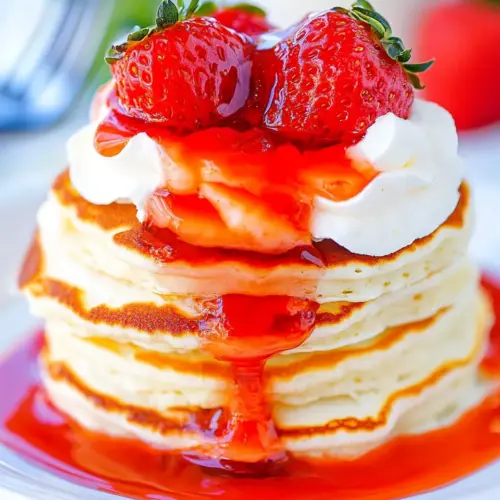
Strawberry Pancakes with Cheesecake Filling
Strawberry Pancakes with Cheesecake Filling are fluffy, tangy, and fruity, combining warm pancakes studded with strawberries and layered with a creamy cream cheese filling and glossy strawberry sauce. This easy yet indulgent stack brings spring flavors to the table and works beautifully for weekend brunch or celebrations. Try it once for a perfect balance of bright fruit and rich, velvety texture.
Equipment
- Medium Saucepan
- Mixing Bowls
- Electric Mixer
- Nonstick skillet or griddle
- Ladle or measuring cup
- Spatula
Ingredients
- 1 cup whole milk Provide a creamy liquid base that hydrates the batter and helps dissolve sugar and leavening agents, contributing to tender pancakes; warm or room-temperature milk blends more evenly for consistent texture.
- 1 egg Bind together wet and dry ingredients while adding richness and structure to the batter; whisk lightly to incorporate air for a fluffier pancake crumb.
- 3 tablespoons vegetable oil Add fat to the batter for moisture and tenderness while preventing sticking on the griddle; neutral-flavored oil ensures the pancakes remain light without affecting taste.
- 3 tablespoons sugar Sweeten the batter to balance acidity and enhance browning during cooking; dissolving sugar thoroughly helps create an even texture and caramelized crust.
- 1 teaspoon vanilla extract Infuse a fragrant, sweet aroma that enhances overall flavor profile; vanilla pairs particularly well with strawberries and cheesecake components.
- 1 teaspoon lemon juice Provide a mild acidic element that brightens flavors and can activate baking powder for lift; fresh lemon juice adds a subtle tartness that complements strawberries.
- 1 cup all-purpose flour Create structure by supplying gluten-forming proteins and starches which thicken the batter; sifting or gently mixing prevents overworking and keeps pancakes tender.
- 1/4 teaspoons salt Enhance overall flavor by adding a hint of salt that balances sweetness and brightens other ingredients; small amounts also strengthen gluten for better texture.
- 1 teaspoon baking powder Leaven the batter by producing carbon dioxide when heated, contributing to light and airy pancakes; combine properly with wet ingredients for consistent rise.
- 2 teaspoons lemon zest Deliver concentrated citrus flavor and aroma that elevates the strawberry notes and cheesecake filling; finely grated zest distributes bright lemon oil without extra liquid.
- 1/2 cup chopped strawberries Contribute fresh strawberry pieces for bursts of fruity flavor and moisture within the pancakes; fold in gently to avoid breaking berries and discoloring the batter.
- 1 pound fresh strawberries rinsed and sliced Provide sliced fresh strawberries as a topping or filling component offering vibrant color, juicy texture, and pronounced berry flavor for the assembled pancakes.
- 1/2 cup white granulated sugar Sweeten the strawberry compote or filling to macerate fruit and create a balanced syrup that enhances natural berry sweetness; adjust to taste depending on fruit ripeness.
- 2 teaspoons lemon juice Add acidity to the strawberry mixture to intensify fruit brightness and balance sweetness; a small amount of lemon juice lifts flavors without overpowering fruit.
- 2 teaspoons cornstarch Thicken the strawberry sauce by gelatinizing when heated, creating a glossy finish and preventing runny compote; mix with sugar first for even dispersion.
- 2 tablespoons water Hydrate the cornstarch to form a slurry that prevents lumps and ensures smooth thickening of fruit sauces when brought to a simmer; cool water works well.
- 8 ounces cream cheese Provide a rich, tangy base for the cheesecake filling that contributes creamy texture and depth of flavor; soften to room temperature for smooth blending.
- 1/2 cup powdered sugar Sweeten and stabilize the cheesecake filling while helping achieve a smooth, slightly firmer texture; powdered sugar dissolves quickly for a silky result.
- 1/2 cup greek yogurt plain or vanilla Add tartness and creaminess while lightening the filling; plain or vanilla Greek yogurt contributes body and a pleasant tang that complements cream cheese.
- 1 teaspoon vanilla extract Enhance the cheesecake filling with aromatic sweetness and depth; adding vanilla extract elevates the overall dessert flavor and ties components together.
- 1 1/2 cups whipped topping Introduce airy lightness to the filling or as a topping by folding in whipped topping for volume without adding excessive fat; use chilled for best stability.
- Whipped cream Provide a light, billowy garnish that complements the pancakes and cheesecake filling with sweet creaminess; pipe or dollop just before serving for visual appeal.
Instructions
- In a medium saucepan over medium heat, add strawberries, sugar, and lemon juice.: The pan should emit a gentle fruity aroma as the strawberries begin to thaw and release their juices, and you will see the fruit soften and the mixture start to shimmer. The bubbling will be gentle at first, not a violent boil, which signals the fruit is macerating and sugars are dissolving into a glossy syrup. I like to stir with a wooden spoon so I can feel the fruit breaking down and avoid sticking. If the heat is too high, the sugars can scorch and develop bitter notes, so lower the flame if you see darkening along the pan edge. One common mistake is crowding the pan with uncut berries, which prolongs cooking and produces uneven texture.
- In a separate bowl, stir the cornstarch and water together until the cornstarch is fully dissolved. Pour the slurry over the strawberries, and stir together. Cook over medium high heat, stirring, until it begins to boil.: The slurry should be completely smooth before hitting the hot fruit, so that it thickens evenly, and once added you will notice the sauce gaining body within a minute or two. At the boil the mixture will brighten and become more translucent as the starch gels, and you should hear a soft rolling simmer rather than aggressive splattering. Keep stirring to prevent lumps and to distribute the thickener, scraping the bottom as you go. Adding the cornstarch dry to the pan causes clumps, which is a frequent error that ruins the texture.
- Reduce heat to low, and continue to simmer for 3-5 minutes, or until the topping is thickened. Remove from heat and allow to cool. Topping will continue to thicken as it cools, set aside until ready to use.: On low heat the sauce will lose excess moisture and concentrate in flavor, producing a syrup that coats the back of a spoon. You will see the sauce cling rather than stream, and the aroma will intensify into a jammy perfume. Cooling is crucial because hot topping will loosen the filling layers and make stacking messy, so patience here is rewarded with cleaner presentation. A common mistake is rushing to use hot compote, which leads to runny stacks that slide apart.
- In one bowl, using a hand or electric mixer, mix milk, egg, oil, sugar, vanilla extract, and lemon juice.: As you whisk, the mixture should look homogenous and slightly glossy, with the sugar dissolving and the lemon and vanilla aromas lifting. Using an electric mixer speeds blending and ensures the egg is fully incorporated, producing an even batter color and texture. If the milk is very cold, let the mixture stand momentarily so the batter mixes without clumping. Overbeating can incorporate too much air here, which may cause uneven pockets during cooking, so stop once the liquids are uniform.
- In another bowl stir together flour, baking powder, salt.: Dry ingredients should be sifted or whisked so they are airy and free of lumps, and you will notice a faint flour scent that signals freshness. Even distribution of the baking powder is vital for consistent rise, so whisk thoroughly and check that there are no visible pockets of leavening. Mixing the dry ingredients separately also prevents overworking the gluten when liquids are added. A common oversight is using expired leavening, resulting in flat pancakes.
- Little by little add the flour mixture to the milk mixture. Stirring well after each addition until the mixture is smooth.: The batter will thicken gradually and take on a pale, uniform color; stir until you have no visible streaks of dry flour but stop before developing a gluey texture. You should see a batter that falls slowly from your spoon, not runny and not too stiff. This staged incorporation prevents lumps and gives control over final consistency. Overmixing at this stage leads to tough pancakes, which is the most common pitfall.
- Stir in the chopped strawberries and lemon zest.: As you fold them in, watch for the bright red flecks and the tiny yellow bits of zest, both of which add visual appeal and bursts of flavor. The chopped strawberries will bleed a little color into the batter, creating pretty marbling that signals freshness. Be gentle so you do not crush the fruit and make the batter watery; if the berries are very juicy, pat them dry first. Squeezing or mashing the fruit while stirring is a common error that can thin the batter too much.
- Place a nonstick skillet or griddle over medium heat.: Heat is key here, and you will know the pan is ready when a few drops of water dance and evaporate on the surface. A properly heated surface gives a quick set to the batter, ensuring a golden exterior and tender interior. If the pan is not hot enough, pancakes spread thin and cook slowly, becoming tough; if it is too hot they brown too fast before cooking through. Test with a small dollop of batter to check the temperature and adjust accordingly.
- Use a ladle or a measuring cup to pour about 1/4 cup of batter onto the hot skillet or griddle. When air bubbles start to form on the pancake, flip it to the other side and cook until golden.: As the batter hits the hot surface you will hear a soft sizzle and see edges set quickly, then tiny bubbles rise through the center. Flip when the bubbles have popped and left small holes, and the underside is golden brown. After flipping, the second side usually cooks faster, and you will watch for a warm, nutty aroma as it finishes. Flipping too early prevents full rise, while flipping too late risks overbrowning, which are common timing mistakes to avoid.
- Repeat with the remaining batter, and stir well to avoid the strawberries sinking to the bottom of the bowl.: Between batches, give the batter a gentle stir so the pieces of fruit remain distributed. You will notice how subsequent pancakes brown slightly differently as the pan heat stabilizes, so adjust heat between batches for even color. If you let the batter sit too long, the leavening power drops and pancakes flatten, so aim for steady rhythm in cooking. A common lapse is leaving batter unattended, causing the fruit to settle and produce pancakes without inclusions.
- In a large bowl using an electric mixer, beat together the cream cheese, sugar, yogurt, vanilla, until smooth.: The softened cream cheese will transform from lumpy to silky, and the mixture should smell tangy and sweet with a creamy sheen. Mix on medium speed until fully smooth to avoid lumps in the filling that can affect texture. Room temperature ingredients blend more easily, so if you start cold you will struggle and might overmix in an attempt to smooth it out, which is a frequent misstep.
- Add a 1/2 cup of the whipped topping and continue to whip until combined.: Introducing some of the whipped topping into the filling lightens it and makes it more pliable for stacking, and you will see the mixture become airier and paler in tone. Use the mixer briefly so you incorporate without deflating, and stop once the texture is smooth and spreadable. Overbeating at this stage collapses the aeration and yields a dense filling, which is the usual mistake here.
- Using a spatula, fold in the rest of the whipped topping by hand, until fully incorporated.: Gentle folding preserves the airy structure of the topping, resulting in a filling that holds shape yet melts in your mouth. Look for streaks to disappear and a cloudlike consistency that is not runny. If you fold too aggressively the mixture will deflate and lose that light mouthfeel, which many people accidentally do when trying to rush.
- Add a pancake on a plate, top with cheesecake filling, another pancake, cheesecake filling, and repeat until you add the fourth pancake on top.: Building the stack is where this recipe becomes playful and dramatic, and you will hear soft layers settling as you press lightly to stabilize each tier. The contrast of warm pancake and cool filling creates a pleasant temperature interplay, and the stack should lean slightly tall but remain sturdy. Piling too many pancakes or adding overly warm filling can cause slipping and structural collapse, which is why moderation and cooling the sauce are important.
- Top the last pancake with a hefty amount of strawberry sauce and serve with a dollop of whipped cream.: The final flourish is both visual and flavorful, with the glossy compote pooling and the whipped cream adding an inviting cloud. Serve immediately so the pancakes retain warmth and texture, and offer extra sauce at the table for those who want more. A final mistake to avoid is assembling too far in advance, which causes the pancakes to steam and become soggy instead of retaining a pleasant bite.
Notes
- Choose ripe strawberries, because they have the best natural sweetness and aroma; underripe fruit will need extra sugar and can make the sauce taste flat.
- Soften the cream cheese completely, by leaving it at room temperature for at least 30 minutes, this prevents lumps and reduces mixing time, leading to a silkier filling.
- Use whole milk, as it contributes to a tender pancake crumb and better browning compared to low fat varieties, giving you a more satisfying mouthfeel.
- Make the topping first, so it has time to cool and thicken; hot sauce will loosen the filling and cause the stack to slide apart.
- Measure flour correctly, by spooning it into the cup and leveling off the top to avoid packing, which can create dense pancakes instead of light ones.
- Keep the griddle steady, maintaining medium heat throughout and adjusting between batches so pancakes brown uniformly and cook through without burning.
- Fold, do not whisk, when combining the remaining whipped topping into the filling to preserve air and yield a fluffy, pipeable consistency perfect for layering.