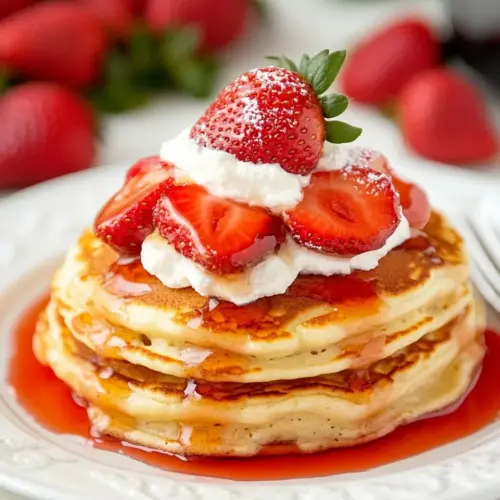
Strawberry Pancakes
Strawberry Pancakes are fluffy, fruit studded pancakes that combine tender batter with bursts of fresh berry sweetness. These easy to make pancakes are great for a relaxed weekend breakfast or a special brunch, offering a balance of creamy, juicy, and slightly caramelized flavors. Make them when strawberries are ripe for the most vibrant taste, and serve warm for the best experience.
Equipment
- Large Bowl
- Separate bowl
- Nonstick skillet or griddle
- Spatula
- Measuring Cups and Spoons
Ingredients
- 1 1/2 cups all-purpose flour Provides structure and bulk to the batter, allowing pancakes to hold together while cooking. Contributes gluten for chew and an even crumb when mixed properly, and serves as the base for combining all dry and wet components.
- 1 tablespoon granulated sugar Adds sweetness and helps balance flavors in the batter, promoting light browning on the pancake surface. Assists in tenderizing the texture by interacting with the flour and liquids.
- 1 tablespoon baking powder Leavens the batter by producing carbon dioxide when activated, creating light, fluffy pancakes. Stabilizes rise across the cooking process and counteracts any density from wet ingredients.
- 1/4 teaspoons salt Enhances overall flavor by brightening and balancing sweetness, while slightly strengthening gluten formation. Helps control the batter’s chemical reactions and improves overall taste.
- 3 tablespoons unsalted butter, melted, plus more for greasing the pan Contributes richness and a tender, moist crumb when melted into the batter, providing a smooth mouthfeel. Also enables pan greasing to prevent sticking and encourages golden browning during cooking.
- 1 1/4 cups milk Hydrates flour to form the batter, facilitating gluten development and creating proper viscosity for pouring. Influences final texture and helps dissolve sugar, salt, and leavening agents for even distribution.
- 2 teaspoons pure vanilla extract Adds aromatic sweetness and depth to the batter, rounding out flavors and complementing the strawberries. Enhances perceived sweetness without adding more sugar and brings a pleasant fragrance while cooking.
- 1 large egg Binds the ingredients together by providing structure and stability, aiding in emulsification of fats and liquids. Contributes to lift and contributes to a tender crumb through protein content.
- 1 cup fresh strawberries, diced Provides fresh fruity flavor and moisture pockets, adding brightness and texture contrast to pancakes. Supplies natural sweetness and a pleasant acidity that complements the batter's richness.
Instructions
- Whisk together flour, sugar, baking powder, and salt in a large bowl to create a smooth, dry mix.: The dry mix should look uniform and pale, with the baking powder evenly distributed so each pancake rises consistently. You will hear a faint whisper of flour as you whisk, and the texture should feel powdery without lumps. This step matters because uneven leavening leads to spotty rise, and failing to fully combine these ingredients can leave pockets of salty or bitter taste. A common mistake is rushing and leaving clumps, which makes pancakes cook unevenly, so take an extra 20 seconds to whisk thoroughly.
- In a separate bowl, mix together the melted butter, milk, vanilla extract, and egg.: The wet mix should glisten slightly from the melted butter and smell warmly of vanilla extract . Whisk until the egg is fully incorporated and the liquids look homogeneous, which prevents streaks of egg in the batter. This technique matters because uniform wet ingredients emulsify better with the dry, preserving tenderness. If your butter is too hot, it can cook the egg, so let it cool briefly before combining; that is the most common slip up here.
- Pour the wet ingredients into the dry mix and stir gently. Fold in the fresh strawberries. Make sure to distribute them evenly.: After pouring, the batter should be stirred with a spatula until you see a few lumps, not smooth pancake glue. When you fold in the diced strawberries , they should be suspended evenly throughout rather than sinking to the bottom. This gentle technique preserves air pockets from the baking powder , yielding light pancakes. Overmixing melts those air pockets and yields tough pancakes, which is why I always stop as soon as the flour streaks disappear.
- Heat a nonstick skillet or griddle over medium heat. Lightly grease with butter. For each pancake, pour 1/4 cup of batter onto the skillet. Cook until bubbles form on the surface and the edges look set, about 2-3 minutes.: As the batter hits the hot surface you will hear a whispering sizzle, and the aroma of butter will rise. Tiny bubbles forming across the surface are the key visual cue that the pancake is ready to flip. This step controls the Maillard reaction, producing that golden exterior while keeping the interior tender. A frequent error is using too high heat, which browns the outside before the center cooks; aim for medium and adjust if the pancakes darken too fast.
- Flip the pancakes carefully and cook for another 1-2 minutes on the other side, or until golden brown and cooked through.: After flipping, the underside should reveal a uniform golden brown color, and you may notice a softer, grainy aroma as the center finishes. Pressing gently should return a slight spring, indicating doneness without dryness. This finishing step seals texture and ensures the pocketed crumb from the leavener sets properly. Overcooking here makes them dry, so remove from the pan when they spring back slightly to the touch.
- Serve with your choice of toppings. I recommend pure maple syrup or some Greek yogurt. You can also add fresh strawberries.: The final presentation should be warm and inviting, with syrup pooling and glistening on top or a dollop of Greek yogurt contrasting the sweet fruit. Serving immediately preserves the delicate texture; as pancakes cool they firm up and lose some moisture. A common mistake is stacking too many at once, which can steam them and make the bottoms soggy, so if you stack, separate layers briefly to keep them light.
Notes
- Measure accurately Use a spoon and level method for the flour to prevent a dense batter that will produce heavy pancakes.
- Keep heat steady Maintain medium heat so the exterior browns slowly while the center cooks through without drying out.
- Fold gently Integrate the wet and dry ingredients until just combined to preserve air pockets from the baking powder and keep pancakes fluffy.
- Pat the strawberries dry If your strawberries are very juicy, dab them so they do not add excess moisture which can make the batter thin and the pancakes soggy.
- Rest the batter briefly Allowing the batter to sit for five minutes helps the baking powder activate and yields a lighter texture.
- Use melted butter carefully Let the melted butter cool slightly before adding to the egg to avoid cooking it and creating streaks.