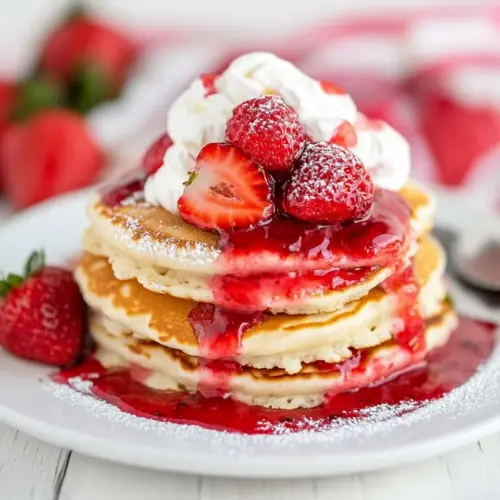
Strawberry Pancakes
Strawberry Pancakes deliver fluffy, golden cakes studded with sweet, juicy strawberries and a buttery aroma that fills the kitchen. This easy breakfast favorite is perfect for a quick family morning or a leisurely weekend brunch, offering light texture and fresh fruit in every bite. Make them for an approachable yet special meal that everyone will ask you to repeat.
Equipment
- Mixing Bowls
- Whisk
- Spatula
- Non stick skillet or griddle
- Measuring Cups and Spoons
Ingredients
- 1 1/2 cups all-purpose flour Sifted to aerate and remove lumps, providing structure and bulk to the pancake batter; combines with leavening to create tender crumb and consistent texture when cooked.
- 1 tablespoon baking powder Leavening agent that creates air bubbles during cooking to help pancakes rise; balances density so stacks are light and fluffy while maintaining shape.
- 2 tablespoons sugar Sweetened to enhance flavor and promote browning during cooking; helps balance acidity and complements the natural sweetness of strawberries.
- 3/4 teaspoons salt Seasoning used sparingly to enhance overall flavor; tightens gluten slightly and balances sweetness while preventing a flat-tasting batter.
- 1 egg Beaten to bind dry and wet ingredients, adding richness and helping trap air for lift; contributes to structure, color, and a tender crumb in pancakes.
- 1 1/4 cups milk Poured in to hydrate the dry mix and dissolve sugar and baking powder; controls batter consistency and contributes to tenderness and flavor.
- 2 tablespoons melted butter Melted and incorporated for richness and moisture, promoting tenderness and flavor; adds a subtle buttery taste and helps with browning.
- 1 cup diced strawberries Folded in gently to distribute fruity pockets throughout the batter; provides freshness, juiciness, and bursts of sweet-tart flavor in each bite.
- additional butter for greasing pan about 3 Tbsp Smoothed on the pan surface to prevent sticking and aid even browning; supplies extra butter flavor and ensures pancakes release cleanly.
Instructions
- Combine dry ingredients and sift in a bowl.: You will notice a mild flour dust and a slightly sweet, mineral scent as you sift the all purpose flour , baking powder , sugar , and salt together. Sifting aerates the mixture, which gives the pancakes a lighter texture once cooked. Use a whisk to ensure the leavening is evenly distributed so you avoid dense pockets. A common mistake is to skip sifting, which can leave small lumps of baking powder that cause uneven rise, so take the extra minute to sift and then stir gently to combine.
- In another bowl beat egg until light and fluffy. Add 1 1/4 cups milk and melted butter to the bowl. Stir until combined.: When you beat the egg , you should see it turn paler and slightly frothy, which traps tiny air bubbles that help with lift. Pour in the milk and warm, melted butter and stir until the mixture looks glossy and uniform. The warm butter helps the batter incorporate smoothly and contributes to a richer mouthfeel. If the butter is too hot it can cook the egg , so make sure it’s only warm. Avoid over mixing here, since vigorous beating can make the batter tough; a gentle whisk until homogenous is all you need.
- Add wet ingredients to dry ingredients and mix until moistened. Gently fold in diced strawberries.: Pouring the wet mix into the dry will create a shaggy batter at first, and you should stop when you still see a few streaks of flour, not when it is perfectly smooth. Over mixing develops the gluten in the flour which leads to chewier pancakes. Folding in the diced strawberries with a soft spatula prevents them from breaking up and turning the batter pink throughout, preserving little fruit pockets. A common mistake is to use too aggressive a motion, which bruises the fruit and can make the pancakes gummy, so be gentle and patient.
- Heat griddle or skillet over medium-low heat. Melt about 1/2 tablespoons butter in a large non-stick skillet. Ladle the batter (about 1/4 cup batter) into the skillet making 3-4 pancakes. Cook pancakes until bubbles form on top. Flip and brown the other side.: As the pan warms, you will hear a faint settling sound and smell warm, toasty butter notes once it melts. The surface should shimmer but not smoke; medium low ensures the pancake cooks through without burning. Spoon about 1/4 cup portions to form evenly sized pancakes so they cook uniformly. Watch for tiny bubbles forming and spreading across the surface, that’s your cue to flip; the underside should be a golden brown. After flipping, the second side will take less time, and you’ll hear a gentle sizzle while the edges set. A frequent issue is cooking too hot, which browns the outside before the center cooks; lower the heat if you see rapid darkening.
- Wipe out any excess butter with paper towels. Repeat with remaining batter.: Between batches I blot the pan with a paper towel to remove pooled butter , which prevents the next pancakes from frying too aggressively and becoming overly dark. You’ll notice a difference in browning and texture when the pan is kept just lightly greased instead of slick with butter. Continue ladling, watching the same visual cues of bubbling and color. A common slip is letting the pan accumulate residue which leads to uneven browning, so keep it clean and maintain a steady medium low temperature.
Notes
- Measure the flour correctly — Spoon your all purpose flour into the measuring cup and level it off with a knife to avoid packing, which can make the batter heavy rather than light and fluffy.
- Keep the strawberries slightly chilled — Cold, diced strawberries hold their shape better when folded into the batter, reducing the chance of overly pink or watery batter.
- Control the heat — Maintain a medium low stove setting so the pancakes develop a golden crust while cooking through; if they brown too fast, lower the heat immediately.
- Use melted and cooled butter — Add butter that is warm not hot to the wet mix, to avoid cooking the egg and to ensure even distribution throughout the batter.
- Portion batter consistently — Use a 1/4 cup scoop for uniform pancakes, which ensures each cake finishes at the same time and stack neatly for serving.