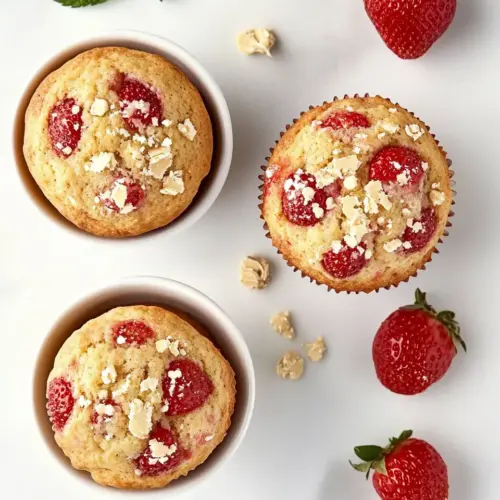
Strawberry Muffins
Strawberry Muffins are tender, fruit studded treats with a balanced crumb from a blend of flours, offering a moist, slightly nutty texture and bright bursts of fresh strawberry flavor. This easy, quick bake is perfect for breakfast or a snack, delivering bakery quality at home and a friendly reason to make extras for sharing.
Equipment
- Muffin Tin
- Mixing Bowls
- Whisk
- Spatula
- Measuring Cups
- Wire Rack
Ingredients
- 3/4 cup + 2 tablespoons all-purpose flour, spooned and leveled Measure accurately and sift or spoon and level to ensure tender muffin crumb; contributes bulk and structure while providing gluten for chew and lift when combined with liquids and leaveners. Use as the primary light flour to balance whole wheat and almond flours, helping maintain a soft texture and neutral flavor. Handle gently when mixing to avoid overdeveloping gluten and producing dense muffins.
- 3/4 cup whole wheat flour, spooned and leveled Add whole grain body and nutty flavor while boosting fiber and nutrients; spoon and level to maintain correct volume and texture. Contributes denser structure than all-purpose flour, so it helps create a heartier crumb and complements the sweetness of strawberries. Combine carefully with lighter flours to prevent an overly heavy muffin.
- 1/2 cup + 2 tablespoons almond flour, spooned and leveled Provide moisture retention and a mild nutty taste while reducing overall gluten content for a tender, slightly crumbly texture; spoon and level to measure properly. Enhances richness and helps maintain a soft crumb, especially useful when using whole wheat flour. Use as part of the flour blend to balance structure and tenderness.
- 1 tablespoon aluminum-free baking powder Spark leavening action and produce rise when activated by liquid and beaten gases; aluminum-free variety avoids metallic taste and ensures clean flavor. Use the specified amount to achieve tender, airy muffins without large tunnels. Distribute evenly through dry ingredients for consistent lift.
- 1/2 teaspoon cinnamon Impart warm aromatic notes and subtle sweetness to complement strawberries; use measured amount to avoid overpowering delicate flavors. Enhance overall flavor complexity and pair well with cinnamon-friendly fruits and nuts. Sprinkle evenly into the dry mix for consistent flavor.
- 1/2 teaspoon salt Enhance overall flavor balance by highlighting sweetness and reducing bitterness while stabilizing yeast or chemical reactions; measure precisely to avoid saltiness. Contributes to proper dough chemistry and strengthens gluten network slightly for structure. Distribute evenly through dry ingredients for uniform seasoning.
- 1 cup unsweetened almond milk Moisten the batter and activate leavening agents while contributing a mild, slightly nutty almond flavor; use unsweetened variety to control sweetness. Provide necessary hydration for flours and help create a smooth, pourable batter. Warm to room temperature if possible to mix more evenly with eggs and oils.
- 1/4 cup extra-virgin olive oil Add healthy fat for tenderness and moistness while imparting a subtle fruity, savory olive flavor; use extra-virgin for best quality. Help create a tender crumb and prolong freshness by coating flour proteins and inhibiting excessive gluten development. Measure accurately and mix with wet ingredients for even distribution.
- 2 large eggs Bind ingredients, add richness and structure, and assist leavening when beaten with sugars; use large eggs at room temperature for best incorporation. Contribute moisture, color, and emulsification, helping to create a cohesive batter and tender crumb. Beat lightly before adding to ensure even distribution.
- 1/2 cup cane sugar Provide sweetness and contribute to browning and tenderness while assisting creaming and moisture retention in the batter. Use cane sugar to add subtle molasses notes and consistent sweetness; adjust slightly if preferring different sweetness levels. Ensure sugar dissolves sufficiently during mixing for even texture.
- 1 teaspoon vanilla extract Enhance and round out flavors while providing a warm, familiar aroma that complements fruit and sugar; use pure vanilla extract for best results. Add to wet ingredients to distribute flavor evenly throughout the batter. Avoid artificial flavoring if seeking a more natural taste profile.
- 1 1/4 cups diced strawberries Introduce fresh fruity flavor, tartness, and moisture while delivering bursts of strawberry in each bite; dice evenly for consistent distribution. Fold gently into batter to avoid crushing and bleeding color, and toss with a small amount of flour to prevent sinking. Choose ripe but firm berries for best texture and flavor.
- 1/2 teaspoon flour to dust the strawberries Coat the diced strawberries lightly to prevent sinking during baking; use measured amount to evenly dust pieces without altering batter consistency. Create better distribution of fruit throughout muffins by helping berries remain suspended. Toss berries gently with the flour right before folding into the batter.
Instructions
- Preheat the oven to 400°F and grease a 12-cup muffin tin.: When your oven reaches 400°F you will notice a warm, dry heat that encourages quick rise, producing gently domed tops; greasing the tin prevents sticking and helps the muffins release cleanly. The reason this step matters is that a properly preheated oven gives the batter an immediate burst of heat, creating visible oven spring and a pleasing texture. A common mistake is not preheating long enough, which leads to flat, dense muffins, so wait until the oven thermometer reads steady 400°F if you have one.
- In a medium bowl, combine the flours, baking powder, cinnamon, and salt.: As you mix these dry items, you should see a uniform pale mixture with no clumps of baking powder or streaks of whole wheat. Combining evenly distributes the rising agent and spices so every muffin rises and tastes consistent. The why here is that uneven distribution causes pockets of heavy texture or over spiced bites; to avoid that, whisk until the color is homogenous. A typical error is measuring flours directly from the bag without leveling, which can give too-dense results.
- In a large bowl, vigorously whisk together the almond milk, olive oil, eggs, sugar, and vanilla.: Vigorous whisking aerates the liquid mixture, producing tiny bubbles that help lighten the batter; you will hear a soft whisking sound and see the liquid take on a slightly frothy look. This step matters because the emulsified liquids bind fats and water so the batter holds together and achieves good crumb. Troubleshooting tip, if the eggs are cold the oil may not combine smoothly, so bring eggs to room temperature for a silkier mix.
- Dust the strawberries with the 1/2 teaspoon of flour and toss to lightly coat them. This will prevent them from sinking to the bottom of the muffin cups.: After coating, the diced strawberries will look slightly matte and separated rather than glossy and wet, which helps them stay suspended in the batter. This technique prevents the fruit from sinking and ensures an even distribution of juicy pockets throughout the muffins. The reason this works is that the flour soaks up surface moisture and creates a micro barrier, avoiding heavy fruit settling. A common slip up is adding very large or overly ripe strawberries which release excess juice and can still sink, so dice uniformly and pick firm fruit.
- Pour the dry ingredients into the bowl of wet ingredients and stir to combine. Gently fold in the strawberries. Use a 1/3 cup measuring cup to scoop the batter into the muffin cups. Bake for 17 minutes, or until the muffin tops spring back to the touch. Let cool for 10 minutes, and then transfer to a wire rack to cool completely.: At the moment of combining, you will see the batter transform from glossy liquid to a thicker, ribboning batter where flour streaks disappear; stop mixing as soon as the streaks are gone to keep the muffins tender. This matters because overmixing develops gluten in the flours, yielding a tough, chewier result rather than soft crumb. If you notice lumps of flour remain, fold gently with a spatula instead of vigorous stirring to preserve lightness. A misstep is using a mixer on high which rapidly overworks the batter.
- Gently fold in the strawberries: Folding should be done with a wide spatula using slow, deliberate strokes so the diced strawberries stay intact and evenly distributed, avoiding bleeding of color into the entire batter. You can feel the batter change texture as fruit disperses, and you should avoid smashing the pieces to keep juicy pockets in the final muffin. This matters because broken fruit will create localized moisture and color that alters the crumb and appearance. Watch for the mistake of folding too aggressively, which will deflate any air you incorporated in the wet mix.
- Use a 1/3 cup measuring cup to scoop the batter into the muffin cups: Portioning with a 1/3 cup gives uniform muffins that bake evenly, and you will notice identical domes forming as they rise. Consistent scooping matters because uneven portions cause under or overbaked centers; equal-sized muffins finish at the same time. The audible difference is subtle, but evenly filled cups will show an even golden edge when done. A frequent error is overfilling cups which leads to batter spilling and misshapen tops.
- Bake for 17 minutes, or until the muffin tops spring back to the touch: During baking you will smell a warm, fruity aroma and see the tops develop a light golden color; when you gently press the center it should bounce back, signaling doneness. Precise timing matters because underbaking yields gummy interiors, while overbaking dries them out. If your oven runs hot, check a few minutes early to avoid excessive browning; conversely older ovens may need extra time. Avoid opening the oven repeatedly, which drops temperature and affects rise.
- Let cool for 10 minutes, and then transfer to a wire rack to cool completely: After removing from the oven you will sense a warm, comforting scent and see steam dissipate from the tops; the short rest helps the crumb set so the muffins hold together when moved to the wire rack. Cooling on a rack prevents trapped steam from making the bottoms soggy and preserves the exterior texture. The reason to wait is the interior continues to finish as it cools and slicing or storing too soon can cause collapse. A common mistake is stacking hot muffins which traps moisture and softens crust.
Notes
- Swap oils carefully Use a neutral oil if you prefer less olive flavor, but keep the quantity the same to maintain moistness and texture.
- Adjust sweetness If you like a less sweet muffin, reduce the cane sugar slightly, keeping in mind that sugar affects browning and crumb tenderness.
- Fruit size matters Dice the strawberries uniformly so each muffin gets fruit spread evenly; larger chunks can sink or create wet spots.
- Fresh versus frozen Fresh strawberries are best for texture, but if using frozen, do not thaw fully and toss in extra flour to limit bleeding into the batter.
- Storage tips Cool completely before storing in an airtight container at room temperature for two days, or freeze for longer keeping in a zipper bag with excess air pressed out.