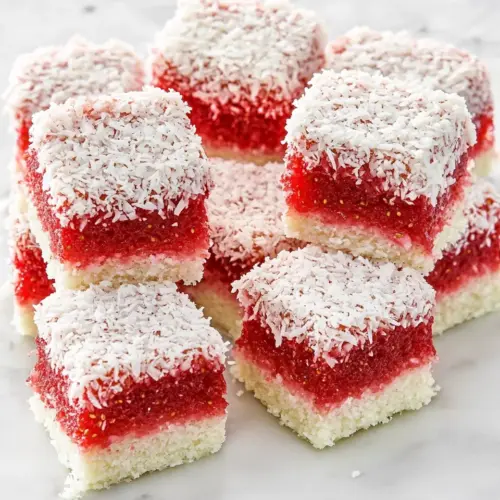
Strawberry Lime Coconut Lamingtons
Strawberry Lime Coconut Lamingtons are a bright, tender cake coated in a fruity glaze and rolled in flaked coconut. The combination of zesty lime, tropical coconut, and sweet strawberry preserves creates a playful texture and vibrant flavor that works well for brunches and spring gatherings, making them a delightful treat to make and share.
Equipment
- Stand mixer
- Paddle attachment
- Whisk attachment
- 13 x 9-inch baking dish
- Wire Rack
- Rimmed Baking Sheet
- Tall narrow container
- Long serrated knife
Ingredients
- 1 cup (227 grams) unsalted butter, softened Creamy and rich, used to provide tender structure, moisture, and a buttery flavor to the cake batter; softened to ensure even creaming with sugar for proper aeration.
- 1 1/2 cups (300 grams) granulated sugar Granulated and fine, used to sweeten the batter and help incorporate air when creamed with butter to produce a light crumb and balanced sweetness.
- 1 tablespoon (6 grams) lime zest Aromatic and zesty, used to add bright citrus fragrance and a concentrated lime flavor that lifts the overall profile of the lamingtons.
- 4 large eggs (200 grams), separated Separated eggs provide structure and leavening; egg whites beaten create volume and lightness while yolks enrich the batter with fat and emulsifiers.
- 1 teaspoon (4 grams) vanilla extract Fragrant and sweet, used to enhance the cake's flavor with warm, familiar vanilla notes and to round out the citrus and coconut accents.
- 3/4 teaspoon (3 grams) coconut extract Strong and tropical, used sparingly to intensify coconut flavor without adding liquid, complementing the coconut milk and coating.
- 2 1/2 cups (313 grams) cake flour Fine-textured and low-protein, used to create a delicate, tender crumb ideal for sponge-like lamingtons and to absorb the wet ingredients evenly.
- 1 1/2 teaspoons (7.5 grams) baking powder Leavening powder used to provide lift and a gentle rise in the batter, contributing to a light, airy cake texture when combined with beaten eggs.
- 1 teaspoon (3 grams) kosher salt Crystalline and savory, used to enhance overall flavor balance by highlighting sweetness and controlling bitterness while supporting gluten structure.
- 1/4 teaspoon (1.25 grams) baking soda Fine and reactive, used to neutralize acidity from the buttermilk-like coconut milk and lime juice and provide additional lift when activated.
- 1 1/4 cups (300 grams) unsweetened coconut milk Silky and dairy-free, used to contribute moisture, a subtle coconut flavor, and tender crumb similar to milk while keeping the cake light.
- 3 tablespoons (45 grams) fresh lime juice Bright and acidic, used to activate leavening agents slightly and to add fresh lime tang that complements the coconut and strawberry elements.
- cup (107 grams) strawberry preserves Thick and fruity, used to add concentrated strawberry flavor and moisture to the lamingtons or filling; quantity placeholder indicates room for recipe-specific adjustment.
- Strawberry Glaze (recipe follows) Combined components that form a glossy, flavored coating for the lamingtons; used to adhere coconut flakes and impart additional sweetness and strawberry-lime character.
- Unsweetened flaked (dessicated) coconut, for coating Dry and chewy, used to coat the exterior of the lamingtons after glazing to provide texture, coconut aroma, and a classic appearance.
Instructions
- Preheat oven to 350°F (180°C). Spray a 13 x 9-inch baking dish with baking spray with flour.: As the oven warms, you can feel the kitchen change temperature, and the scent of heat primes your senses for baking. Preheating ensures even rise and structure, so the cake sets correctly rather than sinking. A well greased and floured pan helps release the cake cleanly, which is crucial because you will later level and slice it. If you skip preheating, the batter may bake unevenly. A common mistake is relying on a guessed oven temperature, so use an oven thermometer for accuracy.
- In the bowl of a stand mixer fitted with the paddle attachment, beat butter, sugar, and lime zest at medium speed until fluffy, 3 to 4 minutes, stopping to scrape sides of bowl. Add egg yolks, one at a time, beating well after each addition. Beat in extracts.: The sound of the mixer will change as air incorporates into the butter and sugar , becoming lighter and paler; that visual cue is essential for an airy cake. Adding the egg yolks gradually ensures a smooth emulsion, preventing curdling and providing richness. Scraping the bowl prevents pockets of unmixed butter or sugar that can lead to uneven texture. If you overbeat after adding yolks, you can break the emulsion, causing a grainy batter; stop when it looks cohesive and fluffy.
- In a medium bowl, whisk together flour, baking powder, salt, and baking soda. In a small bowl, combine coconut milk and lime juice. With mixer on low speed, gradually add flour mixture to butter mixture alternately with coconut milk mixture, beginning and ending with flour mixture, beating just until combined after each addition. Transfer batter to a large bowl.: The dry ingredients should look uniformly blended, which prevents streaks and lumps when folded in. Adding the dry and wet mixtures alternately gives the batter structure without overworking the gluten in the cake flour . You will notice the batter thicken and become velvety; that is the right moment to stop mixing to preserve tenderness. Overmixing here results in a tougher crumb, so fold with care and stop at homogeneity.
- Clean bowl of stand mixer. Using the whisk attachment, beat egg whites at high speed just until stiff peaks form. Gently fold egg whites into batter in three additions until well combined. Pour batter into prepared pan, smoothing top if necessary.: Whipped egg whites should shine and hold a peak that bends slightly; that texture traps air and makes the cake light. Folding should be done with a gentle hand, using a spatula to cut through the center and sweep under, preserving as much air as possible. The batter will look glossy and aerated when done, and pouring into the pan should be effortless. A frequent mistake is vigorous stirring that knocks out the air, so be patient and gentle.
- Bake until a wooden pick inserted in center comes out clean, about 30 minutes. Let cool completely in pan on a wire rack.: During baking you will see the surface set and edges pull slightly away from the pan, signs of doneness. The aroma of butter and lime will intensify. Letting the cake cool fully in the pan stabilizes it, reducing the chance of crumbling when you move it. If you rush to unmold while warm, the cake can break or compress, so resist the temptation to slice early.
- Transfer cake to a large cutting board. Using a long serrated knife, level cake to about 1 inch tall. With one long side closest to you, cut cake into 2 (8 1/4 x 6-inch) rectangles. Spread preserves onto 1 rectangle; top with remaining rectangle. Gently cut cake into 12 (2-inch) squares.: Leveling makes a uniform thickness so the lamingtons are even and stable. Spreading strawberry preserves creates a moist, flavorful layer that glues the two halves together. When slicing, a gentle sawing motion with the serrated knife minimizes tearing. A common error is applying too much pressure and crushing the cake; take your time and turn the board rather than forcing the knife.
- Place a wire rack on a rimmed baking sheet, and place cake squares 1 to 2 inches apart on wire rack. Freeze until firm, 45 minutes to 1 hour.: Freezing firms the cake so it holds up to dipping, and it helps the glaze set without saturating the crumb. You will notice the squares feel cool and almost solid to the touch when ready. Space them so air circulates and the freeze is even. If you skimp on chilling time, the glaze can pull crumbs away or make the squares soggy, so be sure they are solid before proceeding.
- Transfer Strawberry Glaze to a tall, narrow (no more than 3 inches wide) container. Working with 1 cake square at a time, using a wooden skewer, pick up each cake square, and dip into glaze until fully covered, letting excess drip back into container. Return to wire rack, and let stand until completely set, about 30 minutes.: The glaze should flow smoothly around the square, coating evenly; the narrow container helps you submerge the sides without dunking your hands. Listen for a faint patter as glaze drips back into the container, and watch the surface for even, glossy coverage. Letting excess drip prevents the glaze puddling under the cakes. If your glaze is too thick it will clump, and if too thin it will run off, so aim for a pourable consistency.
- Pour flaked coconut onto a small baking sheet. Using a spatula or wooden skewer, roll each cake square in coconut. Place on desired serving dish, and let come to room temperature, 1 to 2 hours. Refrigerate in an airtight container for up to 3 days.: Rolling in coconut adds the final texture and visual charm. The coconut should adhere lightly, creating a feathery coat. Bringing the lamingtons to room temperature calms the glaze and allows flavors to settle, giving the ideal eating experience. For storage, keep them sealed and slightly cool to preserve texture. Avoid stacking while still warm, or the coating can stick and pull off the glaze.
Notes
- Prep Your Tools Make sure your stand mixer bowl and whisk are clean and dry before beating egg whites to achieve full volume.
- Room Temperature Ingredients Bring butter and eggs to room temperature so they incorporate smoothly when creaming, giving a consistent batter.
- Measure Carefully Spoon and level the cake flour into your cup for accuracy; too much flour will make the cake dense.
- Alternate Wet and Dry When adding the flour and coconut milk, alternate additions to avoid overmixing and to preserve a tender crumb.
- Freeze Before Dipping Place the cut squares in the freezer until firm so they hold shape during glazing and coating with coconut.
- Use a Tall Vessel for Glaze A narrow container makes dipping easier and reduces wasted glaze as excess drips back.
- Storage Keep finished lamingtons in an airtight container in the fridge for up to three days, and bring to room temperature before serving for best flavor.