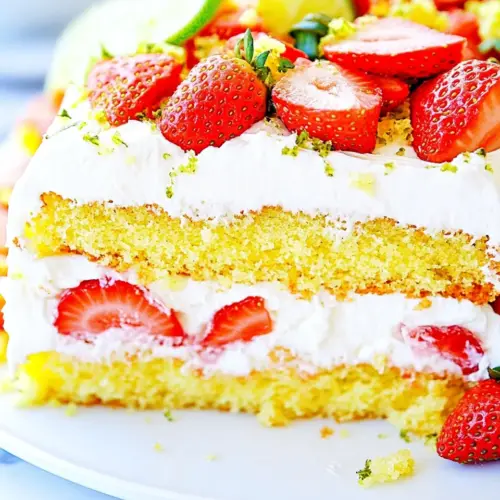
Strawberry Lime Cake
Strawberry Lime Cake is a bright, creamy, and easy dessert that combines juicy strawberries, zesty lime, and a tender sheet cake rolled into an eye catching wheel. The silky mascarpone filling and glossy strawberry sauce create a balanced texture and flavor, perfect for a spring gathering or an easy weeknight celebration. Make it to impress with minimal fuss.
Equipment
- Oven
- Sheet Pan
- Parchment Paper
- Saucepan
- Electric Mixer
- Mixing Bowls
- Wooden Spoon
- Spatula
- Sharp Knife
Ingredients
- 12 oz fresh strawberries sliced Sliced and sweet, provides fresh strawberry flavor and moist texture; can be folded into batter or used as a topping. Adds natural color and a bright fruity note that complements lime and cream. Best used ripe for maximum sweetness and aroma.
- 1 lime juiced Juiced to add bright citrus acidity and enhance overall flavor balance; helps cut through the sweetness of sugar and mascarpone. Contributes a zesty lime tang that lifts the strawberry notes. Use immediately after juicing for fullest aroma.
- 3/4 cup granulated sugar Granulated sugar measured for batter to provide sweetness and structure; helps with moisture retention and browning during baking. Dissolves into wet ingredients to create a uniform crumb and balanced flavor. Adjust slightly to taste if using very sweet strawberries.
- 3/4 cup all-purpose flour All-purpose flour provides the cake’s structure and crumb; acts as the primary dry building block for the batter. Combines with eggs and sugar to form gluten that supports rise and texture. Sift or whisk to incorporate air for a lighter cake.
- 1/2 cup granulated sugar Additional granulated sugar likely for balancing tartness or macerating fruit; contributes sweetness and can affect texture depending on where it’s used. Can be sprinkled over strawberries to draw out juices or mixed into a filling. Ensures harmonious sweetness with the lime and cream components.
- 3 large eggs room temperature Large eggs at room temperature contribute richness, moisture, and leavening; help emulsify fats and liquids for a stable batter. Whisked eggs trap air that expands during baking, improving rise and texture. Bring to room temperature for better incorporation.
- 1 lime juiced and zested Juiced and zested to deliver concentrated lime flavor and citrus oils; zest adds aromatic intensity while juice provides acidity. Balances sweetness from sugar and mascarpone and enhances strawberry brightness. Use zest sparingly to avoid bitterness from pith.
- 1 teaspoon vanilla extract Vanilla extract adds warm aromatic depth and rounds out the citrus and berry flavors; enhances perceived sweetness without adding sugar. Stirred into batter or cream for subtle complexity. Use pure extract for best flavor.
- 3/4 cup heavy whipping cream cold Cold heavy whipping cream is used for whipping into stable peaks or folding into mascarpone; provides lightness and a creamy mouthfeel. Cold temperature helps it whip more easily and hold structure in fillings or frostings. Beat to medium-stiff peaks to avoid overwhipping.
- 12 oz mascarpone cheese room temperature Mascarpone cheese at room temperature creates a rich, silky texture in fillings or frostings; provides tangy, creamy body that pairs well with fruit. Softened to room temperature for smooth mixing and spreadability. Contributes decadence without overpowering citrus.
- 1/3 cup granulated sugar Granulated sugar measured separately to sweeten the mascarpone or cream component; balances the tang of cheese and lime. Dissolves into softened cheese or whipped cream to create a smooth, sweetened filling. Adjust level to taste for desired sweetness.
- 1 lime juiced and zested Juiced and zested to provide a final burst of lime aroma and bright acidity; contributes both flavor and decorative zest flecks. Enhances overall freshness and ties together strawberry and mascarpone elements. Add at the end to preserve volatile oils and fragrance.
Instructions
- First, preheat the oven to 350 degrees F and line a large sheet pan with parchment paper, and lightly spray it with non-stick cooking spray.: You will smell a faint warmth as the oven climbs to 350 degrees F , and lining the sheet pan creates a nonstick surface so the cake releases easily after baking. Properly preparing the pan prevents tearing and keeps the top smooth for rolling. One common mistake is skipping parchment which can cause the cake to stick and tear when you try to roll it; always double check your pan and spray the paper lightly so the batter spreads evenly.
- In a saucepan, combine the strawberries, sugar, and lime juice, and cook on low heat for 20 minutes, stirring occasionally.: As the mixture simmers gently, the strawberries will break down releasing a fragrant, fruity steam and their juices will darken to a deep ruby color. Stirring occasionally prevents sticking and encourages even softening, and the lime juice brightens the flavor while helping the sauce balance. If you let the sauce boil rapidly you risk over reducing it to a jammy texture that loses freshness, so keep the heat low and monitor the consistency; it should thicken slightly but remain spreadable.
- In the meantime, in a large bowl stir together the flour and sugar.: The dry mixture will smell faintly of sweet flour and feels light and powdery to the touch, which ensures even distribution when you add wet ingredients. Whisking together prevents pockets of unmixed flour and sugar, leading to a uniform crumb. A frequent error is insufficient mixing of dry ingredients, which can create dense spots in the final cake ; take a moment here to blend them thoroughly.
- Next, in a medium bowl, beat with an electric mixer on medium speed the eggs, lime juice, zest, and vanilla, until thoroughly combined.: As you beat the mixture, you will notice the aroma of zested lime rising, and the eggs will lighten slightly in color. This step adds air into the batter, supporting a tender structure for the cake . Overbeating after adding flour can deflate air, so aim for full integration without unnecessary extra mixing; a common mistake is running the mixer too long which results in a tougher crumb.
- Add the flour mixture gradually, and stir with a spatula until it is all mixed in.: The batter will change from glossy and wet to thicker and more cohesive, and you'll feel increased resistance as the flour integrates. Folding gently preserves the air you incorporated earlier and avoids a dense final texture. Avoid aggressively stirring which knocks out volume, and if you see streaks of dry flour keep folding gently until they disappear.
- Pour batter evenly into the prepared pan and bake for 10 to 12 minutes in the preheated oven.: The kitchen will fill with a warm, slightly citrus and vanilla scented steam as the cake bakes, and the edges will set before the center springs back slightly to the touch. Even spreading in the pan avoids thin spots that can overbrown, and rotating the pan midway promotes uniform coloring. A common oversight is overbaking; watch for the center to just set and avoid a dry crumb by checking a little early.
- Remove from the oven and let the cake cool to room temperature.: Cooling allows trapped steam to dissipate so the cake firms slightly and becomes easier to slice without crumbling. During cooling you might notice a gentle aroma shift as the surface settles; do not attempt to roll or cut while still warm, because warm cake is more fragile and likely to tear.
- In a medium bowl, mix the heavy whipping cream and sugar until stiff peaks start to form. Add the mascarpone and the rest of the ingredients and mix JUST until combined, light and fluffy.: You will hear the increasing whir as the heavy whipping cream transforms from liquid to aerated peaks, and its texture becomes glossy and substantial. Folding in room temperature mascarpone creates a luscious cream that supports the cake layers. Overmixing after adding the cheese can cause the mixture to become runny, so stop as soon as it's smooth and holds shape.
- Set aside about 1/2 cup for the top of the cake.: Reserving a small portion of the filling gives you decoration flexibility, and that extra cream will be thicker and easier to pipe into roses or swirls. Measure carefully so you do not short yourself when assembling, and avoid letting the reserved portion warm up too much or it will lose structure.
- Chill the cream for 30 minutes before using on the cake.: Chilling firms the filling, making it much easier to spread and preventing sliding once placed on the cake . You may sense a cooling aroma and notice the texture tighten. Skipping this chill can result in a softer filling that may shift when you roll the cake, so plan for the half hour to ensure stable layers.
- Next, pour the strawberry sauce onto the cake and spread it evenly with a wooden spoon.: The spread will glisten and smell intensely of cooked strawberries and lime , and spreading with a wooden spoon gives you tactile control to get a thin, even layer. Aim for even coverage so each strip tastes balanced; piling sauce too thickly can make rolling tricky and cause the cream to slip.
- Then, gently spread the cream on top of the sauce.: The contrast between the glossy strawberry layer and the pale, fluffy filling is visually appealing, and spreading gently preserves the sauce layer beneath. Use light passes so you do not mix the layers together; too vigorous spreading will incorporate the sauce into the cream and mute the distinct layers.
- After that, slice the cake longways into five long strips. Carefully roll the strips together to make a wheel shape, like in the photo.: As you slice, you will see clean edges if the cake has cooled properly, and rolling slowly prevents the filling from squishing out. The rolling motion creates attractive concentric layers that reveal the colors of sauce and cream. A typical error is cutting uneven strips which can make the wheel lopsided; use a sharp knife and steady hands for uniform pieces.
- Finally, top the cake with cream roses from the remaining frosting, lime slices, and fresh strawberries before serving.: The final garnishes add texture and a fresh, citrusy aroma, and piping roses from the reserved cream creates elegant highlights. Arrange the strawberries and thin lime slices so they support each other visually and do not slide; a light chill after decorating helps everything set. Avoid overdecorating which can overwhelm the delicate flavors.
Notes
- Boost citrus intensity Add additional lime zest to the filling for a brighter, more aromatic profile while keeping the juice amounts steady so the texture remains balanced.
- Concentrate fruit flavor Reduce the strawberry sauce a few extra minutes for a thicker, jam like layer if you prefer pronounced fruit pockets in each bite.
- Make it lighter Fold in a little more whipped heavy whipping cream to the mascarpone filling to create an airier texture, keeping the reserved portion for decoration untouched.
- Change the presentation Instead of a wheel, roll a single jelly roll style log from the entire sheet to make a classic roulade with the same flavors and textures.
- Adjust sweetness Taste the strawberry sauce before assembly and reduce the added sugar slightly if your berries are very sweet to maintain bright balance with the lime.