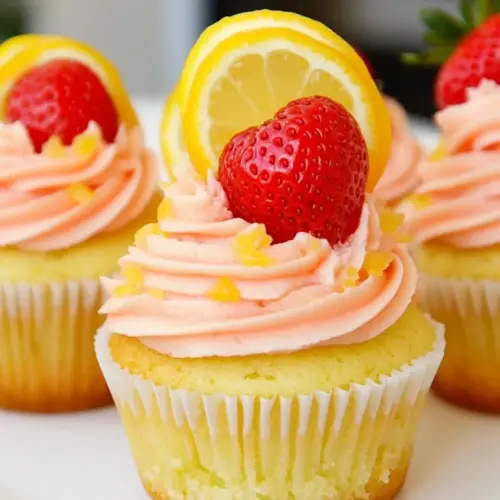
Strawberry Lemonade Cupcakes
Strawberry Lemonade Cupcakes combine bright lemon zest and juicy strawberries in a tender, moist cupcake topped with a silky buttercream. Light, fruity, and easy to make, this recipe is perfect for spring gatherings and casual celebrations. Whip up a batch for brunch or a picnic to enjoy a fresh, flavorful treat that disappears fast.
Equipment
- Oven
- Mixer
- Food Processor
- Mixing Bowls
- Cooling rack
Ingredients
- 1 1/4 cups all-purpose flour 1 teaspoon baking powder 1/4 teaspoon baking soda 1/2 teaspoon salt 1/2 cup granulated sugar 1/4 cup brown sugar, packed 1/3 cup oil 1 cup full fat coconut milk 2 teaspoons vanilla extract 1 teaspoon finely grated lemon zest 1 teaspoon lemon juice Provides the dry structure and rise for the cupcakes by combining flour with leavening agents and salt; granulated and brown sugars add sweetness and moisture while oil and full-fat coconut milk contribute tender crumb and richness; vanilla, lemon zest, and lemon juice enhance flavor with aromatic and citrus notes; baking soda and baking powder ensure proper leavening when reacting with acidic components.
- 2 ounces of fresh strawberries 1/2 cup granulated sugar 2 large egg whites 6 ounces unsalted butter, at room temperature 2 tablespoons lemon juice (approximately 1 large lemon) 1/2 teaspoon pure vanilla extract Creates a bright, smooth frosting and glaze base by puréeing fresh strawberries with granulated sugar; whipped egg whites lend lightness and stability if used in a meringue-style buttercream, while room-temperature unsalted butter yields creamy body and spreadability; lemon juice and pure vanilla extract balance sweetness with acidity and aromatic depth for a well-rounded finish.
Instructions
- Preheat oven to 350°F.: As the oven warms, notice the faint electrical hum and the air gently heating around the door, which helps set your expectations for timing. Preheating ensures the batter begins rising immediately when it hits heat, producing an even, well domed top rather than a slow, dense rise. A common mistake is putting batter into a cool oven, which leads to heavy, under risen cupcakes, so always wait until the oven reaches temperature. If your oven runs hot, you may see faster browning at the edges; watch the cupcakes closely after 15 minutes.
- In a large bowl, sift together flour, baking powder, baking soda, and salt. Add sugar and brown sugar and mix. Whisk together oil, coconut milk, lemon zest, lemon juice, and vanilla. Make a well in the center of the dry ingredients and pour in the wet ingredients. Mix until relatively smooth. Fill cupcake liners with a scant 1/4 cup of batter (should be just under 2/3 of the way full). Bake for 20-25 minutes or until golden, and toothpick inserted in the center comes out clean. Transfer to cooling rack and allow to cool completely.: You will sense the dry, slightly nutty scent of the flour when you sift, and the act of sifting aerates the mixture so the crumb is gentler. This step reduces lumps and makes it easier to incorporate the sugars and liquids. If you skip sifting, you might end up with uneven pockets of leavening, causing inconsistent rise, so take the extra minute. Use a whisk afterward to ensure uniform distribution of the leaveners.
- To make frosting, first wash and hull strawberries and toss them into a food processor. Puree strawberries and set aside.: When you blend the granulated and brown sugar into the dry mix, notice the slightly molasses aroma from the brown sugar, which will deepen the cake's flavor. Dry mixing ensures the sugars are evenly spread and helps with consistent sweetness. A common error is not breaking up packed brown sugar, which can leave dense pockets in the batter, so crumble it with your fingers before combining.
- Add sugar and egg whites into a mixer bowl or another large heatproof bowl, fit the bowl over a plan of simmering water and whisk constantly, keeping the mixture over the heat, until it feels hot to the touch, about 3 minutes. The sugar should be dissolved, and the mixture will look like shiny marshmallow cream. Remove the bowl from the heat.: Combine these wet elements until the mixture looks homogeneous, and you will see flecks of bright lemon zest against a pale background. The coconut milk adds a glossy thickness, and the oil ensures a tender crumb by coating flour proteins. If the wet ingredients are cold, they can encourage uneven mixing; bring refrigerated items closer to room temperature for smoother incorporation.
- Using the whisk attachment on a stand mixer or with a hand mixer, beat the meringue on medium speed until it is cool, about 5 minutes.: Creating a well helps control mixing, so you avoid overworking the batter. Pour the wet into the center and gently fold outward, watching for streaks of flour to disappear. Overmixing activates gluten and yields toughness, so stop mixing as soon as it looks relatively smooth. If you find dry pockets, fold a few more times rather than vigorous beating.
- Switch to the paddle attachment if you have one, and add the butter a tablespoon at a time, beating until smooth. Once all the butter is in, beat the buttercream on medium-high speed until it is thick and very smooth, 6-10 minutes. Don’t freak out if your buttercream curdles or separates, keep beating and it will come together again.: You should see a batter that flows slowly off the spoon, with tiny air pockets from gentle mixing. The texture should be thicker than pourable but not stiff, and it will smell faintly of lemon and sugar. A typical pitfall is beating too long, which tightens gluten and leads to a dense cupcake; aim for a few gentle folds just until the batter is uniform.
- Once the buttercream is thick and smooth, gradually beat in the lemon juice on medium speed, waiting until each addition is absorbed before adding more, and then the vanilla. By this point you should have a shiny smooth, velvety, pristine white buttercream. You can stop at this point if you want to stick with lemon buttercream. For strawberry buttercream, gradually add in strawberry puree, beating on medium speed until well incorporated.: As you portion the batter, observe how it settles in the liner, coming just under two thirds full, which allows room for rise without spilling. Using a scoop helps you keep consistent sizes so they bake evenly. If you overfill, cupcakes can dome and crack or spill over, producing uneven bake and a mess to clean, so keep portions conservative.
- Bake for 20 to 25 minutes or until golden, and toothpick inserted in the center comes out clean.: During baking you will notice the kitchen aroma shift to warm sugar and citrus, and the tops should turn a pale golden. The toothpick test is your best indicator of doneness; a moist crumb will cling if underbaked, while a clean pick means they are ready. A common mistake is relying on color alone, which can mislead if your oven browns quickly; always perform the toothpick check starting at 20 minutes.
- Transfer to cooling rack and allow to cool completely.: Moving the cupcakes to a rack prevents residual heat in the pan from continuing to cook them and creating a drier interior. You will feel the gentle warmth when you touch the pan, but the cakes should be cool to the touch before frosting so the buttercream does not melt. If you frost warm cupcakes you risk a runny, sliding topping, so be patient and let them cool fully.
- To make frosting, first wash and hull strawberries and toss them into a food processor.: Fresh strawberries give a fragrant burst when processed, and their juices release that vibrant red hue. Pureeing helps you integrate the fruit into the buttercream without lumps, producing an even color and flavor. Watch for excess water; if berries are overly ripe and watery, the puree can thin the frosting too much, so choose berries that are ripe but not mushy.
- Puree strawberries and set aside.: Once processed, the puree should be smooth and fragrant, with a bright scent that hints at the final frosting. Setting it aside allows you to focus on the meringue base, ensuring each component is ready when assembled. If the puree appears too watery, you can reduce it slightly over low heat until thicker, but be careful not to cook it into jam, which changes the fresh flavor.
- Add sugar and egg whites into a mixer bowl or another large heatproof bowl, fit the bowl over a plan of simmering water and whisk constantly, keeping the mixture over the heat, until it feels hot to the touch, about 3 minutes.: You will feel the bowl warm and smell the sugar settling into the egg whites, creating a glossy, syrupy base. This gentle heating dissolves the sugar and creates a sanitized, shiny meringue foundation. A common mistake is letting the bowl sit too hot, which cooks the whites; keep it warm but not boiling.
- Using the whisk attachment on a stand mixer or with a hand mixer, beat the meringue on medium speed until it is cool, about 5 minutes.: The meringue will transform from glossy syrup to billowy peaks as it cools, and the sound will shift to a lighter, faster whir as air becomes incorporated. Cooling is essential before adding butter; adding butter to warm meringue can melt it. If cooling takes longer, keep beating patiently, the volume is crucial for a light final buttercream.
- Switch to the paddle attachment if you have one, and add the butter a tablespoon at a time, beating until smooth.: When butter hits the bowl in small amounts, it emulsifies into the meringue, creating a silky texture; if added too quickly the buttercream can split. The mixture may appear loose at times, but continuing to beat encourages recombination into a smooth buttercream. If it curdles, resist the urge to panic and continue beating; patience usually brings it back together.
- Once all the butter is in, beat the buttercream on medium high speed until it is thick and very smooth, 6 to 10 minutes.: Expect the kitchen to fill with a rich, sweet scent while the texture changes to glossy, pipeable frosting. This thorough whipping creates stability and a silken mouthfeel. A common error is not beating long enough, which leaves a greasy mouthfeel, so continue until the texture is uniform and holds shape.
- Don’t freak out if your buttercream curdles or separates, keep beating and it will come together again.: The change in texture can be alarming, but it is often a temporary phase where the butter and meringue are rebalancing. By maintaining steady speed, the emulsion reforms into a uniform cream. If separation persists, chill briefly and then rebeat at medium speed to coax it back to smoothness.
- Once the buttercream is thick and smooth, gradually beat in the lemon juice on medium speed, waiting until each addition is absorbed before adding more, and then the vanilla.: Adding the lemon juice slowly preserves the emulsion while layering in a bright, tart note that cuts the butteriness. The color may lighten and the aroma should shift to a tangy perfume. If you add the juice too fast the frosting can thin, so add in small amounts and assess consistency as you go.
- You can stop at this point if you want to stick with lemon buttercream.: The lemon buttercream will be glossy, white to pale yellow, and perfectly balanced for those who prefer a straightforward citrus finish. It pairs well with a subtle strawberry touch in the cake if you prefer not to overwhelm the frosting. A typical mistake is overflavoring with too much lemon, which can make the buttercream too tart, so taste as you go.
- For strawberry buttercream, gradually add in strawberry puree, beating on medium speed until well incorporated.: The puree will tint the buttercream a delicate pink and infuse it with fresh berry flavor, and you will notice a sweeter, fragrant aroma. Add gradually so the frosting does not become too loose; if it softens too much, chill and rewhip briefly. If the puree is watery, the frosting may lose stability, so use the amount that keeps the desired pipeable texture.
Notes
- Make it extra fruity: Fold a tablespoon of finely chopped strawberries into the cupcake batter for bursts of fresh fruit in the crumb.
- Lemon forward: Increase the lemon zest by a half teaspoon for a brighter citrus punch without altering texture.
- Lighten the frosting: For a lighter texture, whip the buttercream a bit longer at a higher speed to incorporate more air, giving a cloud like finish.
- Stability trick: If you need the frosting to hold in warm weather, chill the bowl and beaters slightly before whipping to help maintain structure.
- Presentation swap: Pipe the buttercream with a large star tip for a classic look, or smooth it with an offset spatula for a rustic finish.