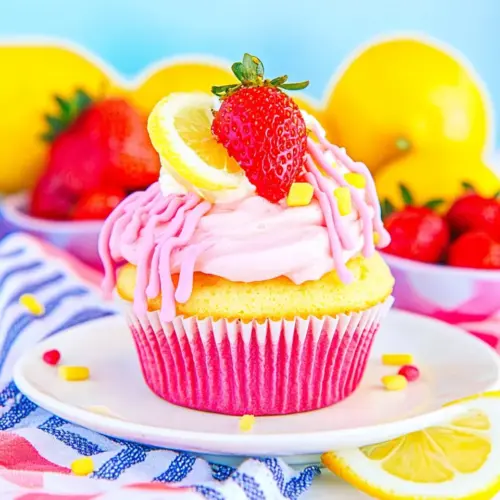
Strawberry Lemon Cupcakes
Strawberry Lemon Cupcakes are soft, tangy, and fruity cupcakes that combine bright lemon notes with a sweet strawberry frosting. The texture is tender and moist thanks to pudding mix and buttermilk, while the frosting offers a smooth, natural fruit flavor. Perfect for spring gatherings or a cheerful dessert, these cupcakes are easy to bake and reliably crowd pleasing.
Equipment
- Cupcake Pan
- Electric Mixer
- Mixing Bowls
- Spatula
- Cooling rack
- Cookie Scoop
Ingredients
- 2 cups all-purpose flour Provide structure and bulk to the cupcakes, creating the crumb and body when combined with liquids and leaveners; sift to remove lumps for a tender texture and even rise.
- 1/2 teaspoons salt Enhance flavor balance and control fermentation by moderating sweetness and strengthening gluten bonds slightly; measure precisely to avoid over-salting the batter.
- 2 teaspoons baking powder Leaven the batter by producing carbon dioxide when activated, contributing to a light, airy crumb and helping the cupcakes rise evenly during baking.
- 3/4 cup buttermelted Add moisture and richness while contributing a slight tang that complements the lemon flavor; ensure melted temperature is warm but not hot to avoid cooking eggs when mixed.
- 1 cup granulated sugar Sweeten the batter and assist with tenderness by dissolving into the wet ingredients; helps with browning and creates a pleasant mouthfeel in the finished cupcakes.
- 2 eggs room temperature if possible Bind ingredients and incorporate air when beaten, contributing to structure, moisture, and stability; use room-temperature eggs for better emulsification and even mixing.
- 2 teaspoons vanilla extract Provide aromatic depth and enhance overall flavor; stir into the batter to complement the lemon notes and round out the sweetness.
- 1/2 cup milk Loosen the batter and add tenderness, helping to hydrate dry ingredients and promote a fine crumb; use the specified amount for proper batter consistency.
- 3 tablespoons fresh lemon juice approximately 1 lemon Introduce bright acidity and concentrated citrus flavor that balances sweetness and intensifies the lemon profile; squeeze fresh and strain if desired to remove seeds.
- 3.4 ounces instant lemon pudding mix (dry mix, do not make pudding) Intensify lemon flavor while contributing additional body and slight thickening to the batter; fold in the dry pudding mix without preparing it as pudding.
- 1 cup butter softened Contribute richness, moisture, and tenderness while aiding in creaming with sugar to incorporate air; soften to room temperature for optimal aeration and texture.
- 1/4 cups strawberry puree Provide natural fruit flavor and color, adding moisture and a strawberry note to the cupcakes; puree fresh strawberries and measure carefully to maintain batter balance.
- 3 -4 cups powdered sugar Sweeten and stabilize frostings or fillings by adding structure and pipeability; sift and add gradually to reach desired sweetness and consistency while avoiding graininess.
Instructions
- Begin by preheating your oven to 350° then lining a cupcake pan with cupcake liners.: The scent of warm kitchen air signals readiness, and when the oven reaches 350° you'll get consistent rise and browning. I like to hear the oven click as it cycles, which tells me the temperature is holding steady. If the oven is cooler than expected the cupcakes may bake long and dry, so use an oven thermometer if yours runs unevenly. A common error is skipping liners which can make cupcakes stick and tear when removed.
- In a medium sized bowl, mix together the flour, salt and baking powder then set this aside.: When you whisk these dry ingredients you should see a pale, even blend with no streaks of baking powder. This step ensures the all purpose flour and leavening are evenly dispersed so the crumb rises uniformly. You might notice a faint scent of starch from the flour, which is normal. Avoid over whisking which can incorporate too much air and disturb the intended texture.
- Next, in a large bowl, combine the melted butter and sugar together using an electric mixer. To this mixture, add the eggs one at a time and continue to mix this together until well combined. After the eggs are combined, stir in the vanilla extract, lemon juice, dry pudding mix and milk. Combine all of this together until smooth.: The texture will shift to a glossy, slightly granular mass as the butter and granulated sugar come together. When you continue to add the eggs one at a time the mixture should smooth out and become more velvety. You will hear the mixer change tone as the batter becomes lighter; a faint hum means the sugar is dissolving into the fat. A common mistake is adding eggs too quickly which can cause the batter to separate, so add them slowly and scrape the bowl between additions.
- Once smooth, slowly add the flour mixture that was set aside earlier to the bowl of wet ingredients and continue to mix. Make sure to take a spatula and scrape the sides of the bowl to make sure everything is evenly combined.: As each egg is incorporated you will notice the batter becoming silkier and slightly more elastic, creating a uniform sheen. The batter should be neither curdled nor sloppy; if it looks broken, pause and beat until it comes back together. Room temperature eggs help achieve this smooth texture; cold eggs can make the batter look curdled and harder to combine.
- Fill the cupcake liners about 2/3 full of the cupcake batter. It tends to scoop easier with a spoon or cookie scoop because the batter is thick.: At this point the aroma of vanilla and lemon will begin to emerge, and the batter should feel slightly thinner as you incorporate the milk . The dry lemon pudding mix will dissolve into the batter, creating a subtle granular feel that disappears with mixing. If the batter looks lumpy, mix just until smooth to avoid activating too much gluten which can toughen the cake.
- Bake for about 15-20 minutes and check for doneness by poking the cupcakes with a toothpick to see if it comes out clean. Transfer these cupcakes to a cooling rack and begin on the frosting.: You will see a homogeneous batter with a pale yellow hue and a light lemon fragrance. The surface should be glossy and free of streaks. Overbeating here can whip in excess air that collapses in the oven, so stop once smooth. If there are pockets of dry ingredients, use a spatula to gently fold until incorporated.
- For the frosting, use a mixer to beat the softened butter on high until light and fluffy, this usually takes about 2 to 3 minutes. Pour in the strawberry puree and gradually add in 3 cups of the powdered sugar to the fluffy butter and continue to combine until smooth.: As you add the dry mix, the batter will thicken and the sound of the mixer will change from a hum to a softer, thicker tone. Use a spatula to scrape the sides and bottom regularly so no pockets of unincorporated flour remain. If you see streaks of flour, fold gently rather than beating hard to maintain tenderness. A typical pitfall is overmixing at this stage which produces a dense cupcake.
- If needed, add the remaining cup of powdered sugar to the frosting and continue to combine this until smooth. Make sure the cupcakes are completely cooled before frosting them with the strawberry frosting. You can frost them using a spatula, or if you want to get fancy, a Wilton 1 B Large tip.: The spatula will reveal any clinging bits of batter and ensure a consistent crumb. You should be able to see a smooth, uniform texture on the spatula edge. This is also a moment to gauge batter thickness; it should be thick but pourable. Skipping this can leave uneven pockets that bake at different rates.
- Fill the cupcake liners about 2/3 full of the cupcake batter: The batter should mound slightly and hold its shape when scooped; using a spoon or cookie scoop helps portion uniformly so the cupcakes bake evenly. Watch the batter as it settles, and adjust if some cups are overfilled since overfilling causes doming and spilling. An easy error is filling too full which leads to cracked tops and uneven bake.
- It tends to scoop easier with a spoon or cookie scoop because the batter is thick: The tactile feel of thick batter is reassuring, and a cookie scoop creates uniform tops that bake at the same rate. The sound of batter hitting the cup is a soft thud, not a splash. If your batter is too runny to scoop this way, you may have added too much liquid; double check measurements before baking.
- Bake for about 15 to 20 minutes and check for doneness by poking the cupcakes with a toothpick to see if it comes out clean: As they bake the kitchen will fill with a warm lemon and butter scent, and the tops should turn a pale golden color. A clean toothpick signals they are done, while sticky crumbs mean they need more time. Rotate the pan halfway if your oven has hot spots. Removing them too early yields a gummy center, and overbaking will dry them out.
- Transfer these cupcakes to a cooling rack and begin on the frosting: The cupcakes will continue to set as they cool, and the rack allows air to circulate underneath so the bottoms do not steam. Wait until they reach room temperature before icing, otherwise the frosting will melt. A rushed frosting step is the usual reason for sliding or runny icing.
- For the frosting, use a mixer to beat the softened butter on high until light and fluffy: Beating softened butter at high speed incorporates air and changes texture to pale and pillowy after two to three minutes. The sound will go from a heavy churn to a lighter, whirring tone as the butter aerates. If the butter is too cold it will not fluff properly; too warm and it will be greasy.
- Pour in the strawberry puree and gradually add in 3 cups of the powdered sugar to the fluffy butter and continue to combine until smooth: The puree will give the frosting a fragrant strawberry aroma and a soft pink color; adding powdered sugar gradually prevents a gritty texture and helps you control thickness. The frosting should become glossy and pipeable. If it is too loose, add more powdered sugar in small increments; if it is too stiff, a teaspoon of milk can help.
- If needed, add the remaining cup of powdered sugar to the frosting and continue to combine this until smooth: Adding the extra powdered sugar will firm up the frosting for piping and create a sweeter, thicker finish. Taste as you go because too much sweetness can mask the fruit, but the texture must be stable for decorating. Work quickly if your kitchen is warm since butter based frosting can soften and become runny.
- Make sure the cupcakes are completely cooled before frosting them with the strawberry frosting: Coolness prevents melting and keeps frosting texture intact. When the cupcakes are cool to the touch and have no steam rising, they are ready. Frosting warm cupcakes causes a glossy, slipping look that soon collapses.
- You can frost them using a spatula, or if you want to get fancy, a Wilton 1 B Large tip: A spatula creates a rustic finish while a piping tip yields a professional swirl. The frosting should feel smooth and hold peaks when piped. Clogged tips happen if the puree has chunks, so strain the puree first to avoid blocking your piping bag.
Notes
- Measure flour correctly by spooning it into the cup and leveling with a knife to avoid dense cupcakes.
- Check baking powder freshness by mixing a small pinch with hot water to see if it bubbles, replacement ensures proper rise.
- Bring dairy ingredients to room temperature for even incorporation and a smoother batter.
- Sift powdered sugar before adding to frosting to prevent lumps and to achieve a silky texture.
- Adjust frosting thickness with small amounts of powdered sugar or milk to get the right piping consistency without oversweetening.
- Make the strawberry puree ahead and chill it; cold puree helps maintain frosting stability in warm kitchens.
- Rotate the cupcake pan halfway through baking if your oven heat is uneven to ensure consistent browning and doneness.