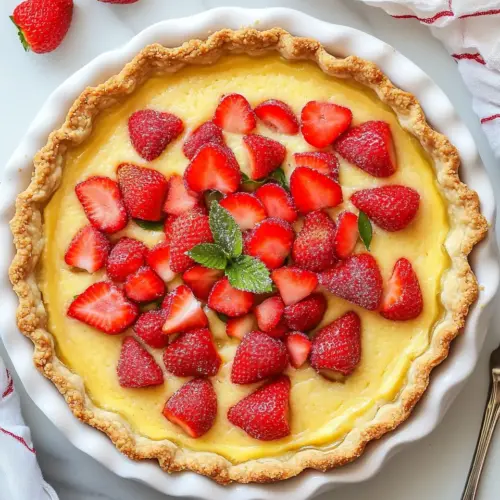
Strawberry Lemon Buttermilk Pie
Strawberry Lemon Buttermilk Pie is a creamy, tangy dessert that balances citrus brightness with fresh berry sweetness. The silky buttermilk custard and glossy strawberries create an easy yet elegant pie, perfect for spring gatherings and casual dinners. This approachable recipe yields tender texture and bright flavor, making it a must make for anyone who loves light, refreshing desserts.
Equipment
- 9-inch pie plate
Ingredients
- 1 1/2 cups granulated white sugar Sweeten and balance acidity while helping the filling set; granulated white sugar dissolves into the custard, providing structure and sticking to the surface for a slight caramelized edge during baking. Measure precisely to avoid an overly runny or cloying pie, and stir until completely dissolved for a smooth texture.
- 1 cup buttermilk Add tangy richness and tenderize the custard; buttermilk contributes lactic acidity that curdles slightly with eggs to create a silky, custardy filling. Use room-temperature buttermilk to integrate smoothly and support the pie’s moist, slightly tangy flavor.
- 1 tablespoon all purpose flour Thicken and stabilize the filling; all purpose flour helps bind the liquid components and prevents weeping by giving the custard body during baking. Sift or whisk it in to avoid lumps and ensure an even, creamy texture throughout the pie.
- 2 large eggs Provide structure, lift, and richness to the custard; whole eggs coagulate to set the filling as it bakes and deliver volume and silkiness. Beat gently to combine yolks and whites just until blended to maintain tenderness and avoid toughness.
- 2 large egg yolks Contribute extra richness and enhanced custard stability; additional yolks add creaminess, deepen color, and increase the filling’s ability to set firmly. Temper yolks with warm mixture if adding to hot liquids to prevent scrambling and ensure a smooth custard.
- 1/2 teaspoon vanilla extract Enhance overall flavor with a warm, sweet aromatic note; vanilla extract rounds out tart and acidic components and complements the fruit and dairy. Add it near the end of mixing to preserve its delicate fragrance.
- 1 medium lemon, juiced and zested Brighten and lift the filling with citrus oils and juice; lemon zest provides fragrant, intense citrus notes while the juice adds acidity that balances sweetness and helps the custard set. Zest before juicing to capture volatile oils, then strain juice to remove seeds and pulp.
- pinch of salt Enhance and balance flavors subtly; a pinch of salt suppresses bitterness, elevates sweetness, and sharpens the custard and fruit flavors without becoming salty. Add it early so it dissolves uniformly and integrates into the filling.
- One 9-inch unbaked pie shell Serve as the foundation for the pie and hold the filling; a 9-inch unbaked pie shell provides structure, flaky texture, and a contrasting base to the smooth custard. Blind bake or partially prebake if recipe directs to prevent sogginess and ensure a crisp bottom crust.
- 1/4 cup honey Impart floral sweetness and add moisture; honey integrates with sugar to deepen the flavor profile and contribute a slightly sticky, glossy finish on top of the filling or fruit. Warm slightly to pour smoothly and combine fully with the other sweeteners.
- 1 medium lime, juiced Introduce bright, acidic contrast to intensify tartness; lime juice adds a sharper citrus note than lemon and can lift the strawberries while helping the filling firm up. Squeeze fresh and strain to remove seeds for a clean, zesty addition.
- 2 pints strawberries, hulled and halved Provide fresh, fruity body and texture; hulled and halved strawberries bring natural sweetness, color, and juicy pockets that complement the custard and citrus. Arrange them attractively in the pie, tossing with a bit of sugar or honey if desired to macerate and concentrate flavor.
- whipped cream Finish with light, creamy topping and provide a textural contrast; whipped cream adds airy richness and a cooling counterpoint to the tangy, dense filling. Whip to soft peaks just before serving to maintain volume and a pleasant mouthfeel.
Instructions
- Preheat the oven to 350 degrees F.: You should sense a warm, dry heat building as the oven reaches temperature, which ensures even baking and a reliable set for the custard. Preheating matters because putting the pie into a cold oven can cause uneven rising and an undercooked center, while placing it into a fully heated environment helps the edges set steadily and brown slightly. A common mistake is not allowing the oven to fully preheat, so use an oven thermometer if your appliance runs cool or hot. Listen for the oven cycling sound and note the consistent warmth when you open the door briefly, that indicates readiness.
- Whisk all of the ingredients together in a large bowl until blended. Pour the filling into the pie shell and place on a baking sheet. Bake until the filling is just set, yet still a bit jiggly, 40 to 50 minutes. Remove from the oven and let cool to room temperature; chill if not serving right away. (Let the chilled pie stand at room temperature for 15 minutes before serving.): Right away you will notice the aroma of lemon zest and the sweet scent of vanilla mingling with the sugar, and the mixture should appear smooth and slightly glossy. Whisking combines the eggs , egg yolks , buttermilk , flour , sugar, and seasonings into a homogeneous batter, which is essential for an even custard. The why here is crucial, because proper blending prevents pockets of uncooked egg and ensures a uniform texture. One troubleshooting tip is to scrape the bowl sides as you whisk, so no streaks of flour remain. Avoid vigorous whisking that whips in too much air, which can cause the filling to puff and crack as it bakes.
- In a small pan, heat the honey with the lime juice until melted. Pour over the berries in a medium bowl and let stand at least 5 minutes. Just before serving, arrange the berries on the pie with a slotted spoon. Top individual servings with whipped cream.: As you pour, the filling should flow smoothly and settle level in the pie shell , creating a glossy surface. I always set the pie on a baking sheet to catch any drips and make it easy to move in and out of the oven. This step matters because the thin metal of a baking sheet helps conduct heat evenly across the bottom of the pie, reducing the risk of a soggy crust. A frequent error is overfilling the shell, which can cause spillage and uneven baking, so stop at a modest margin below the rim.
- Bake until the filling is just set, yet still a bit jiggly, 40 to 50 minutes.: During baking you will detect a gentle lemon perfume wafting from the oven and notice the edges taking on a faint golden tone, while the center remains slightly wobbly like a gently jellied pudding. This visual cue is your guide to doneness, because overbaking will make the custard dry and cause cracks, while underbaking leaves it too loose. The why is that the custard continues to firm as it cools, so removing it while slightly underdone yields a creamy finish. One troubleshooting tip is to test gently by giving the pan a small shake; if the center jiggles but the edges are set, it is ready. Avoid waiting for the center to be completely firm in the oven, as residual heat finishes the job.
- Remove from the oven and let cool to room temperature; chill if not serving right away.: When you take the pie out, you should feel the warm steam and smell the concentrated citrus and baked sugar notes. Cooling slowly at room temperature allows the custard to settle without shocking it, which prevents sudden contraction and cracking. Chilling firms the filling further and makes slicing cleaner. A common mistake is transferring a very hot pie directly to the refrigerator, which can create condensation that wets the crust; cool to room temperature first for best texture.
- Let the chilled pie stand at room temperature for 15 minutes before serving.: Bringing the pie out of the fridge softens the filling just enough so the texture is silky rather than stiff, and the flavors become more pronounced as the cold dulls slightly. I find waiting this short window gives the best mouthfeel. The rationale is that chilled custard is firmer and colder on the palate, which can mute citrus brightness. Watch out for leaving it out too long in a warm room, which could make it overly soft.
- In a small pan, heat the honey with the lime juice until melted.: As the honey warms, it becomes fluid and aromatic, and the lime adds a sharp, floral acidity that balances the syrup. Heating helps the honey integrate with the juice so it evenly coats the berries. This matters because a well blended glaze clings to the fruit and brings shine. A pitfall is overheating the honey which can alter its flavor, so warm gently until it is just melted and combined.
- Pour over the berries in a medium bowl and let stand at least 5 minutes.: The sound here is subtle, the berries absorbing the warm glaze and releasing their juices, creating a syrupy pool. Letting them stand allows flavors to meld and the glaze to penetrate a bit, but not long enough to collapse the fruit. The reason is to enhance sweetness and gloss without making the strawberries soggy. A common mistake is letting them sit too long, which breaks down the berry texture and yields a mushy topping.
- Just before serving, arrange the berries on the pie with a slotted spoon.: When you lift the berries with a slotted spoon, they should glisten and be slightly syrup coated, adding a bright visual contrast to the creamy filling. Placing them just before serving keeps them fresh and prevents the glaze from soaking into the custard. This timing matters to preserve both texture and color. Avoid piling berries too heavily in one spot, which can overwhelm the slice and cause slipping when you cut.
- Top individual servings with whipped cream.: The final touch of whipped cream creates a soft, airy counterpoint to the dense filling and juicy berries, and its coolness balances the citrus tang. Dolloping just prior to serving keeps the cream light and prevents it from weeping into the pie. The why is simple, it rounds out the flavor profile and adds an indulgent finish. A frequent error is overwhipping the cream until grainy, so stop at soft peaks for the best texture.
Notes
- Reduce sugar for a tarter pie. If you prefer less sweetness, cut the granulated white sugar by a quarter to a third and rely on the natural sweetness of the strawberries and the honey for balance.
- Swap pie shell styles. Use a store bought or homemade flaky crust to change the textural contrast, but keep the shell unbaked to allow the custard to bake and set properly in the oven.
- Make smaller tartlets. Use a muffin tin or tart pans and divide the filling for individual portions, which bake faster and make elegant single serving desserts.
- Adjust citrus intensity. Increase or decrease the amount of lemon juice or zest to suit your palate, taking care that acidity remains balanced with the sugar so the custard still sets well.
- Serve berries on the side. If you want cleaner slices, glaze the strawberries and serve them alongside so guests can top their own portions.